BEHIND THE SCENES
The making of The Death of Jim McGraw.
Pre-Production
Pre-production
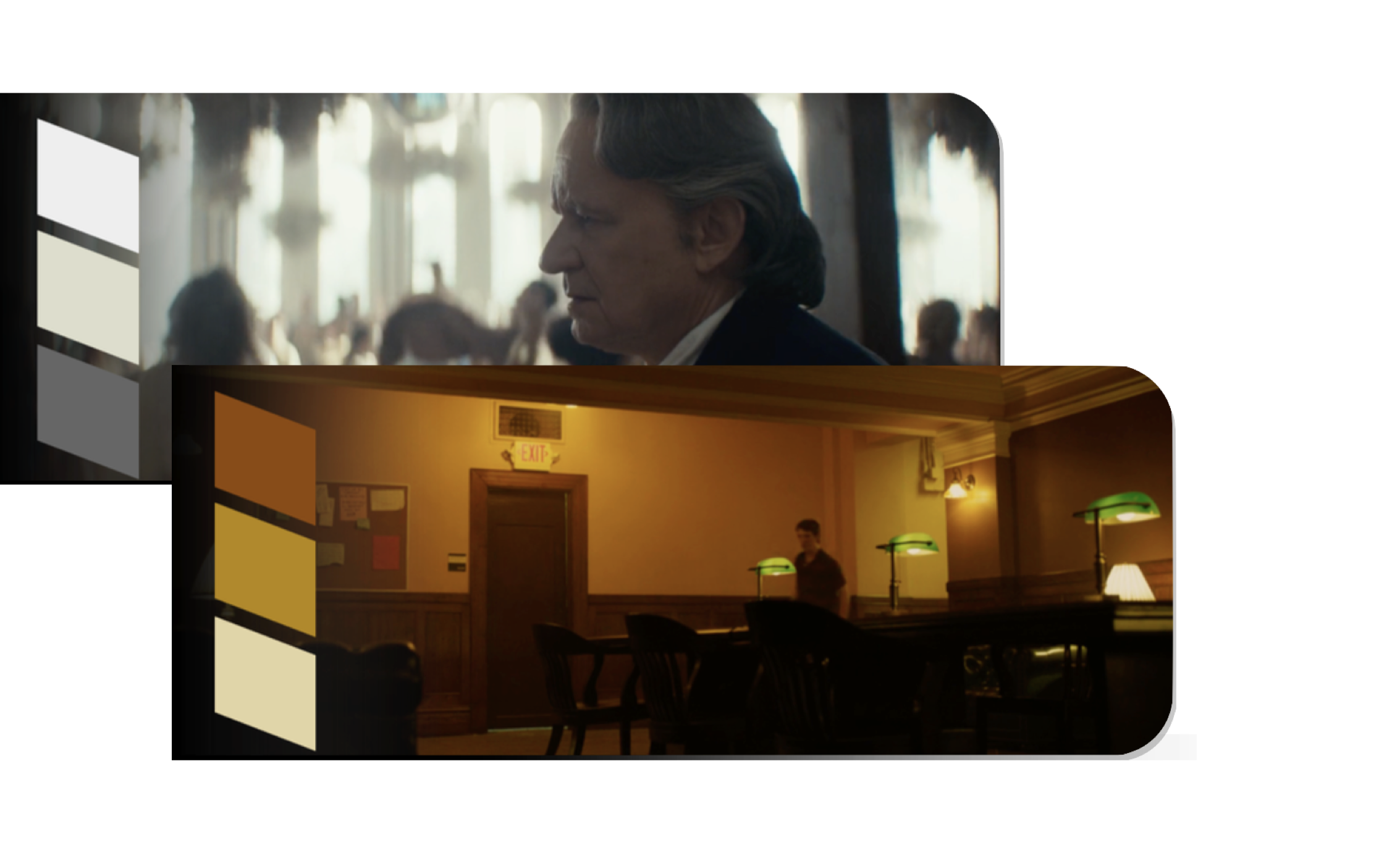
color palettes
Used both in our project pitch and to define the visual language of the film, stills were taken from existing cinema.
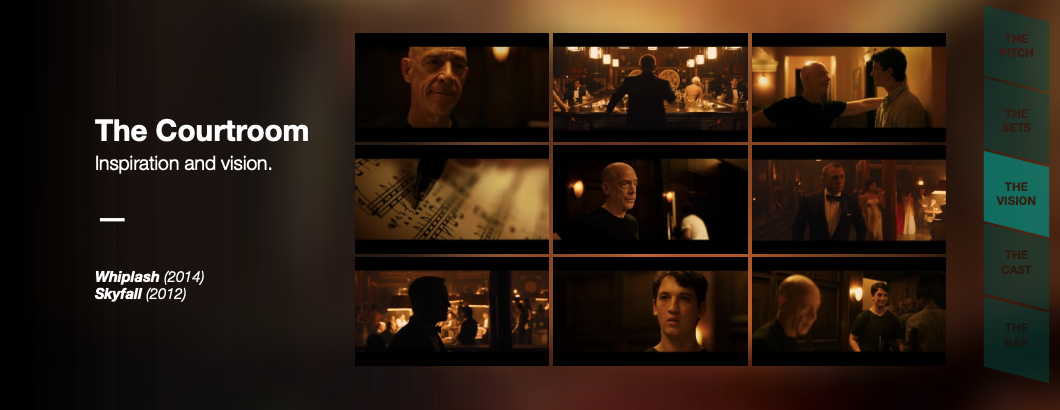
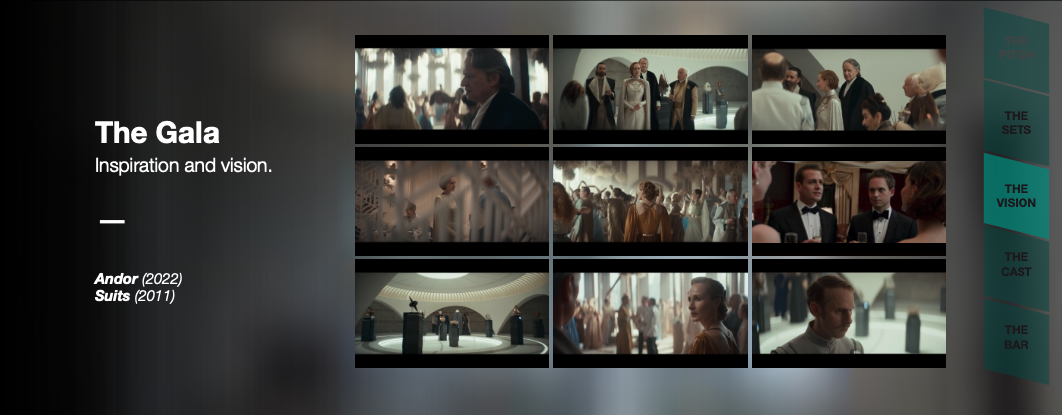
See our full pitch deck
See the vision behind the pitch of The Death of Jim McGraw, as sent to our main actors and external crew members.
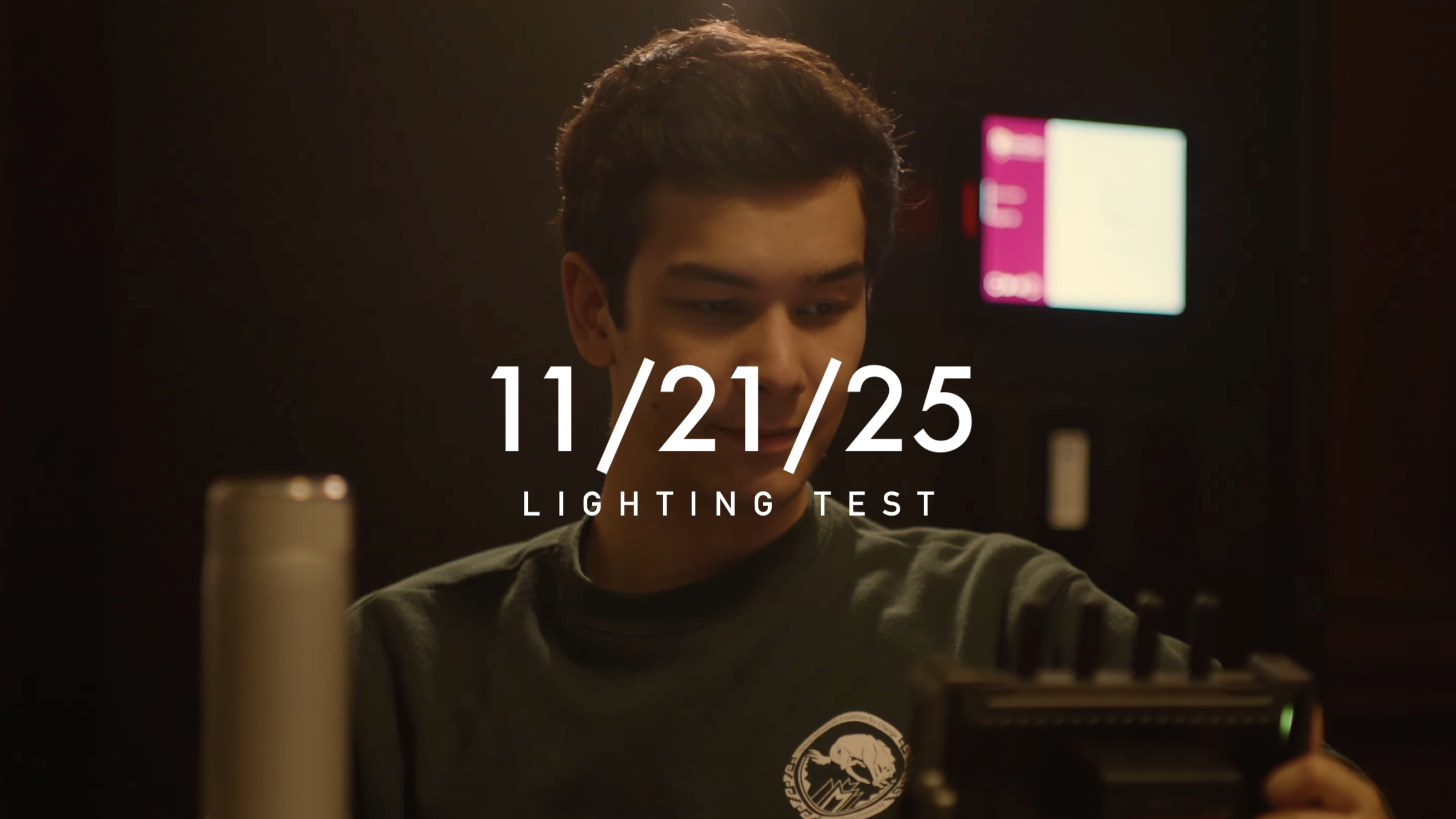
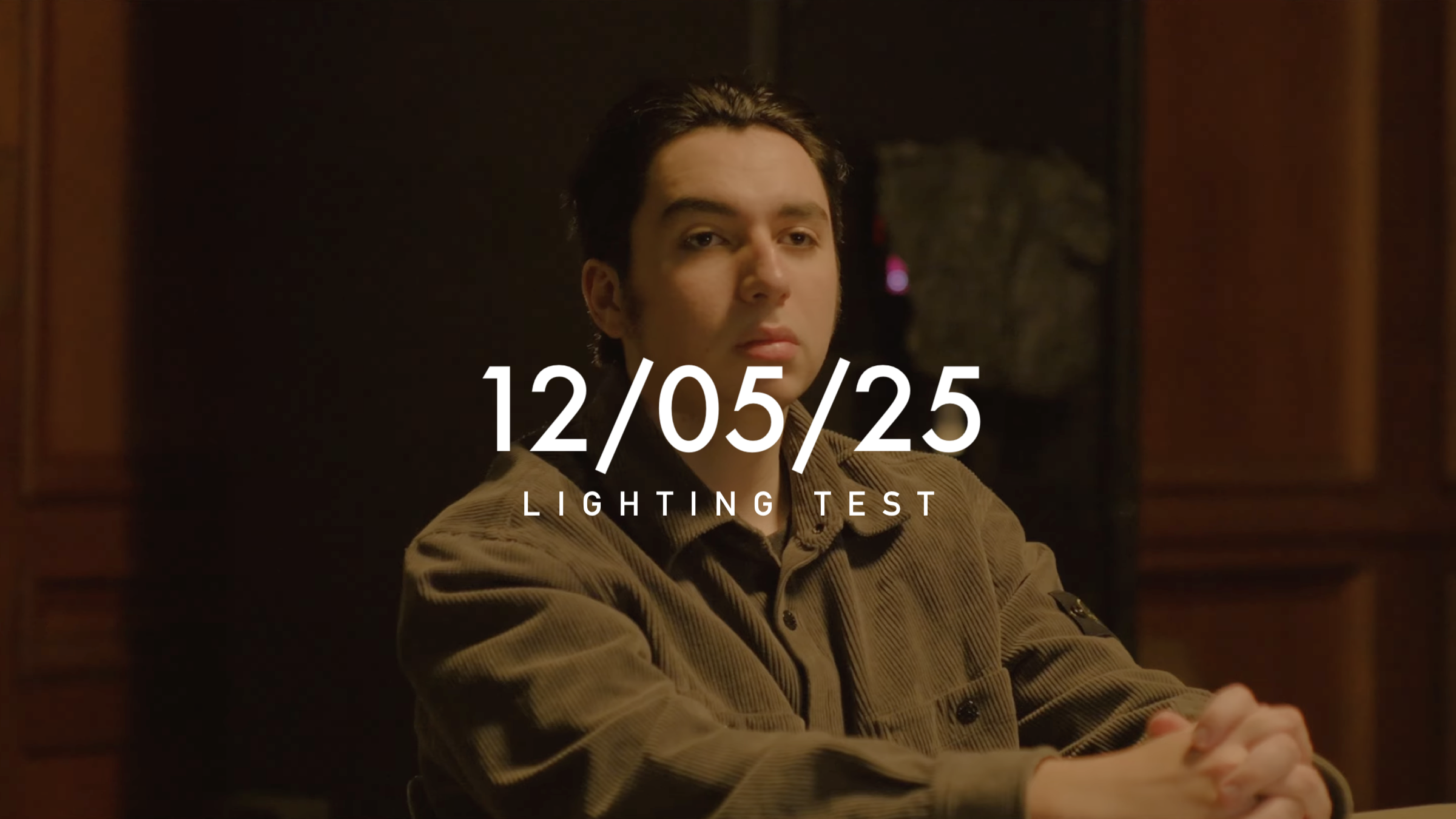
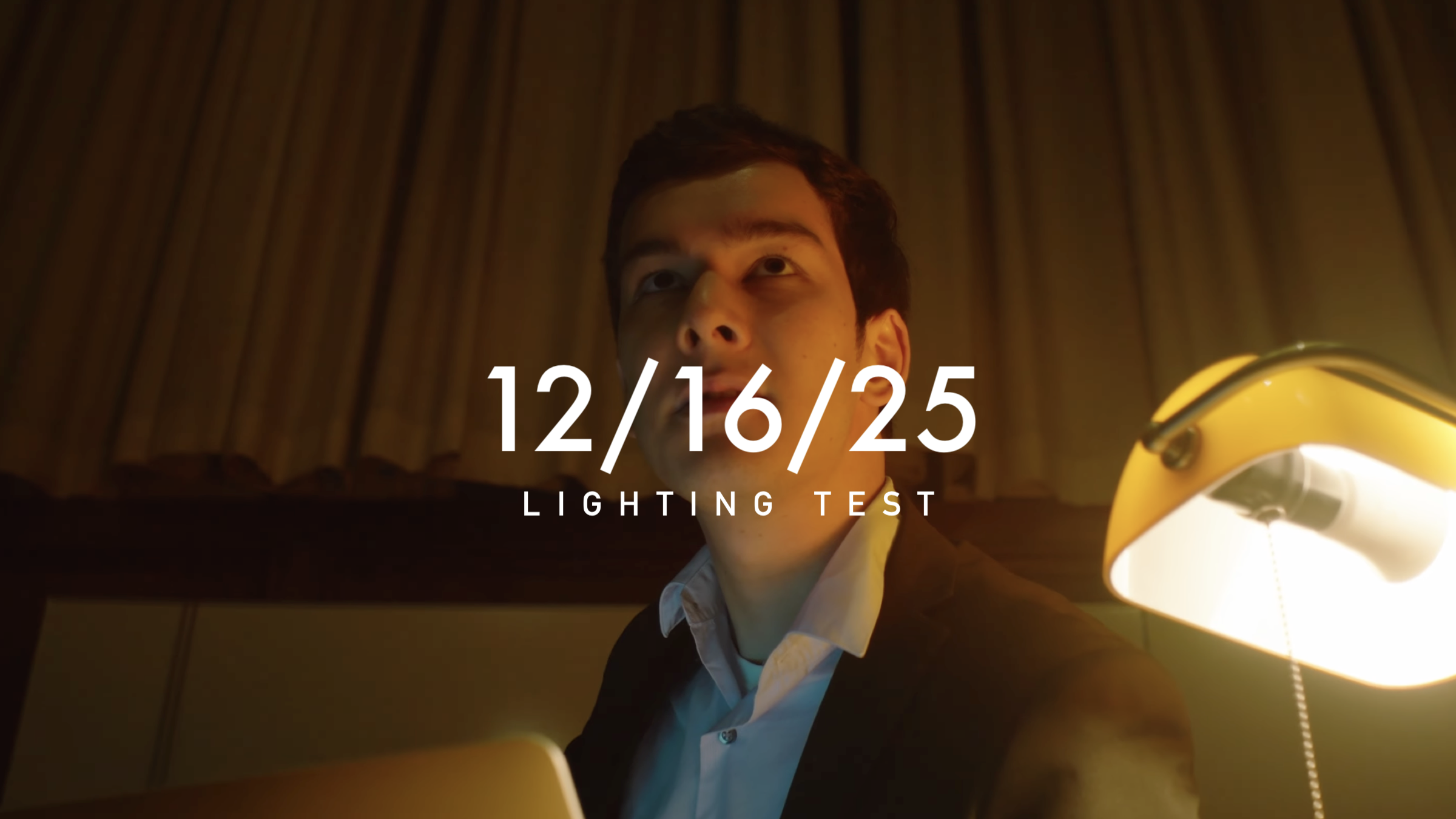
Lighting tests
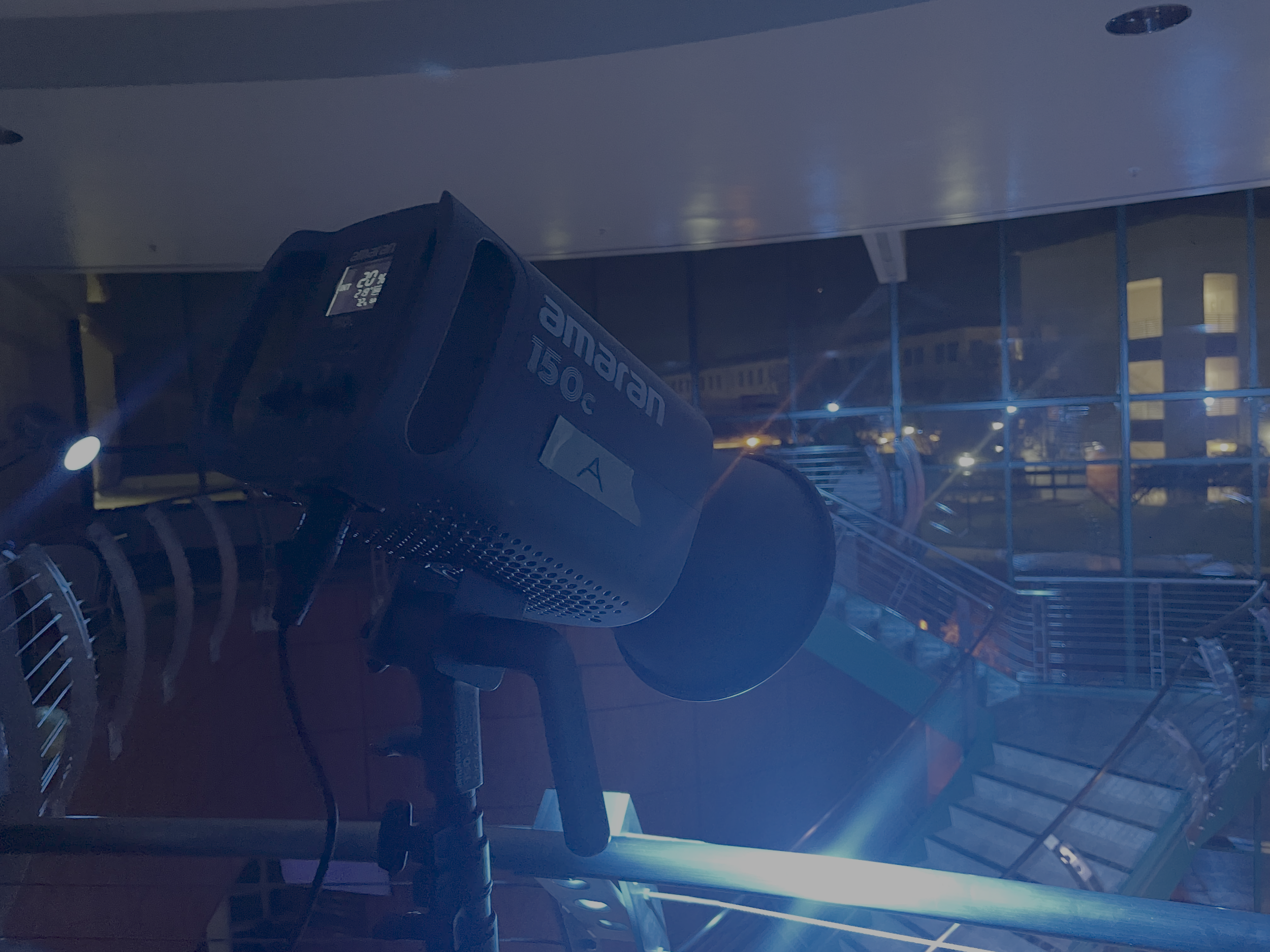
Months ahead of filming, our team extensively tested lighting setups ahead of principal to nail down The Death of Jim McGraw’s unique courtroom feel.
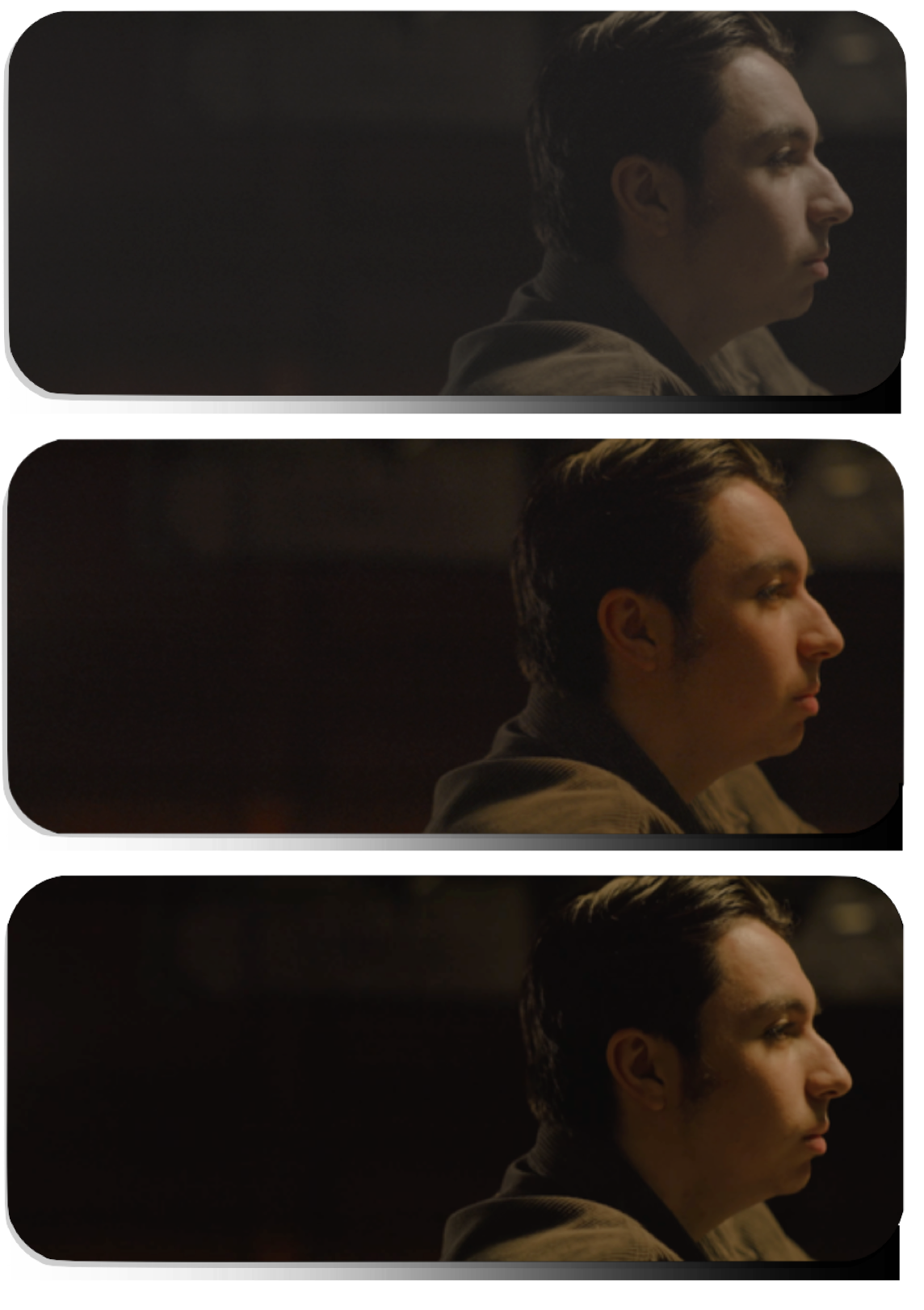
Early color grade testing
Using our lighting test footage, our team experimented with the best color grades for our courtroom scenes. Our final grade avoided the use of LUTs, and instead relied on DaVinci Resolve’s expansive color grading suite.
Resolve is a free-to-use software, and epitomizes Five Watt Lights’ M.O.— that quality can be independent of cost.
Set building
Our judge’s bench and witness stand were built by the Santa Clara University Theater Department, with the majority of the labor done by current students.
Our construction managers created blueprints based on filming needs, including the ability for both the bench and the stand to be modular and rapidly disassembled, as our courtroom set was located in an active classroom.
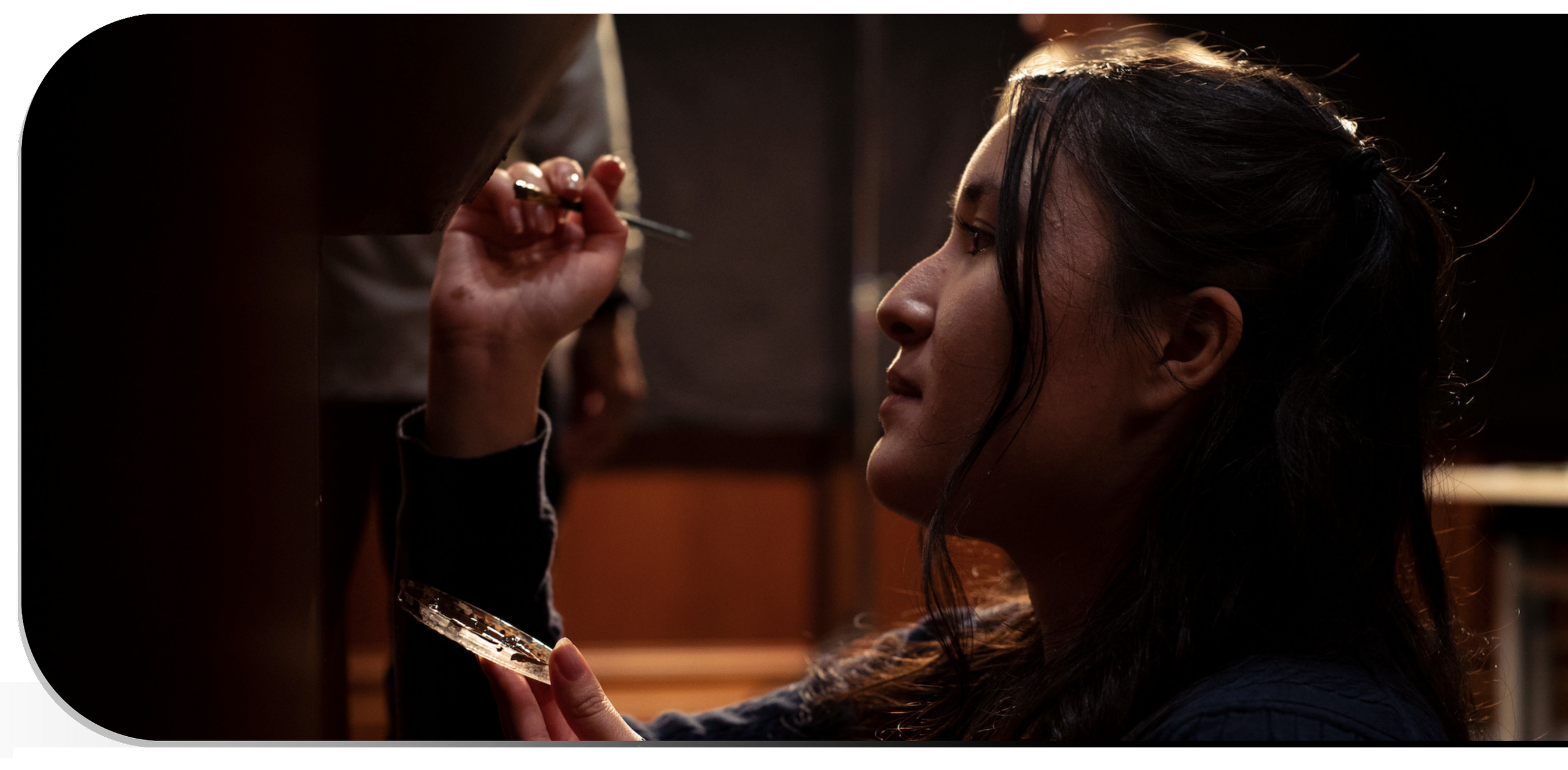
All about painting
Both our bench and stand were hand-painted by Sydney, our Practical Effects and Set Painter & Designer. Wood tones were matched to our courtroom location in Santa Clara University’s Bergin Hall.
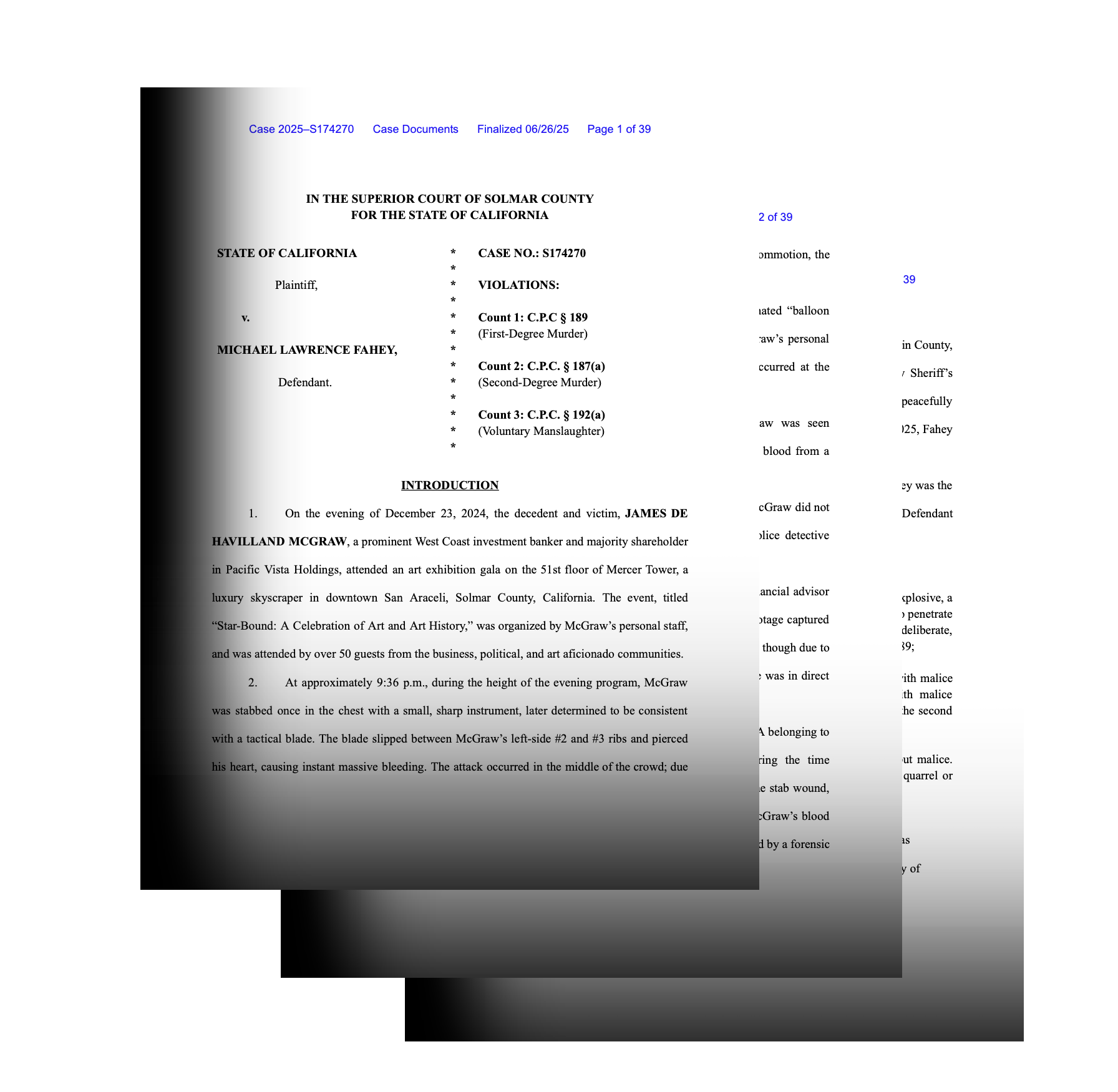
To fully immerse our courtroom cast in the moment, our team wrote a full case brief for the fictional case featured in our film, People v. Fahey. Not only were copies of the case used as props on counsel tables, but they were also used to train our attorney actors in courtroom demeanor.
We’ve made the full 39-page brief public, and you can read it below.
People v. Fahey
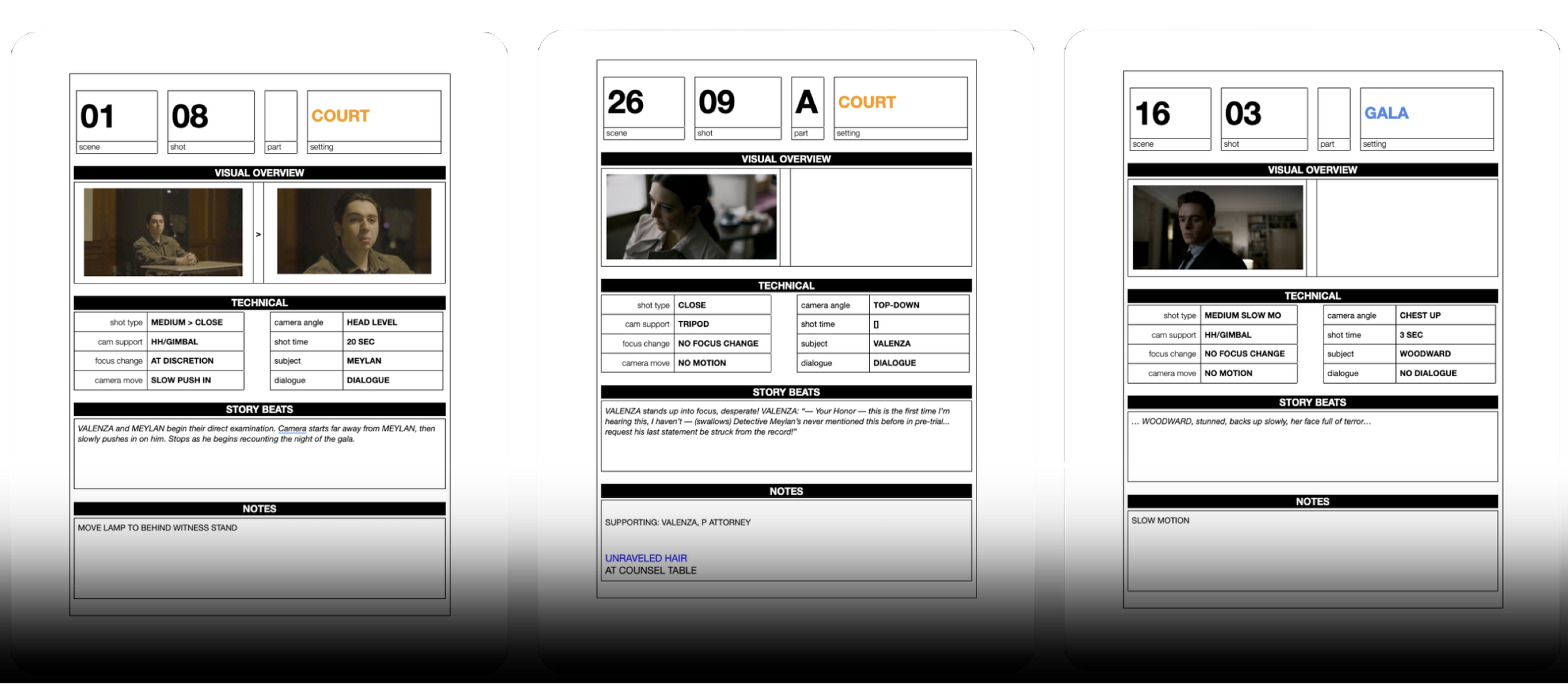
Real production shot list examples
Shot lists were used to outline each shot’s framing, what would be happening in the script for each shot, and what kind of angle/movement would be needed. Shot lists would be sent to cast & crew before each shoot day. Our total shot list for The Death of Jim McGraw numbered 133 pages.
Principal Production
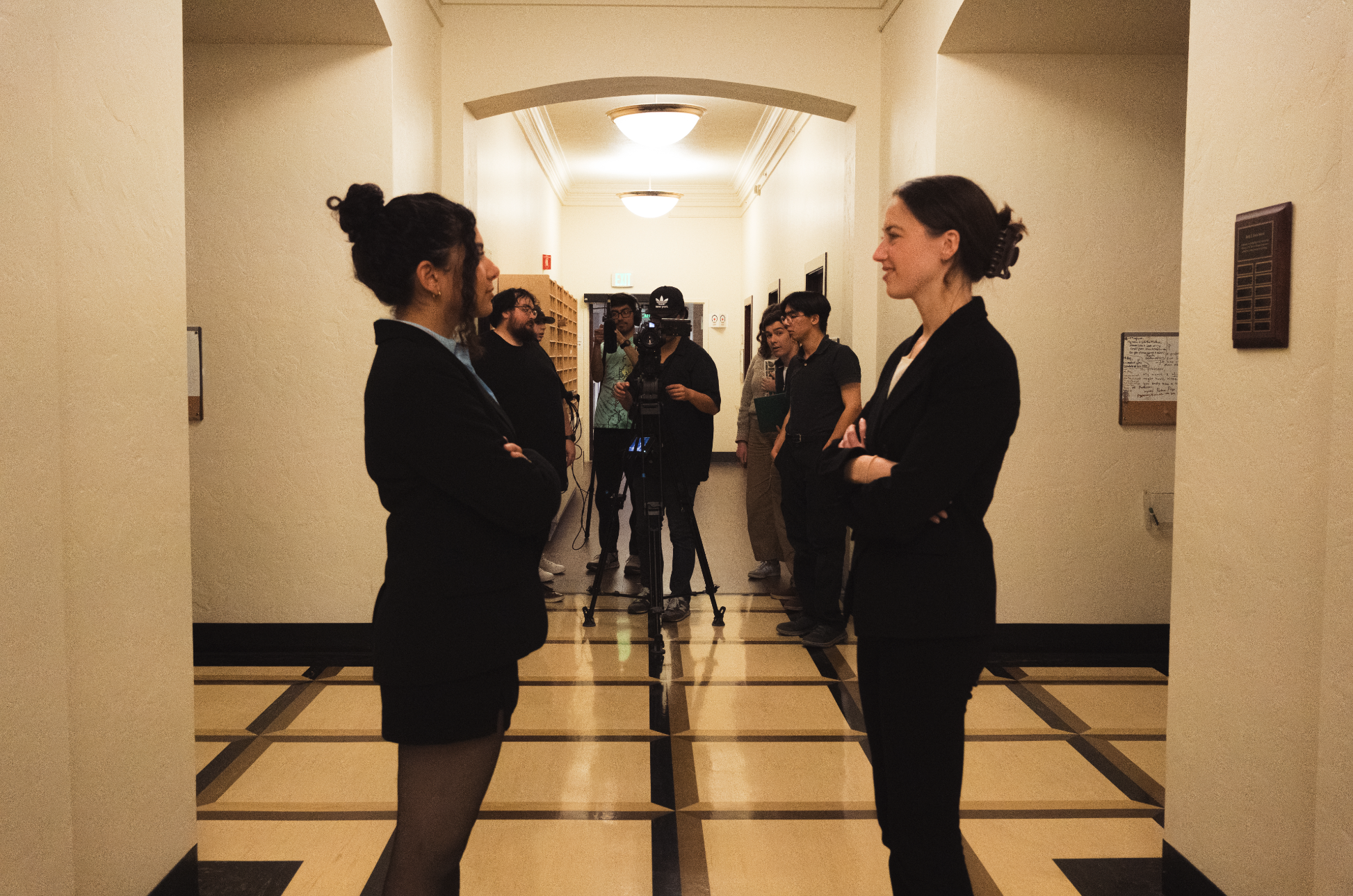
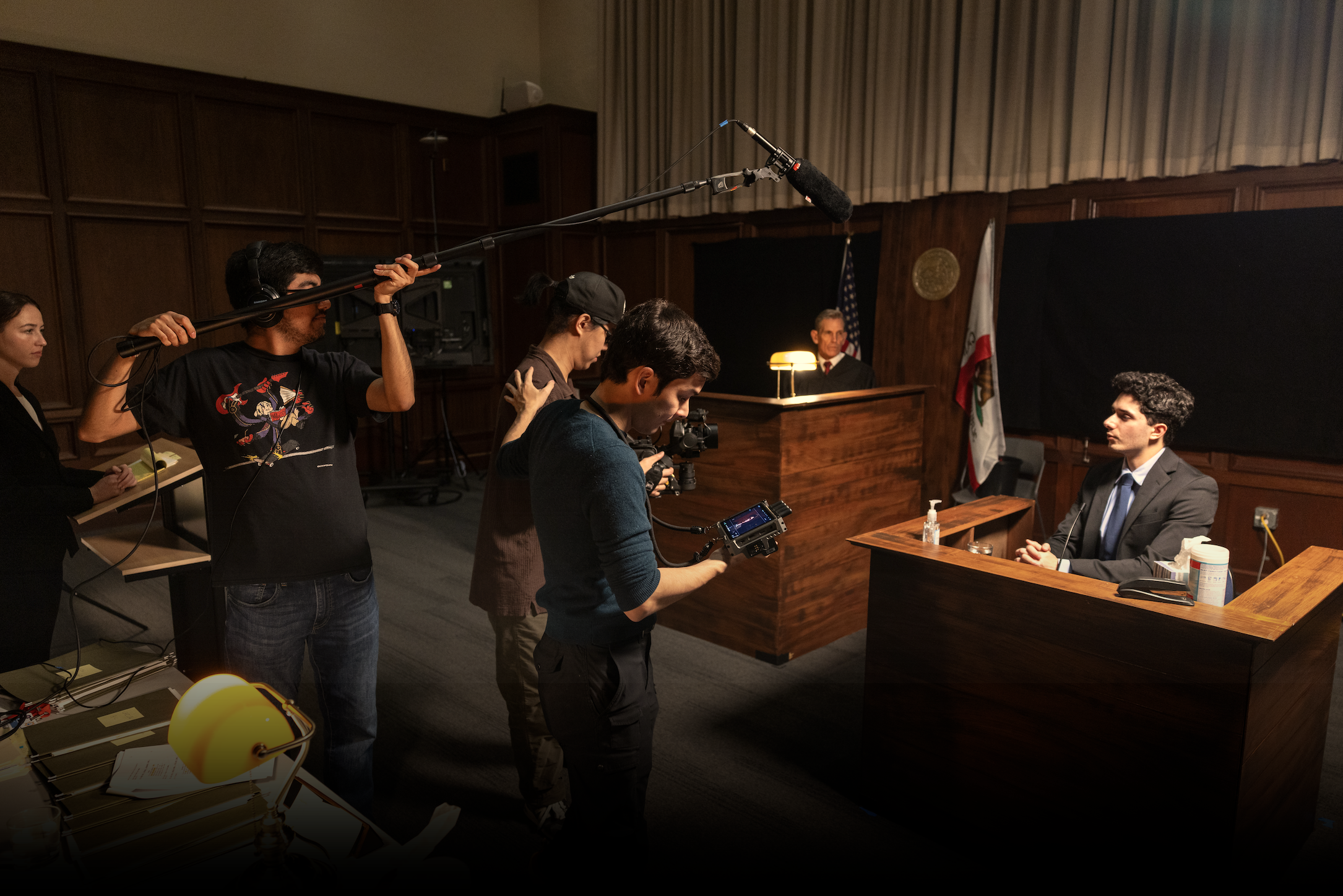
Bergin 116
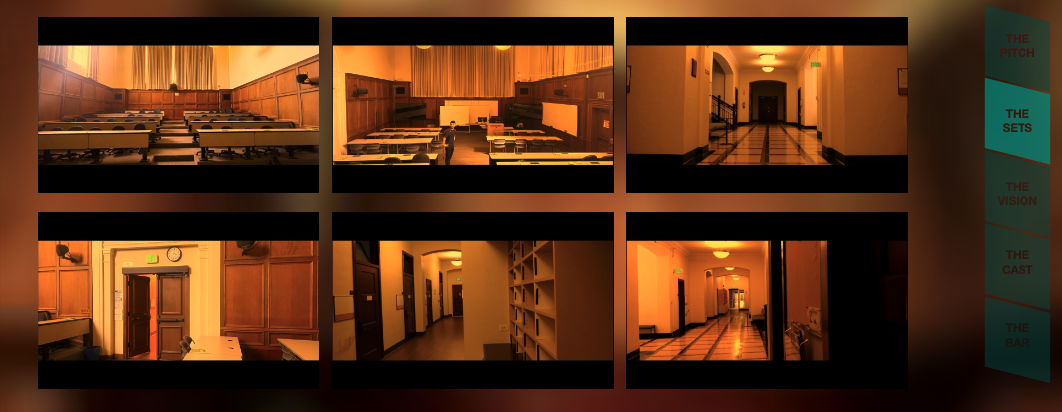
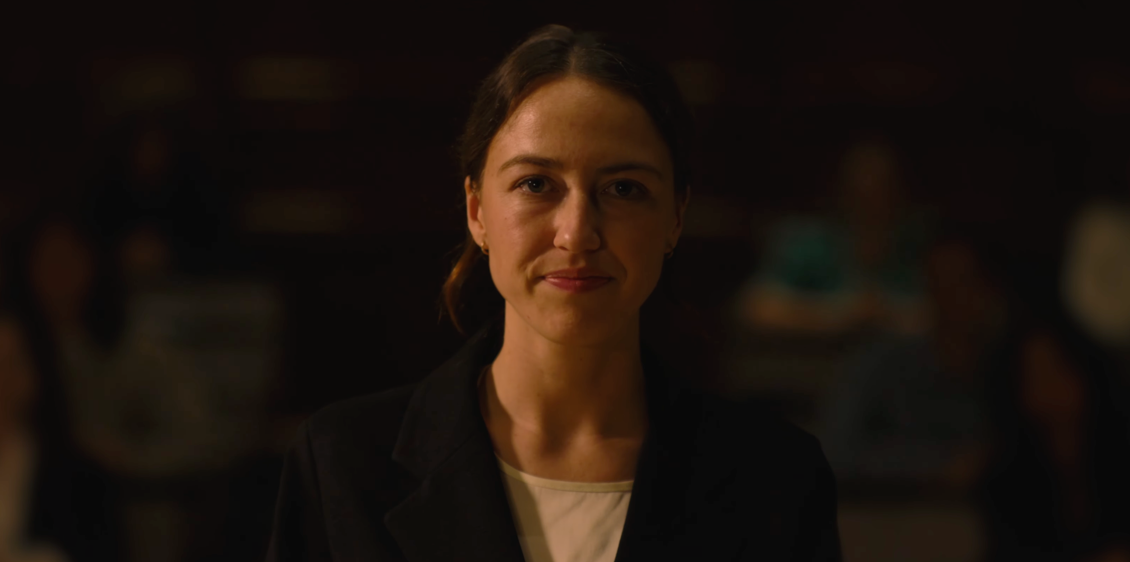
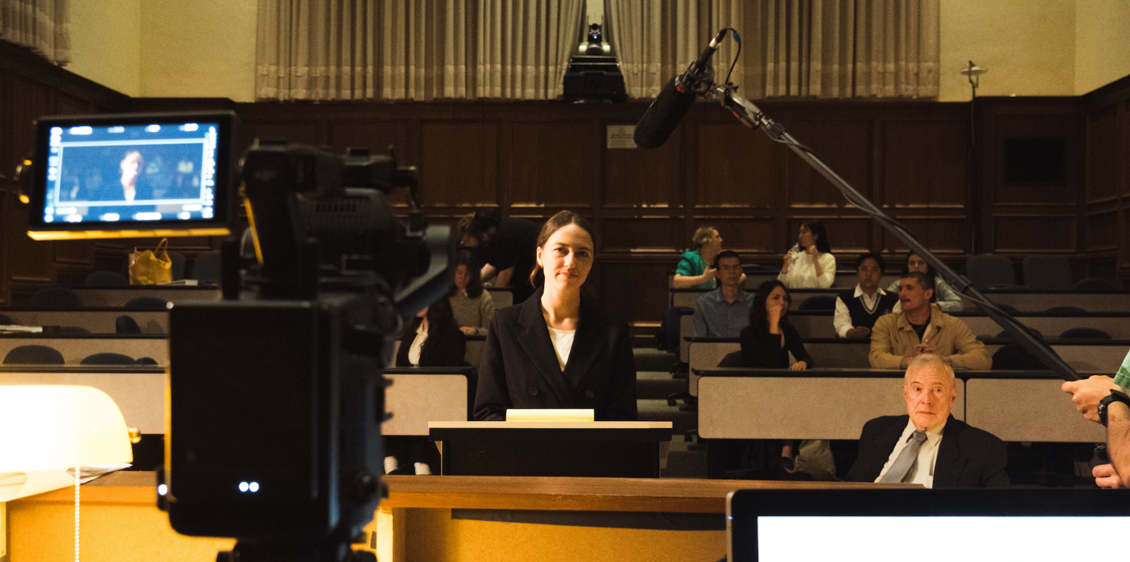
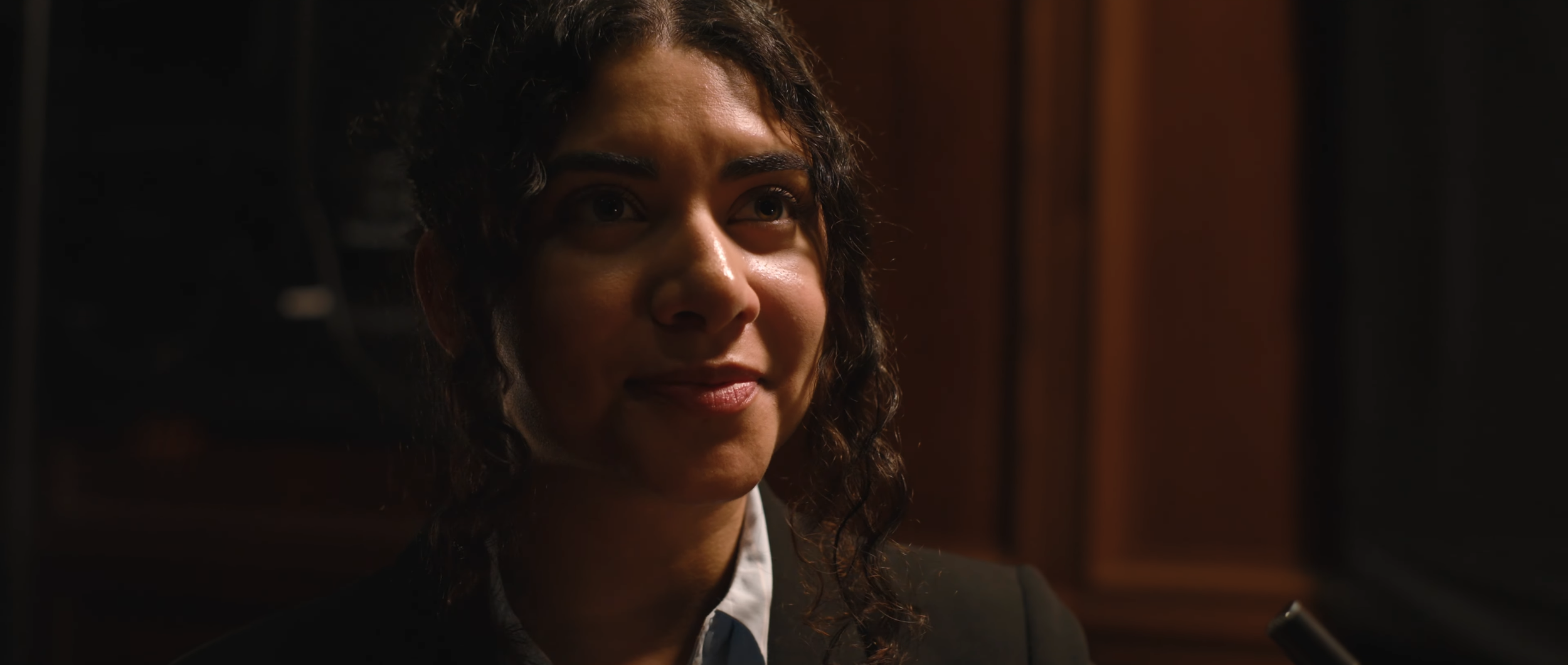
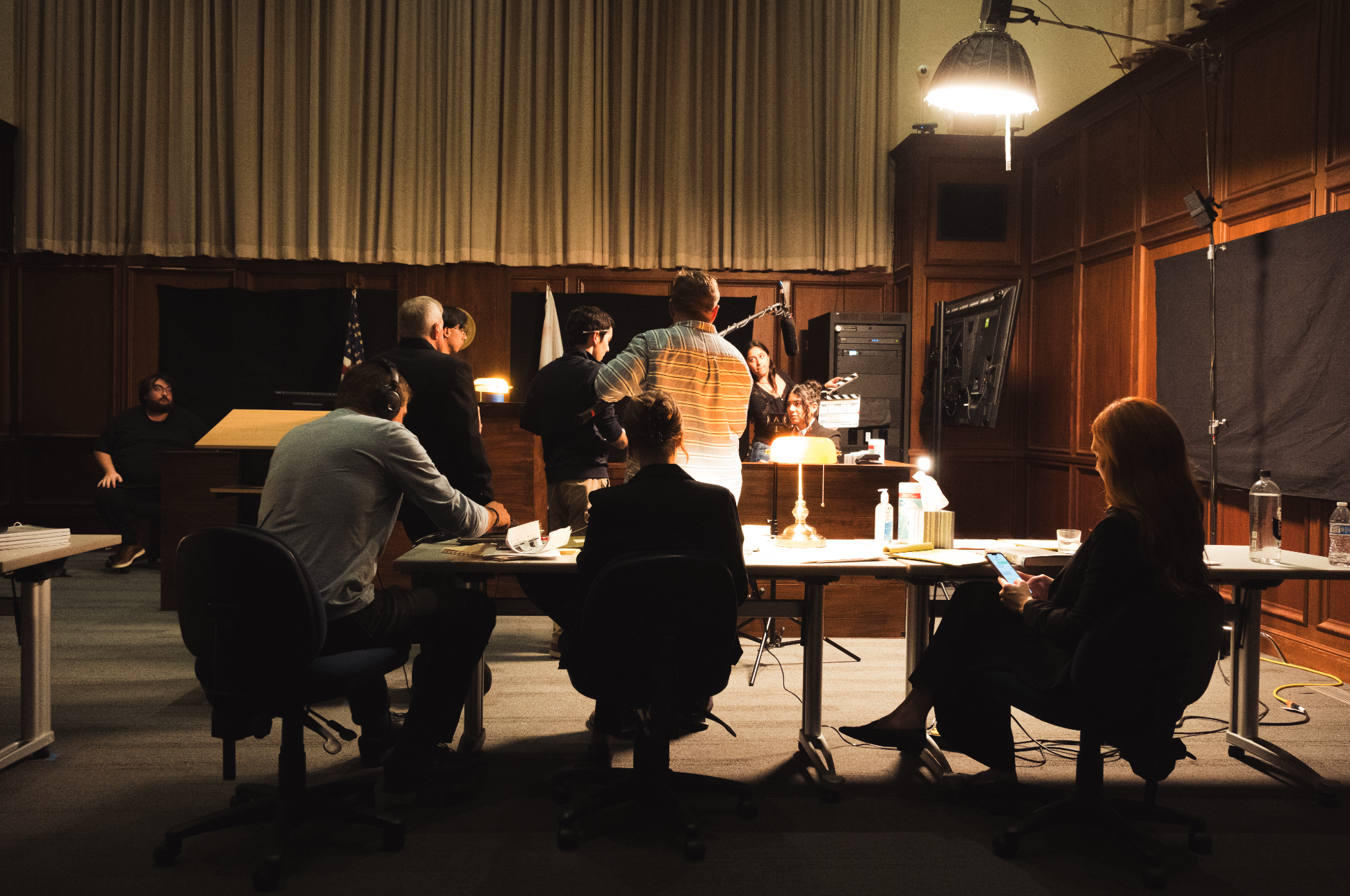
Bergin Hall Room 116 — a classroom on campus at Santa Clara University — represented our courtroom. As an active classroom, our set had to be built and broken down after and after each shoot, which had to be in the evenings.
Duvetyne sheets covered whiteboards and other obvious classroom features, while a set of flags (anchored in pool noodles propped up in buckets) and a 3D-printed California state seal completed our background.
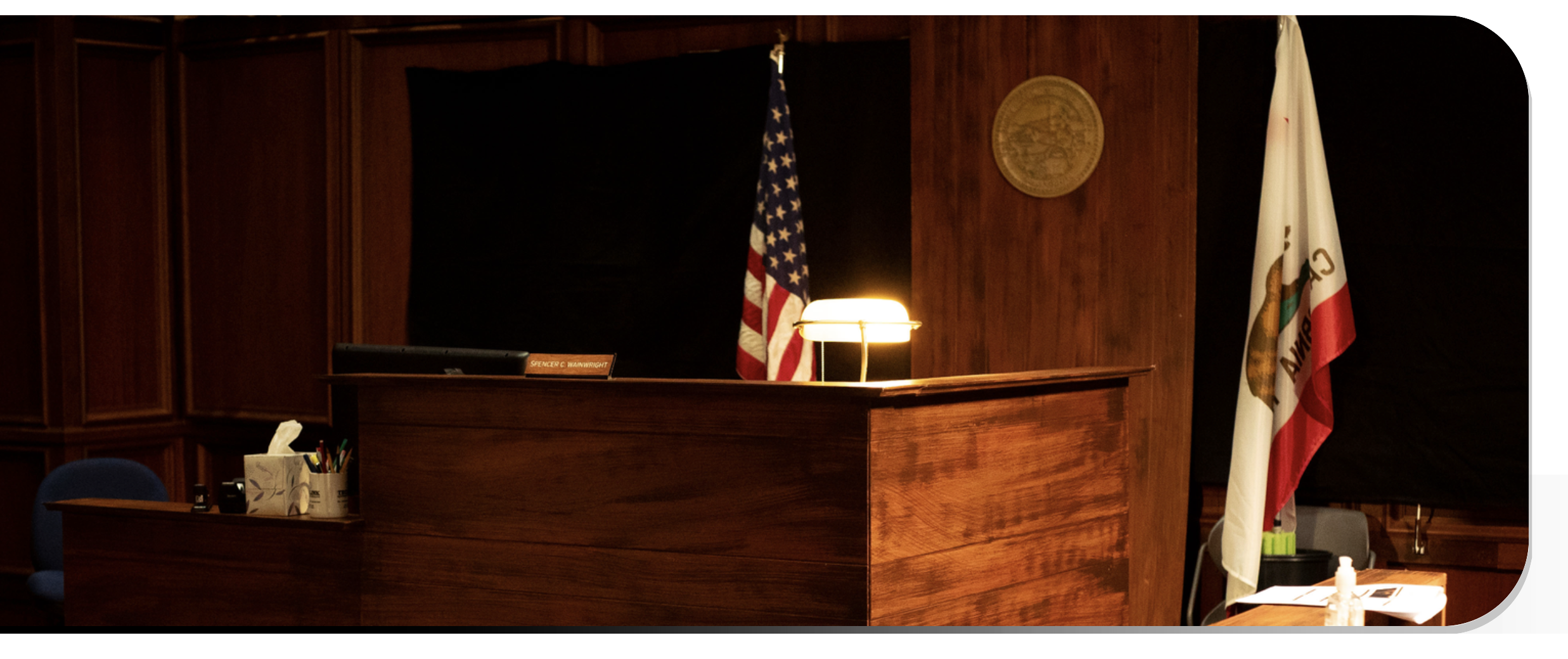
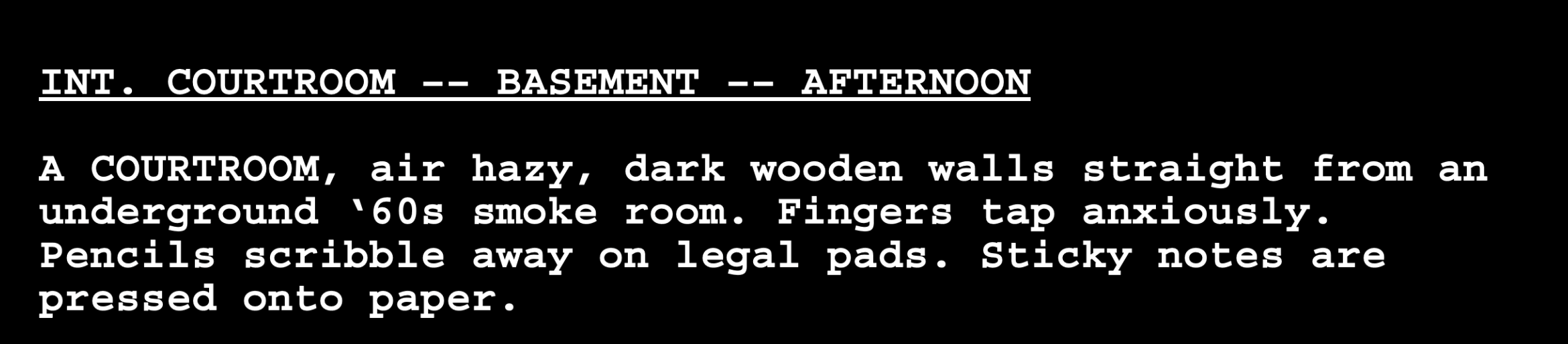
The courtroom
Vari Hall
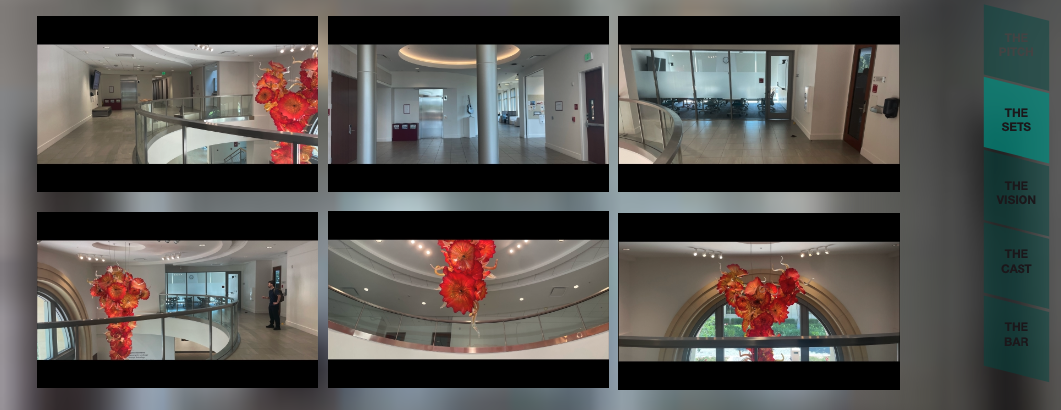
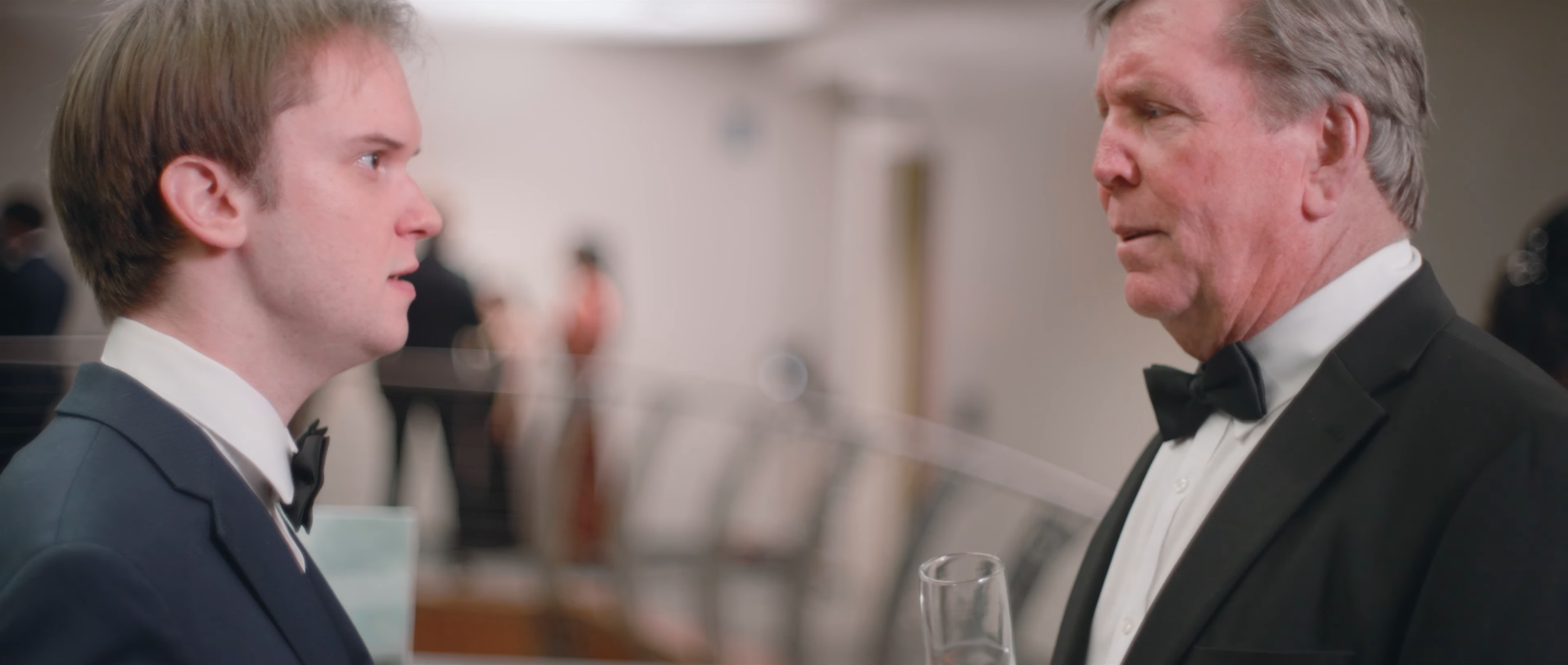
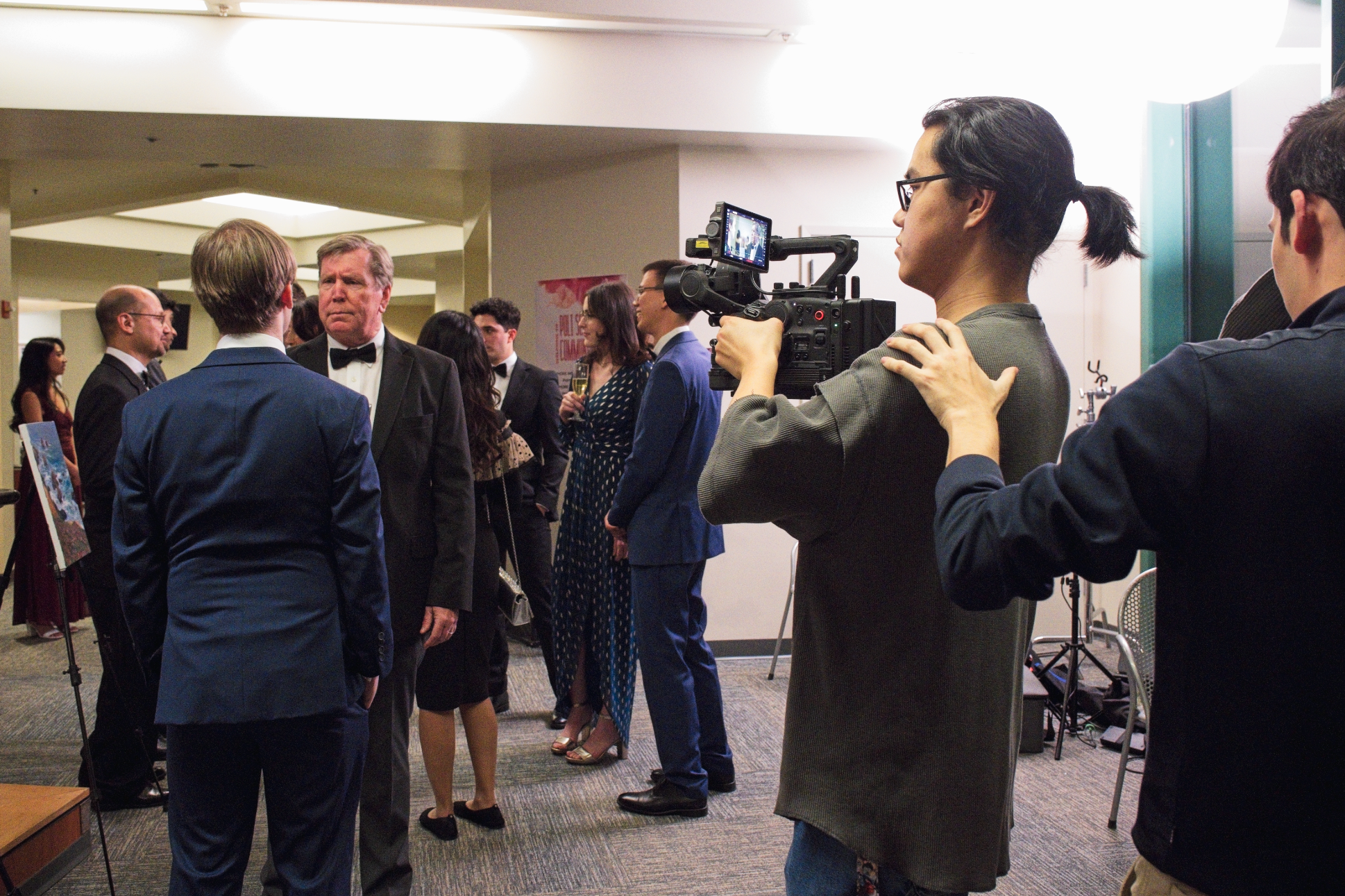
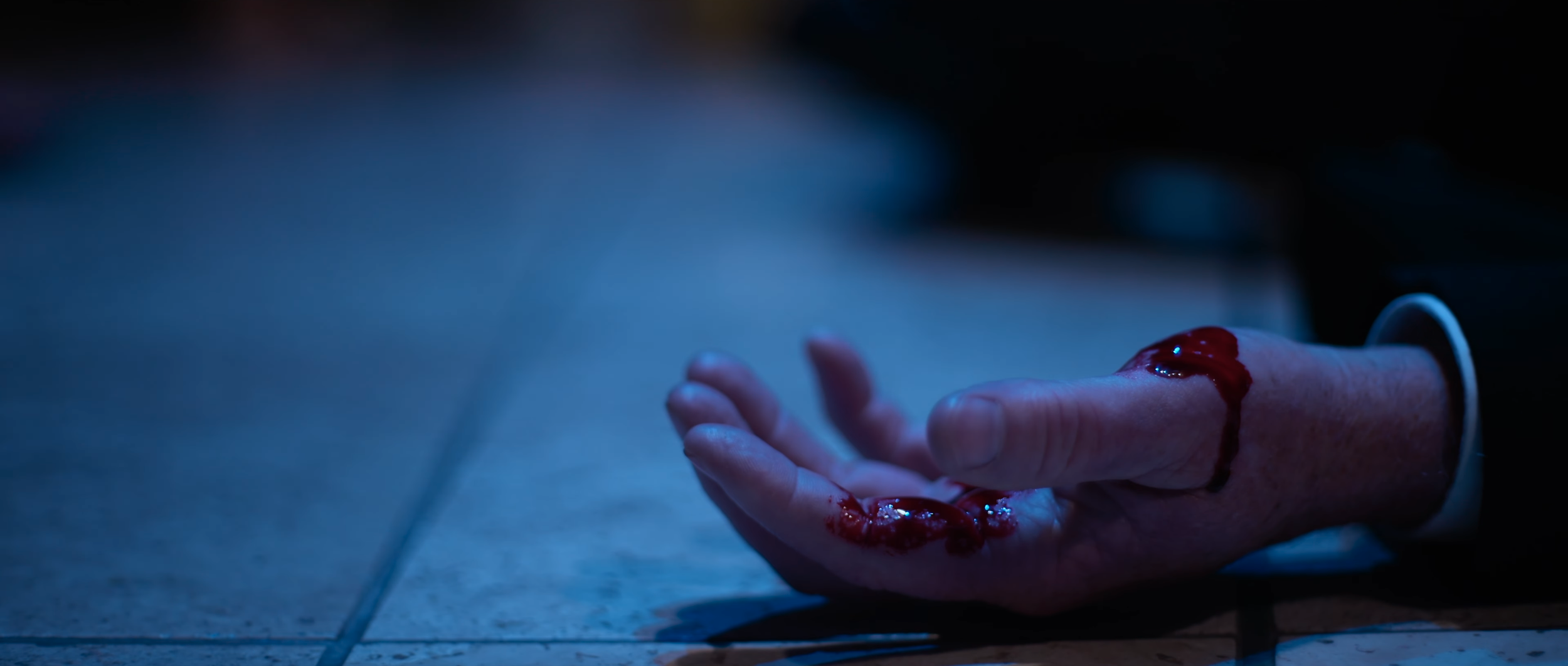
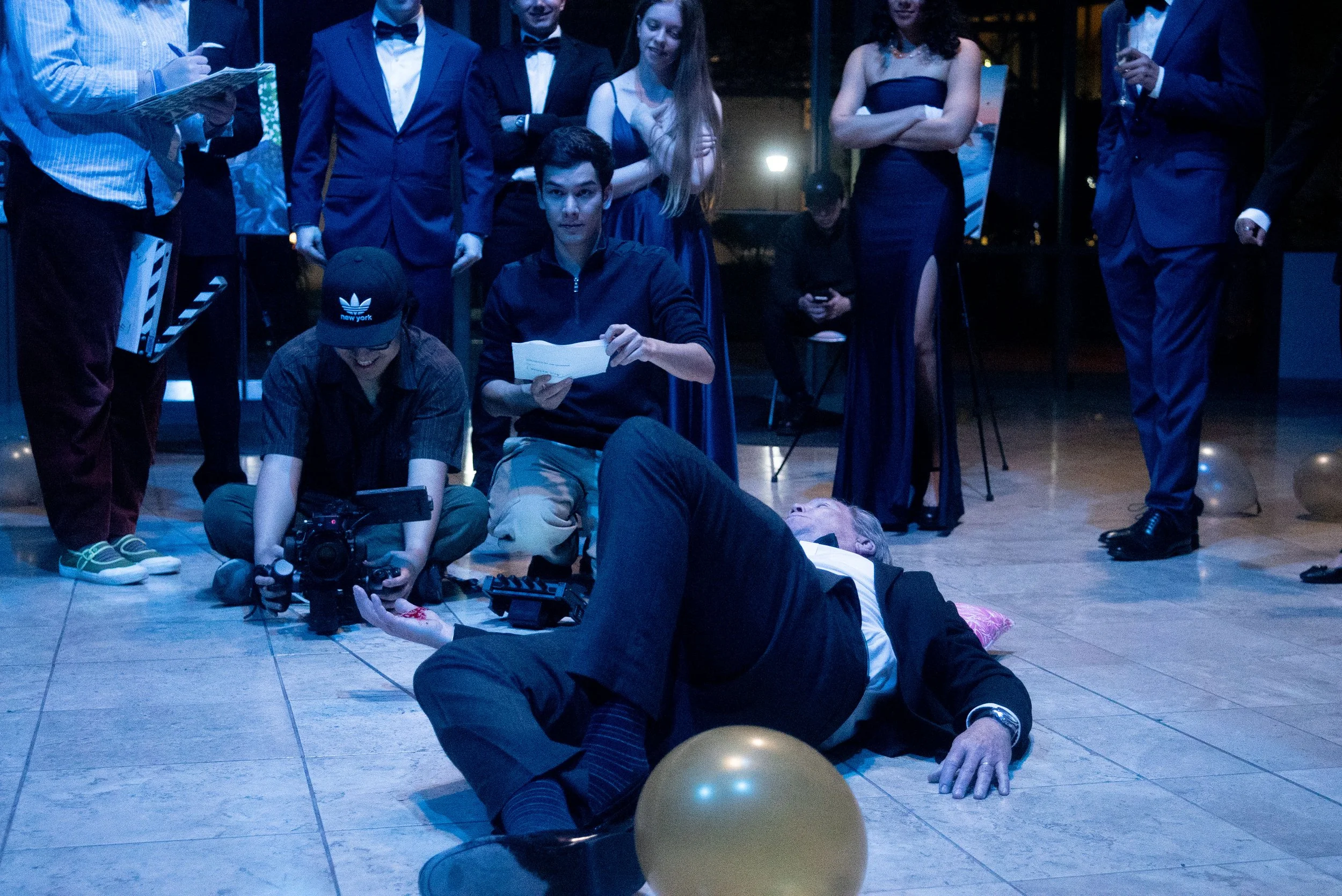
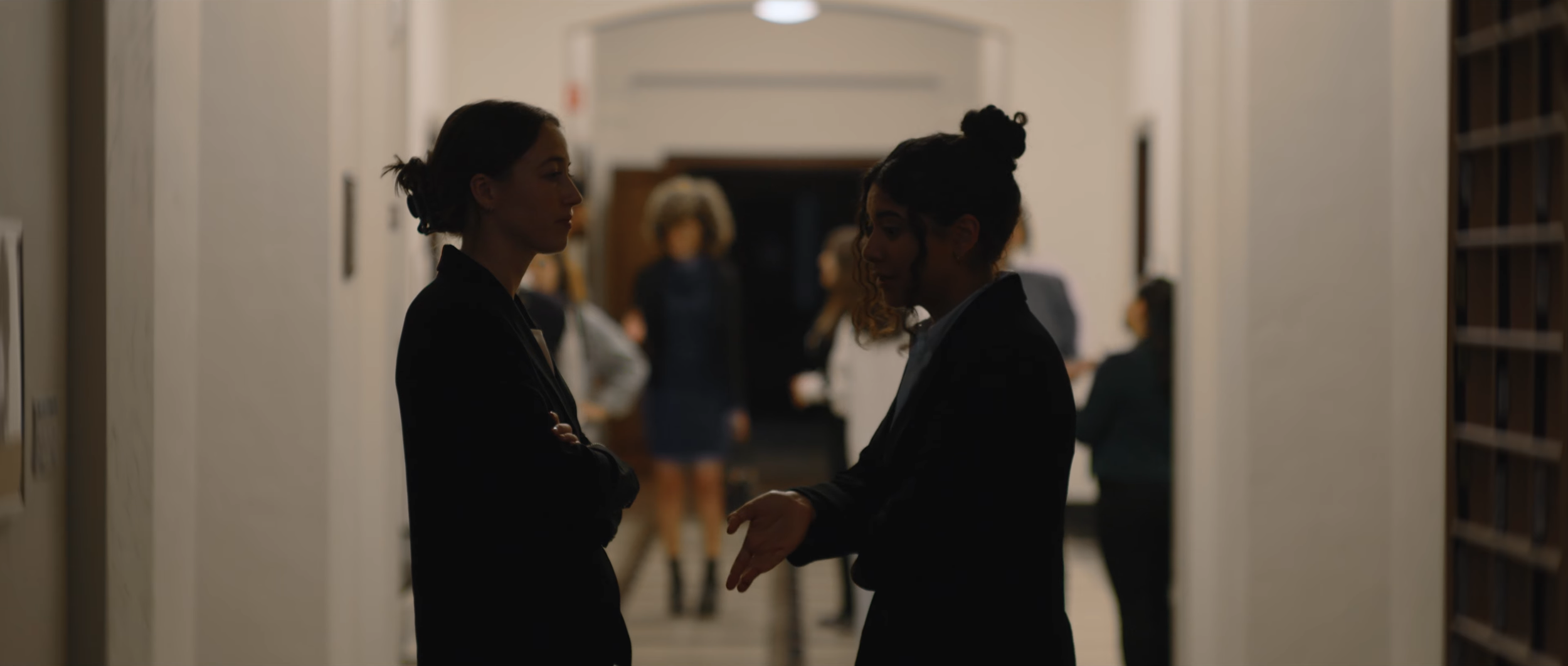
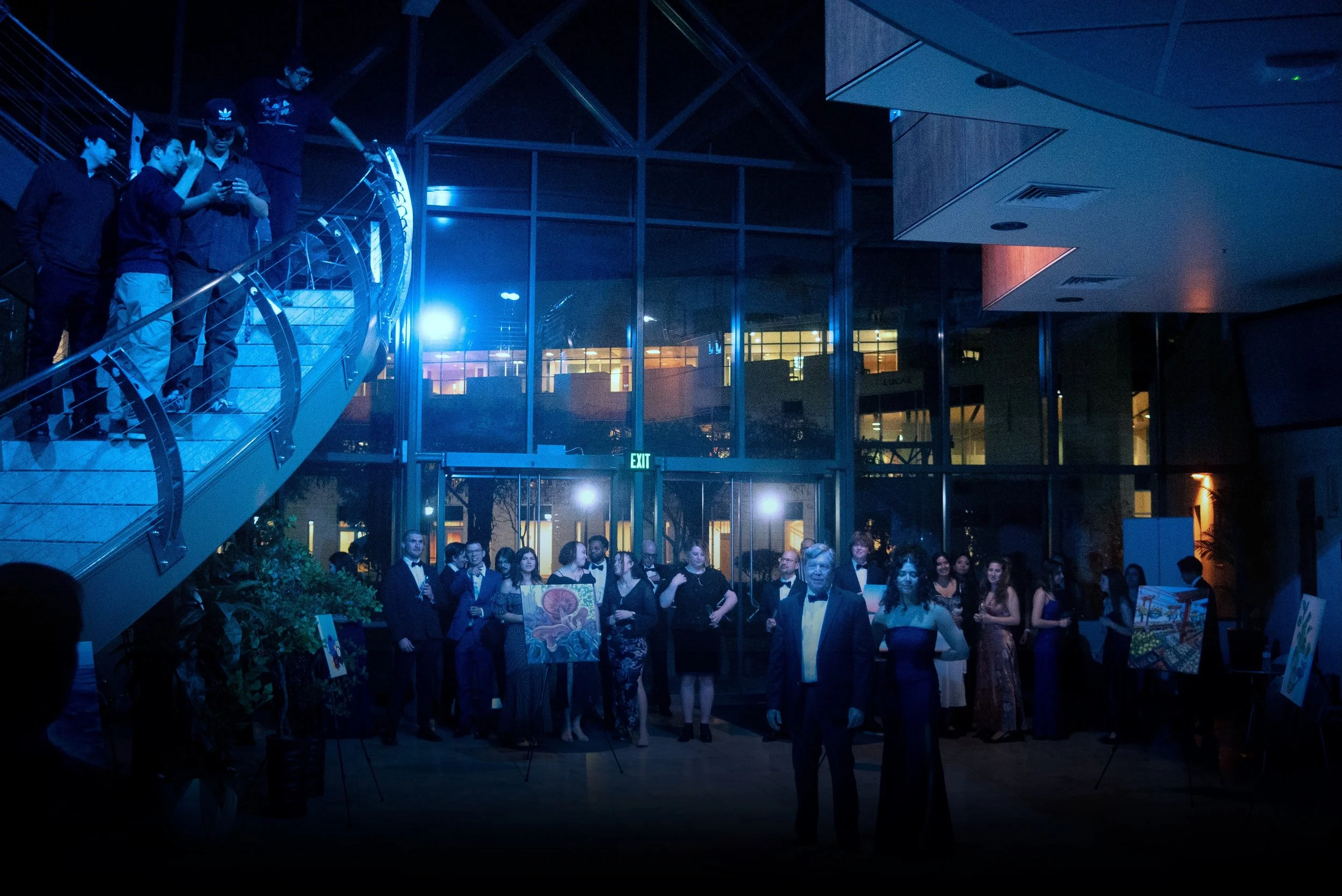
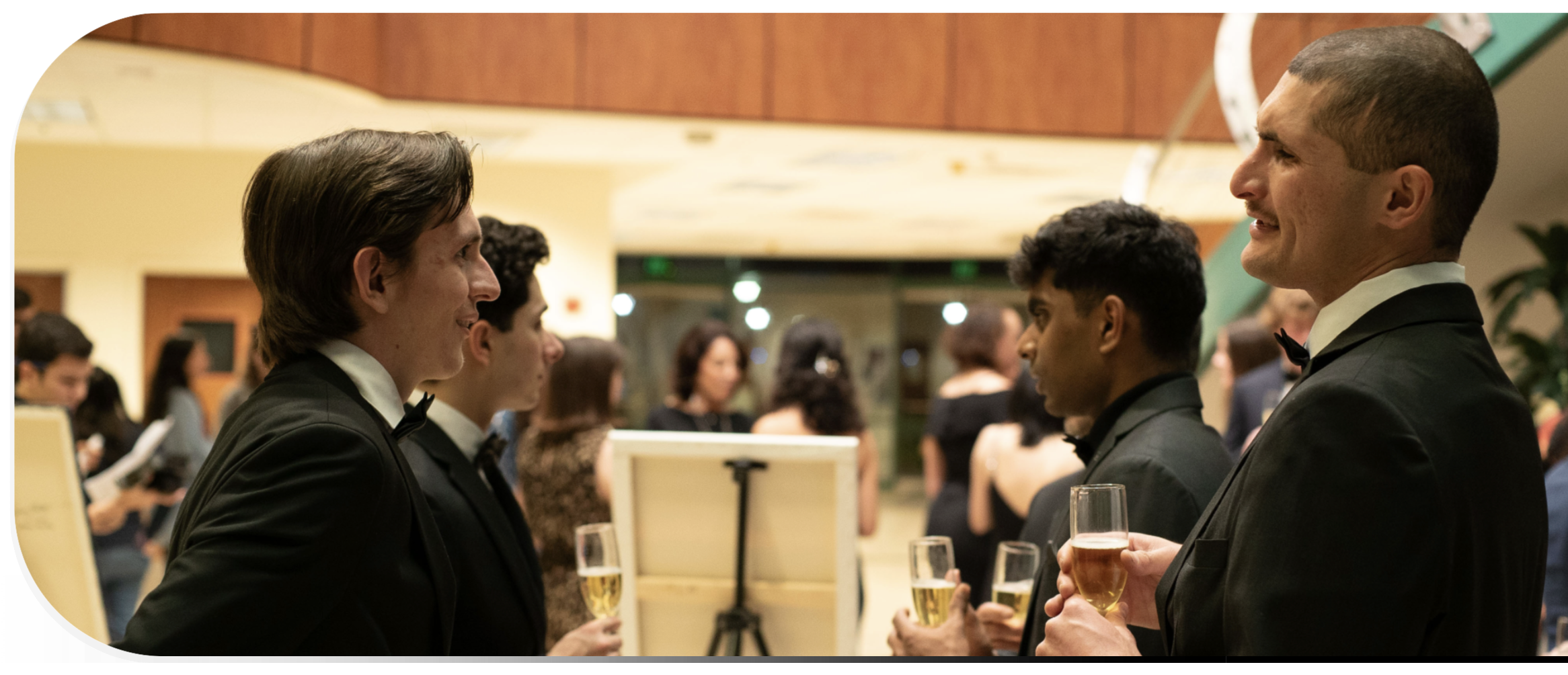
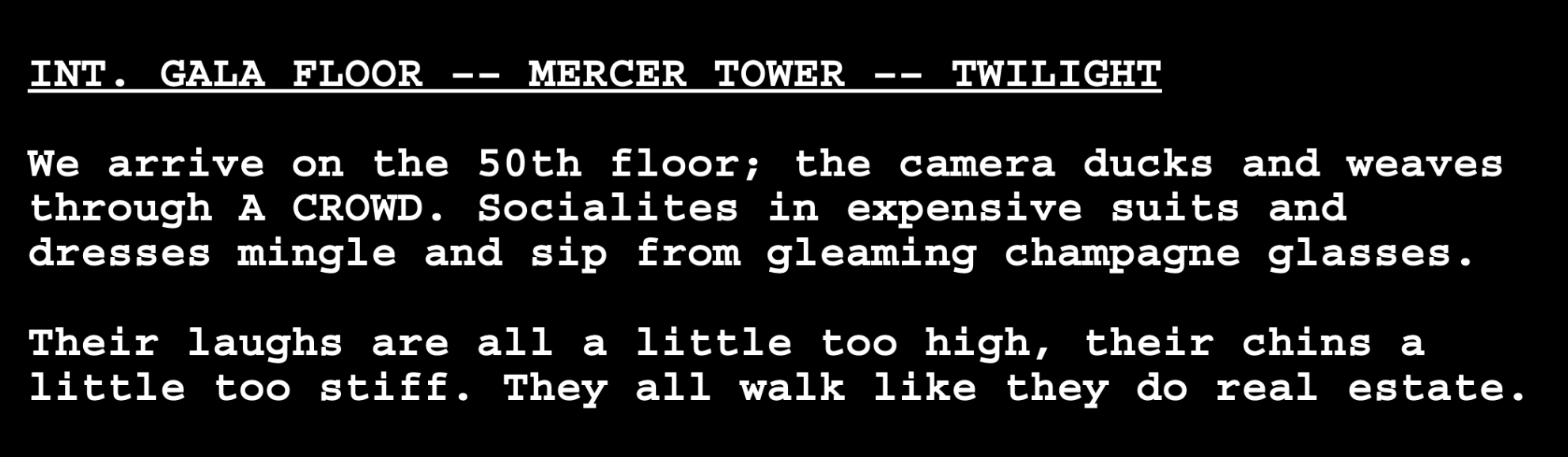
The lobby of Vari Hall — another academic building on campus — served as the atrium on the 50th floor of Mercer Tower, the scene of Jim McGraw’s murder on New Year’s Eve.
Our team was lucky to work with building management staff and university facilities to control the lighting in the atrium, giving our team unprecedented authority over framing, lighting, and scenery.
The gala
Weekly progress recap videos
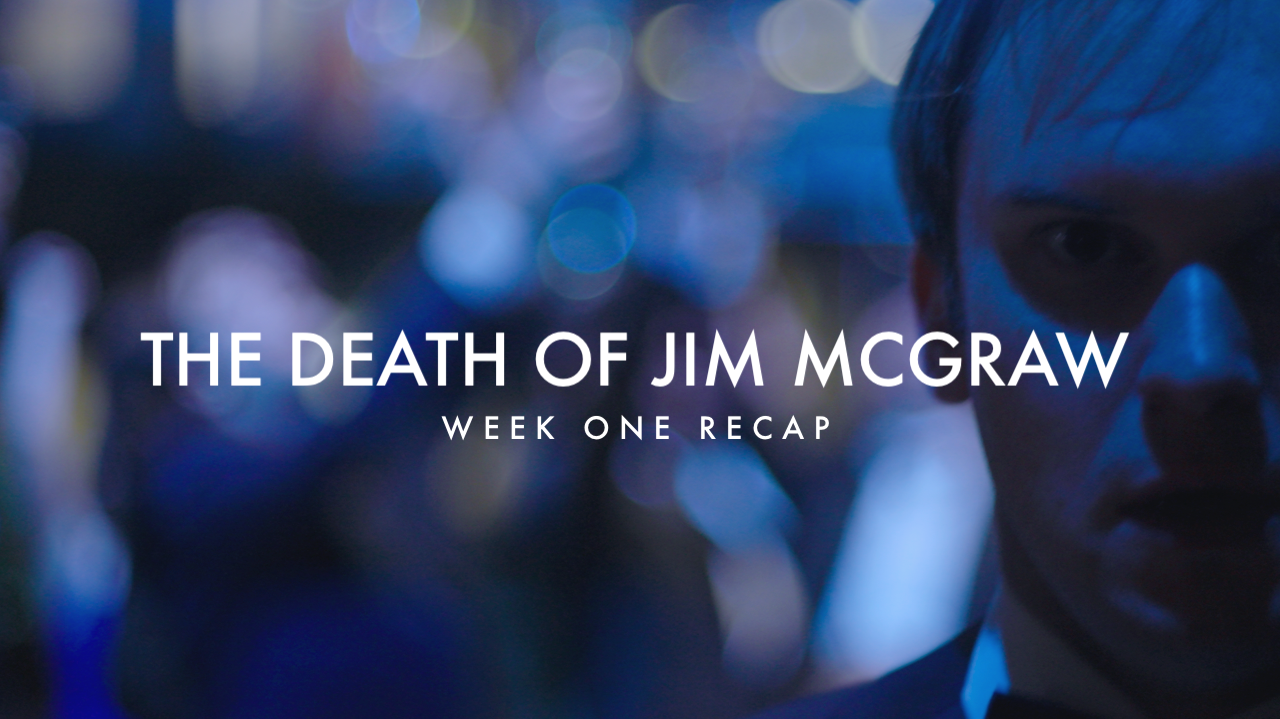
Made during production, these recaps summarized each week’s progress.
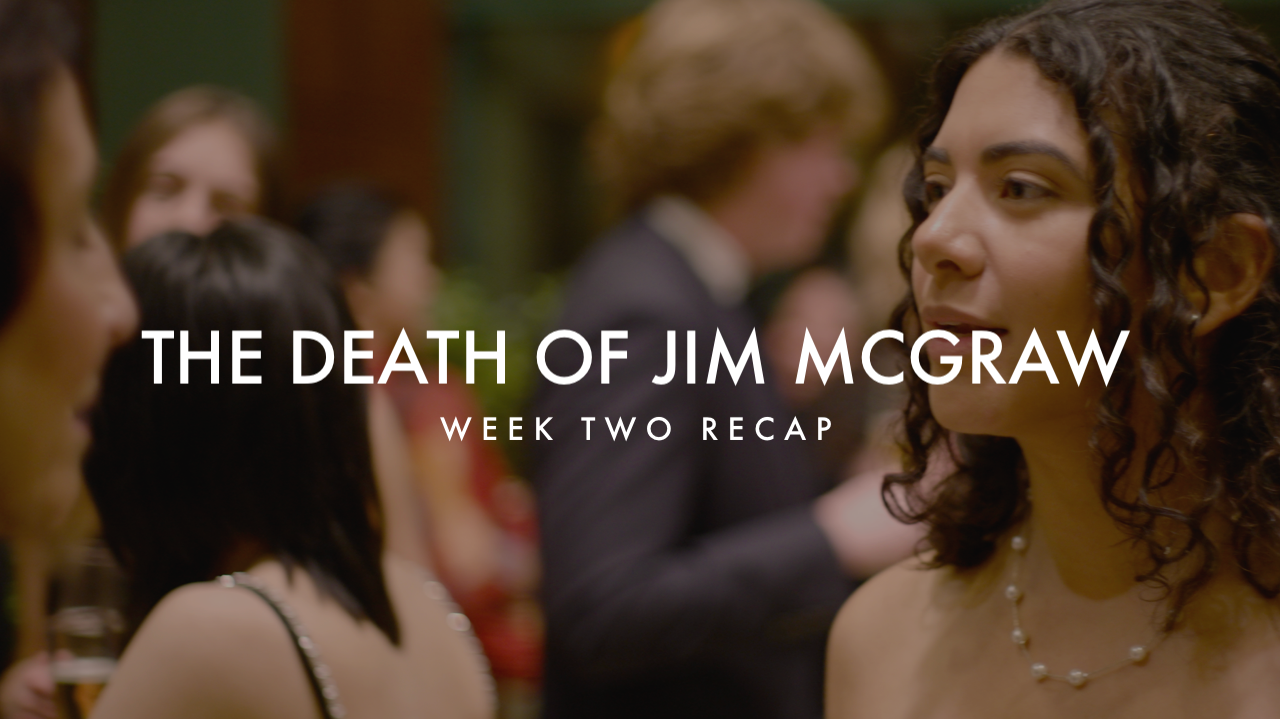
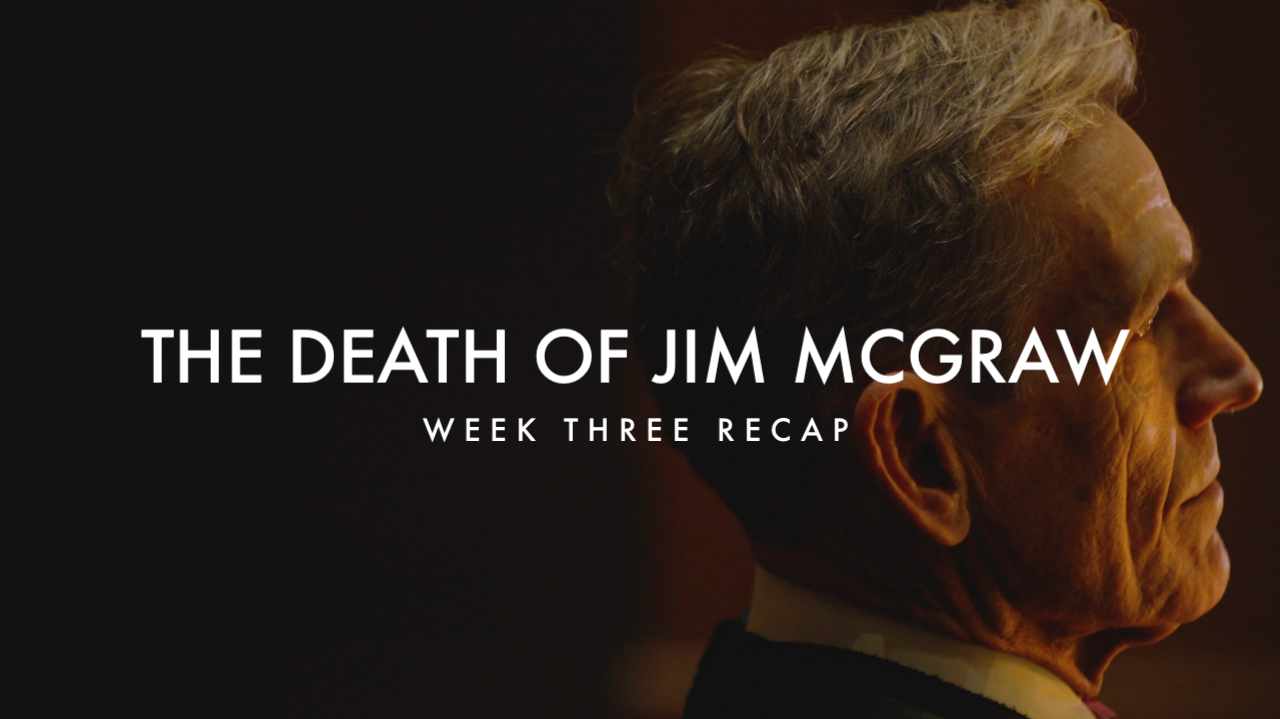
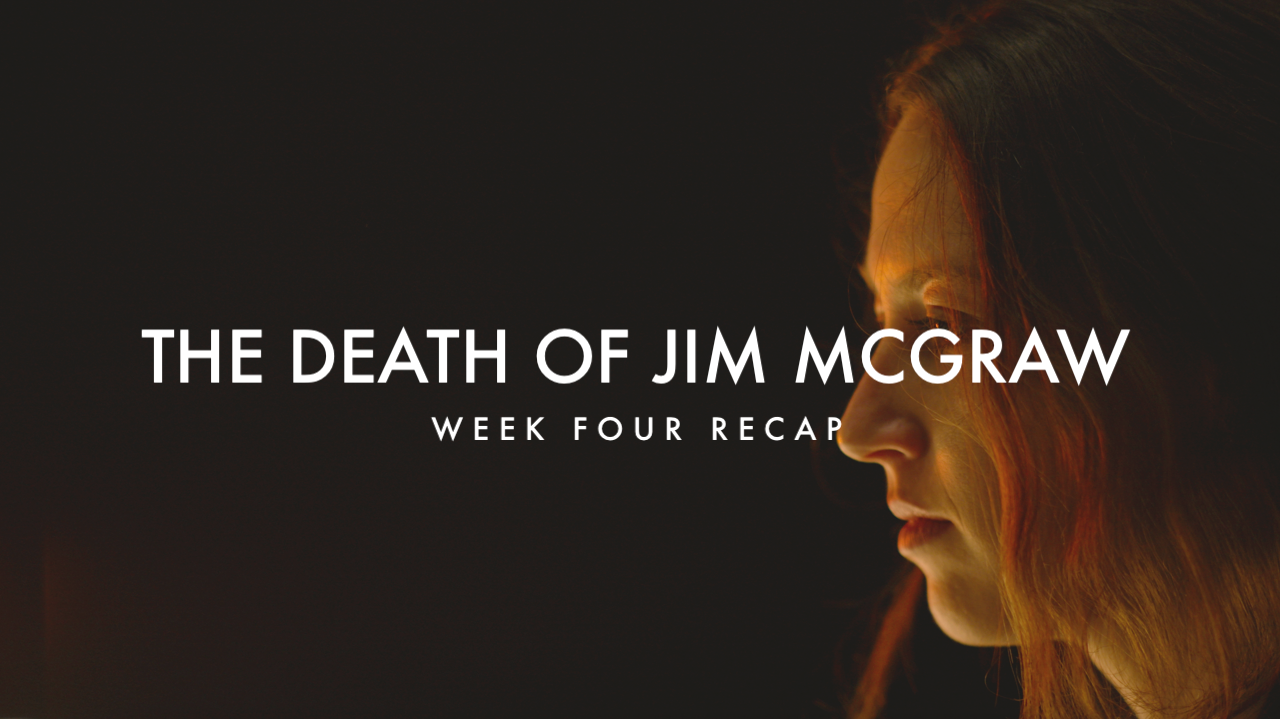
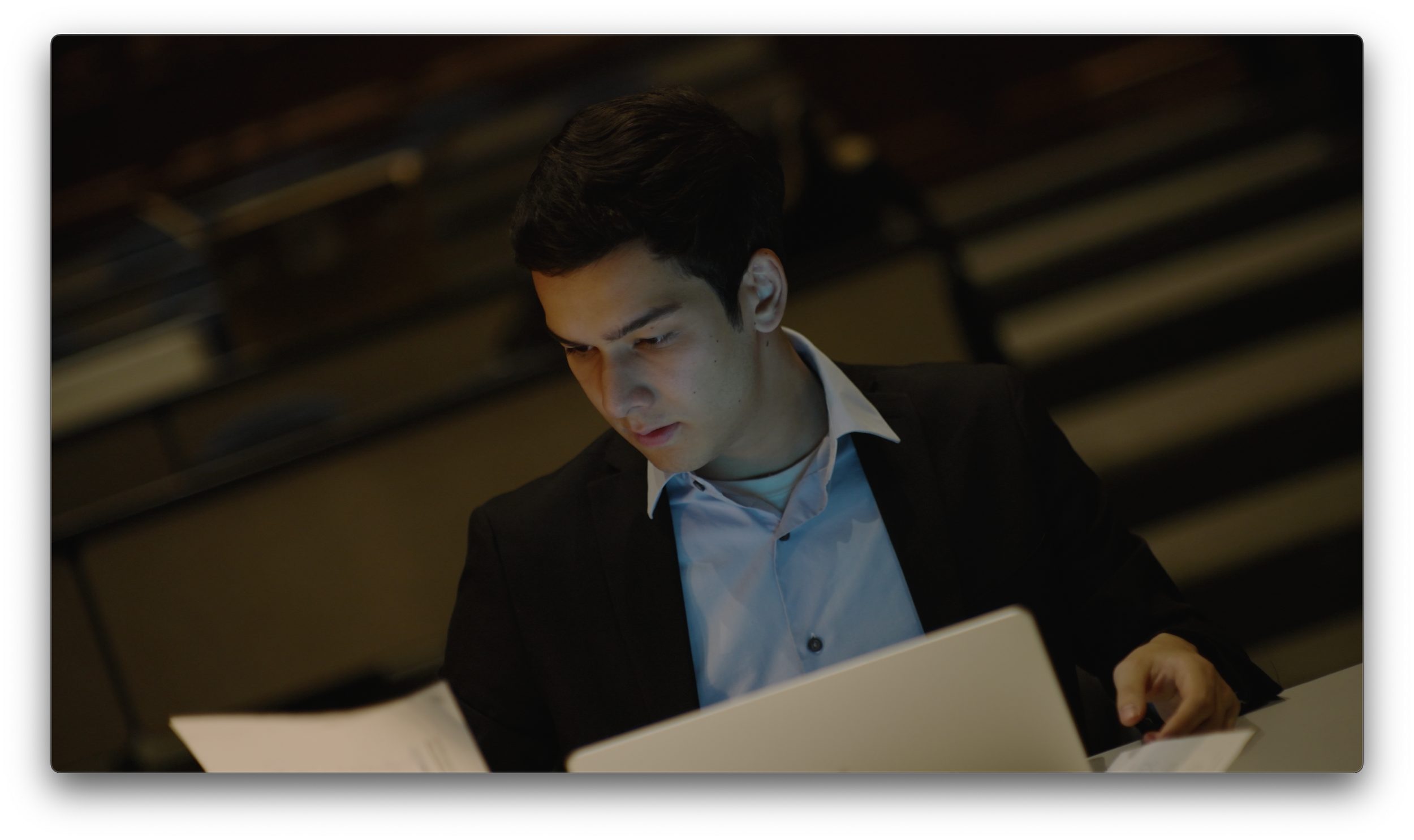
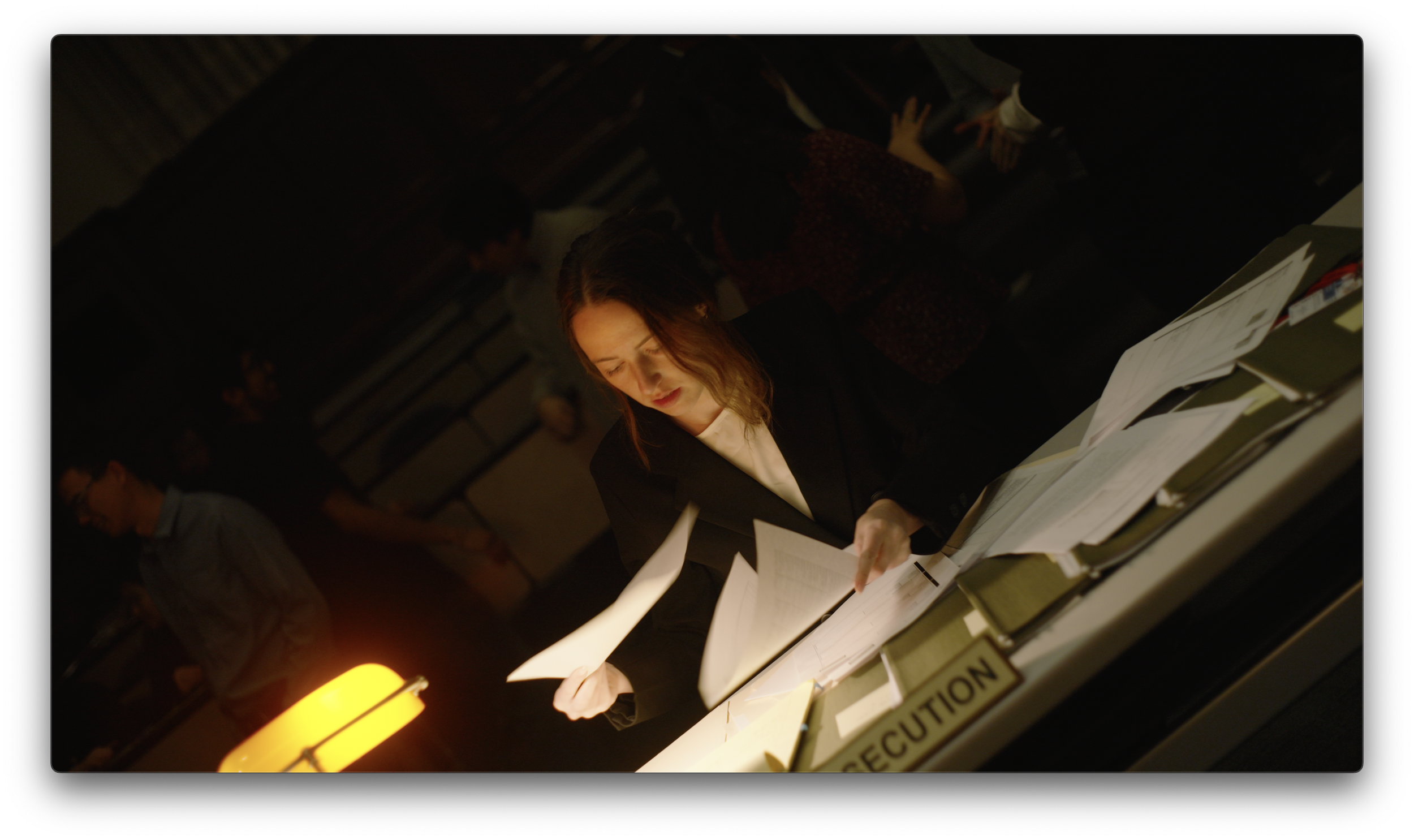
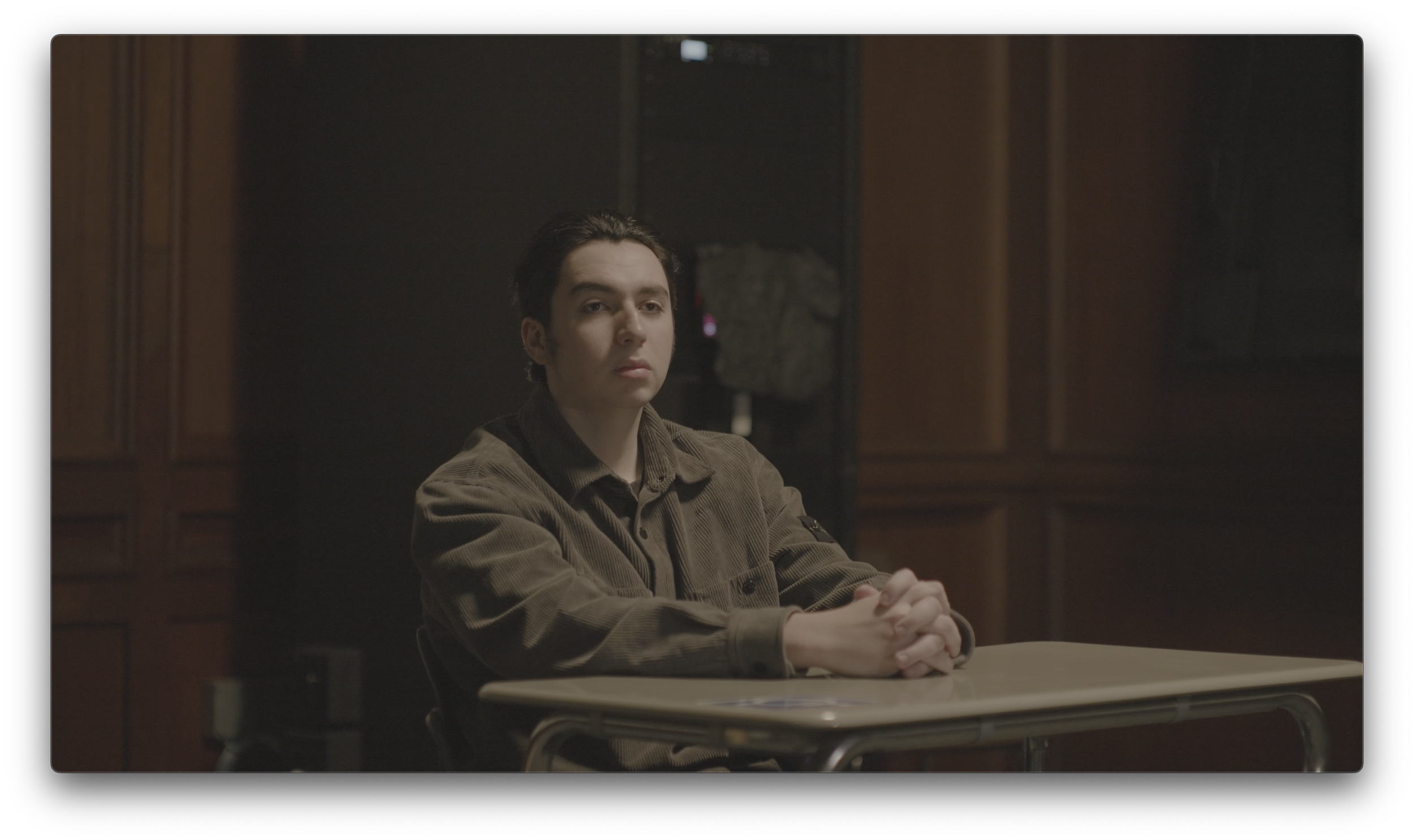
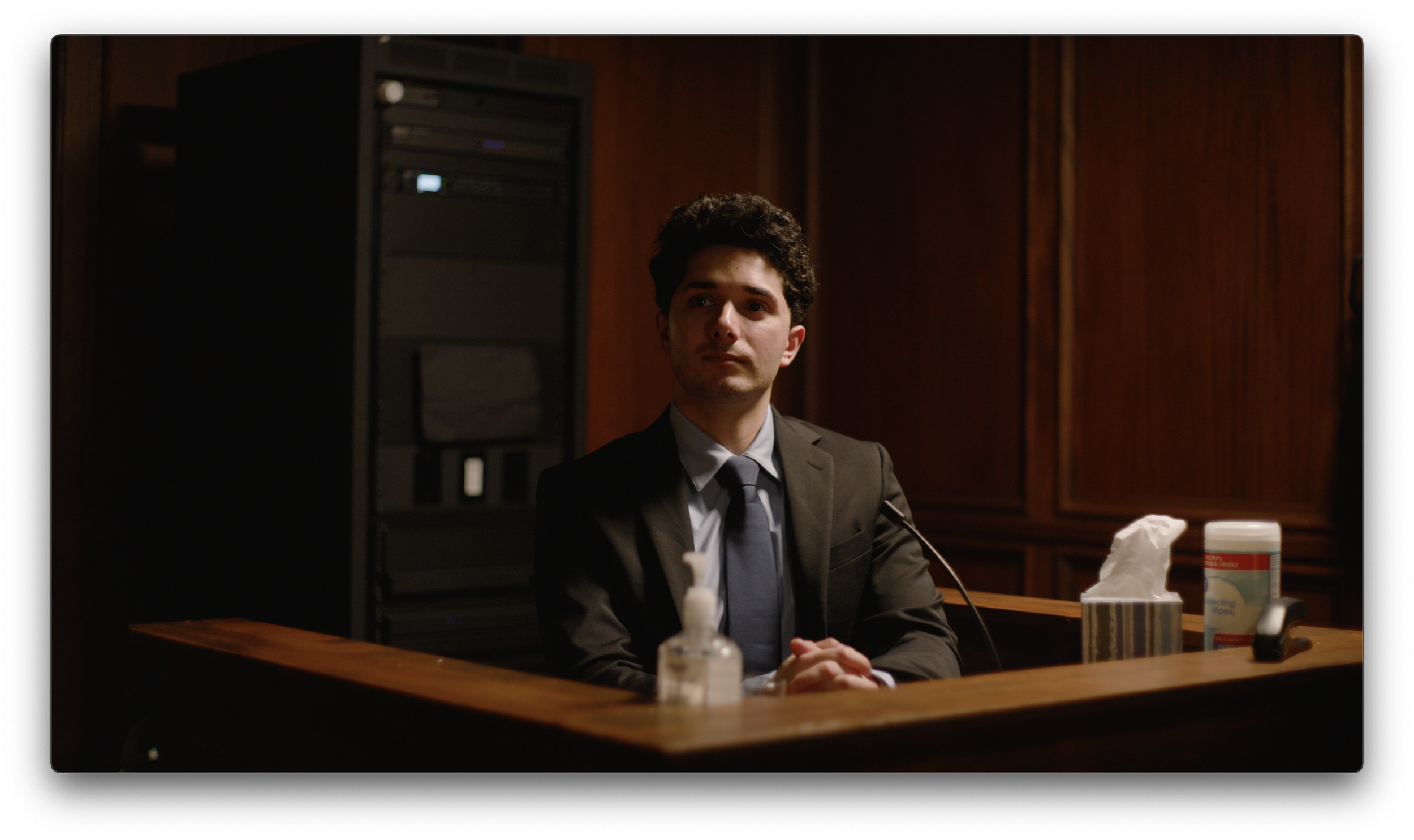
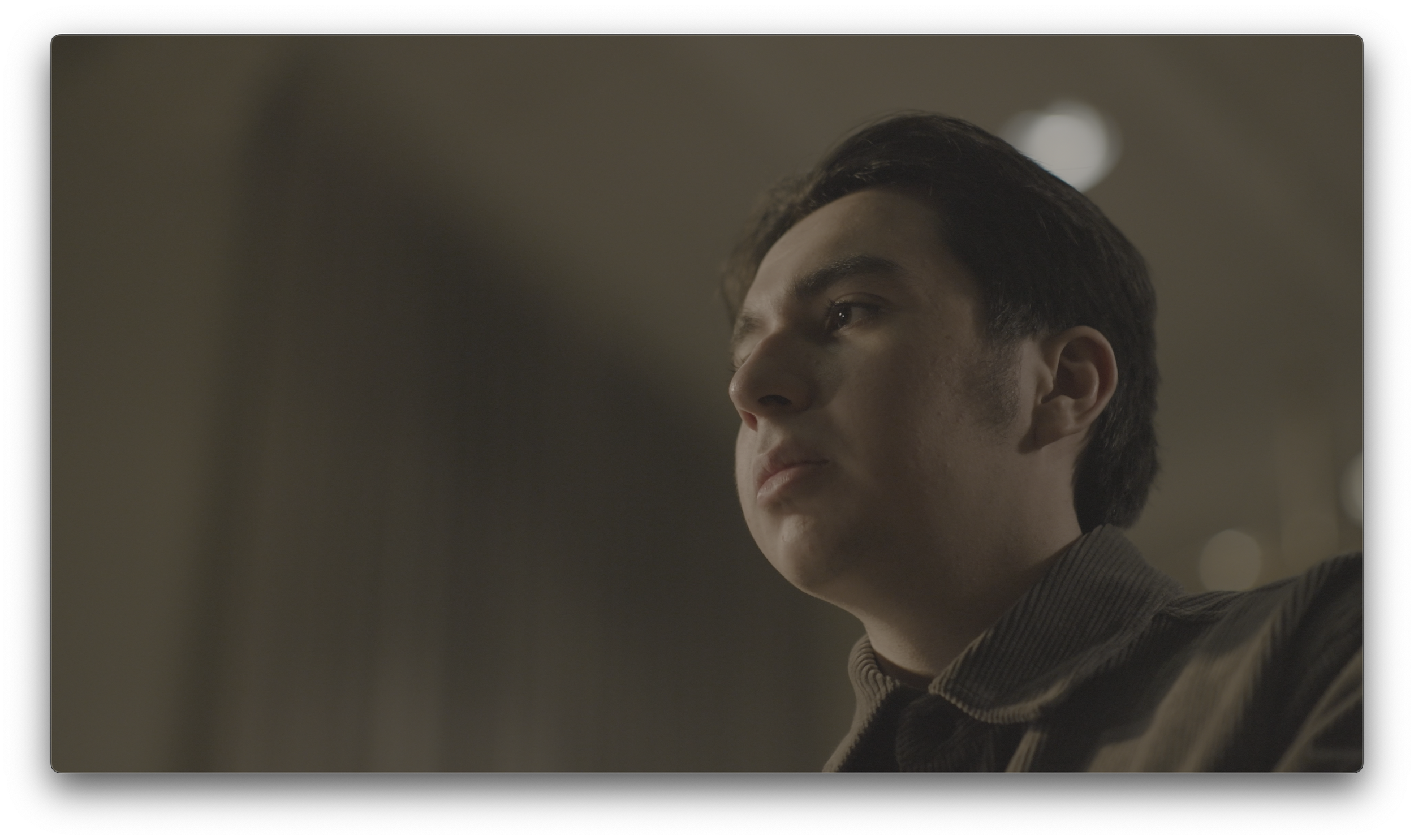
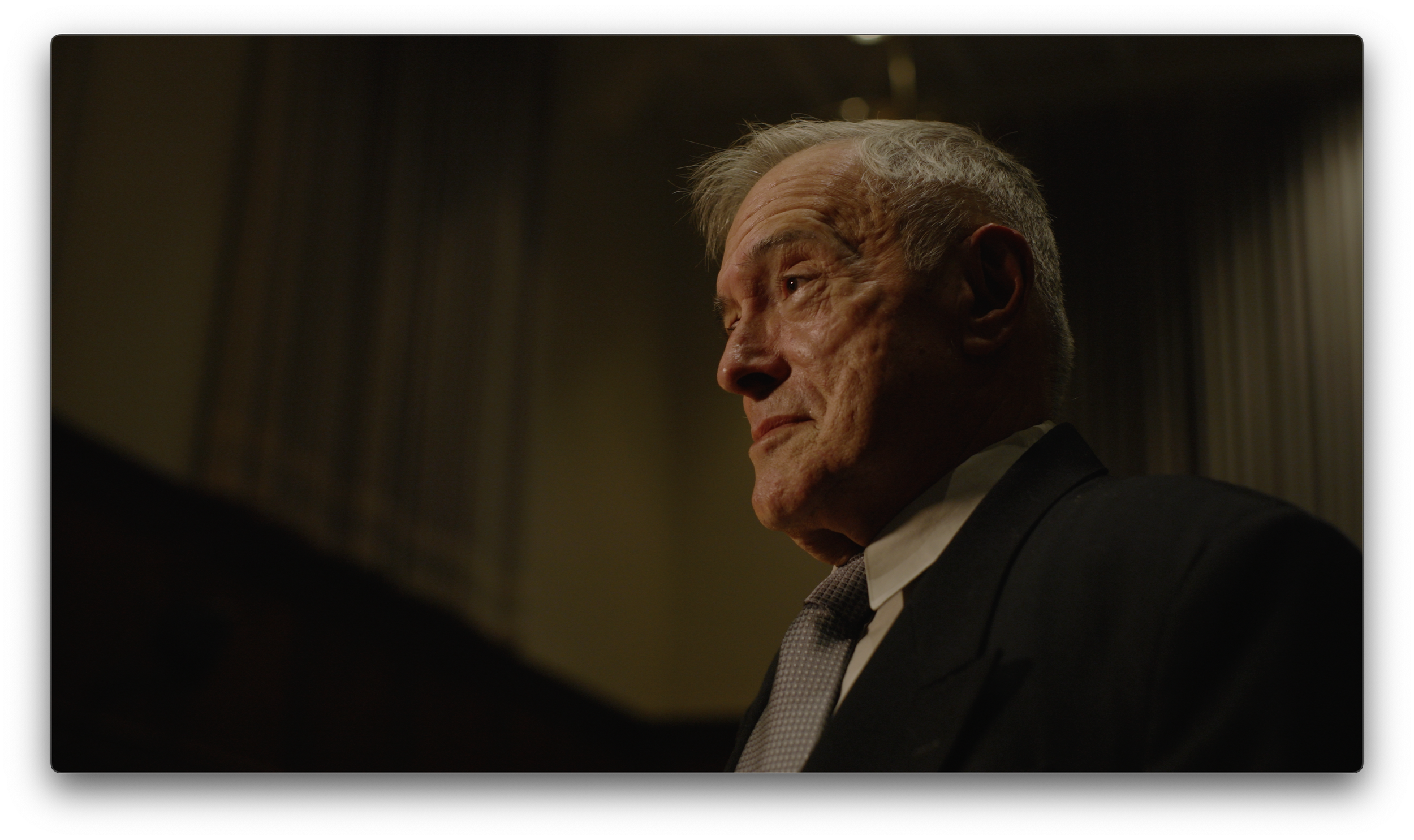
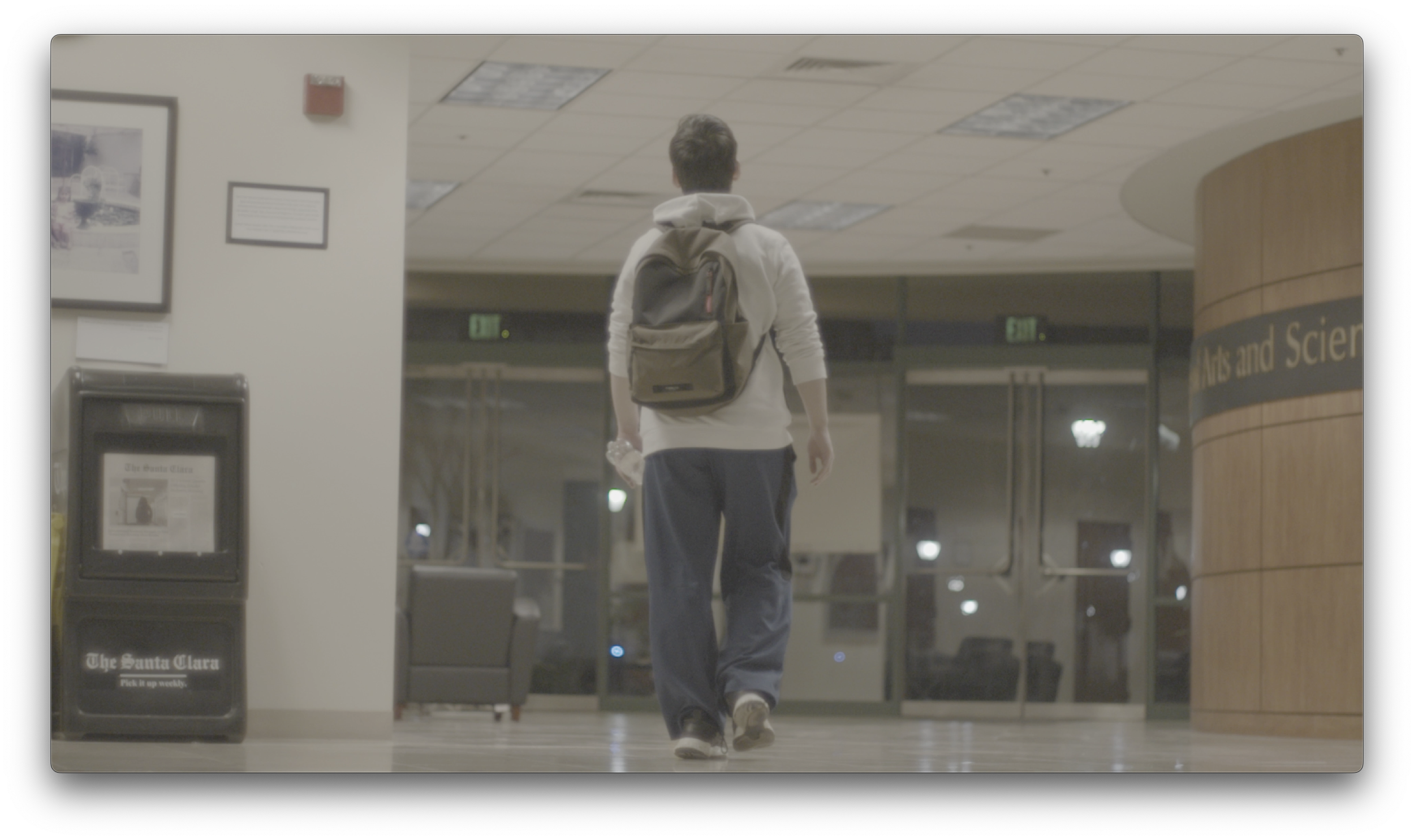
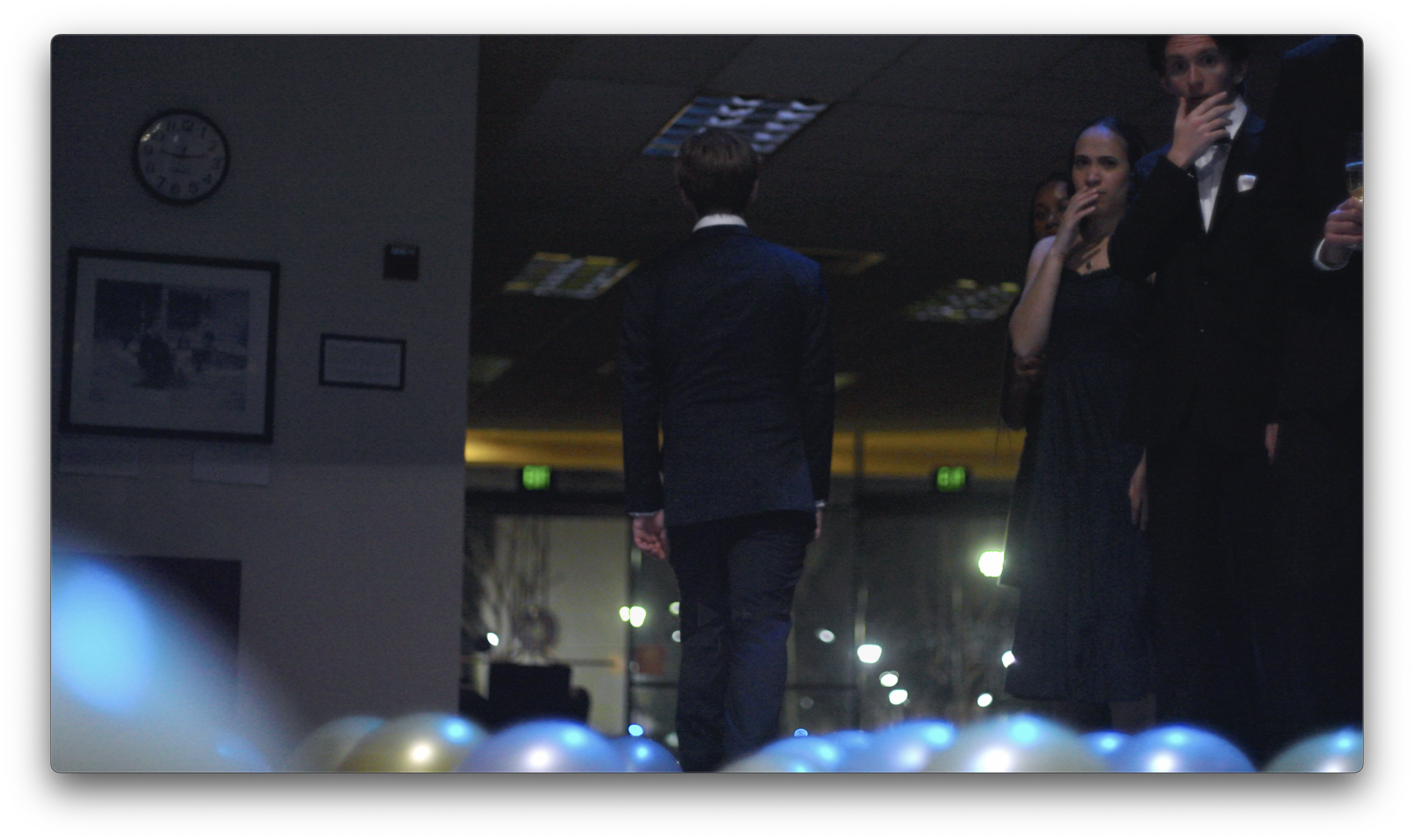
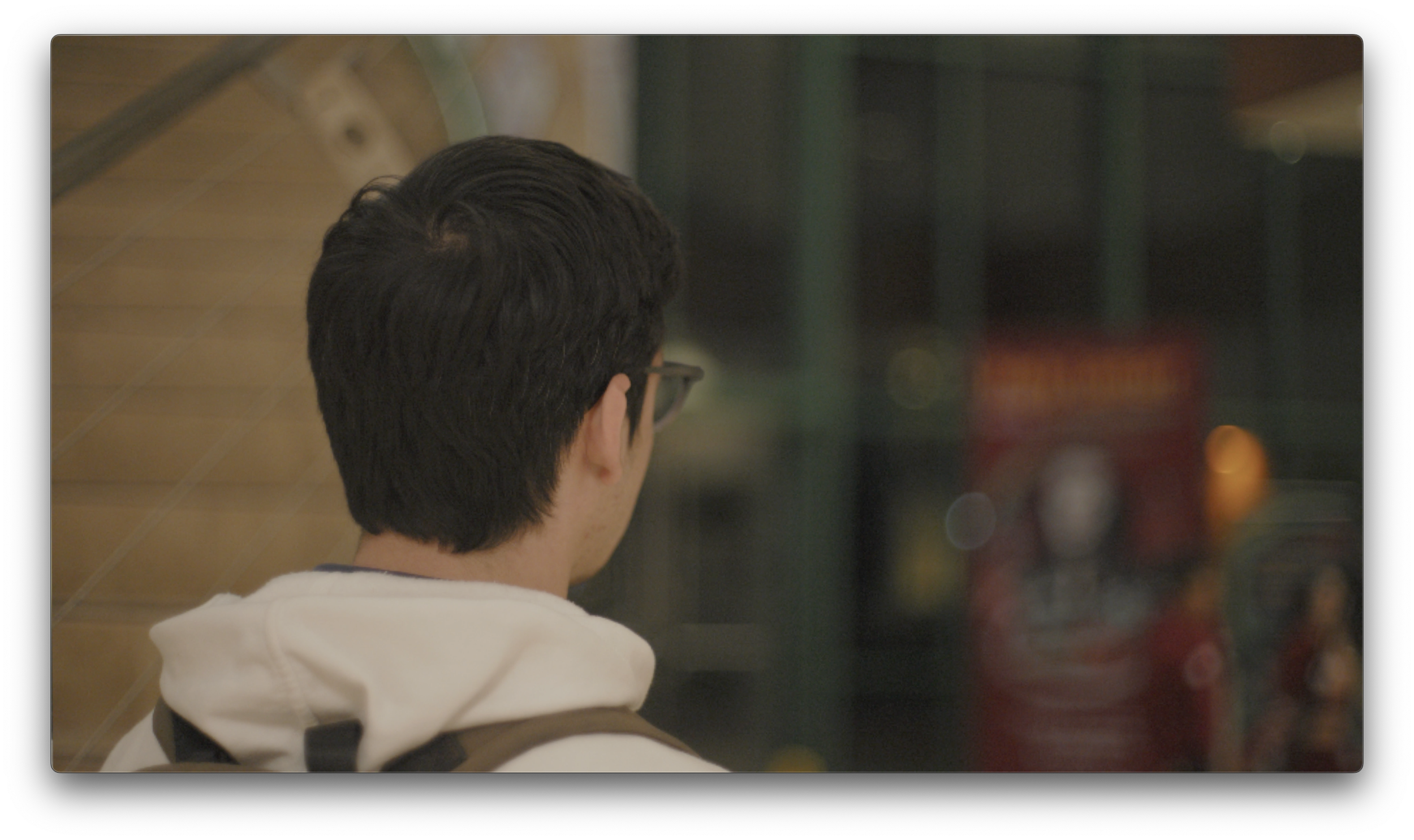
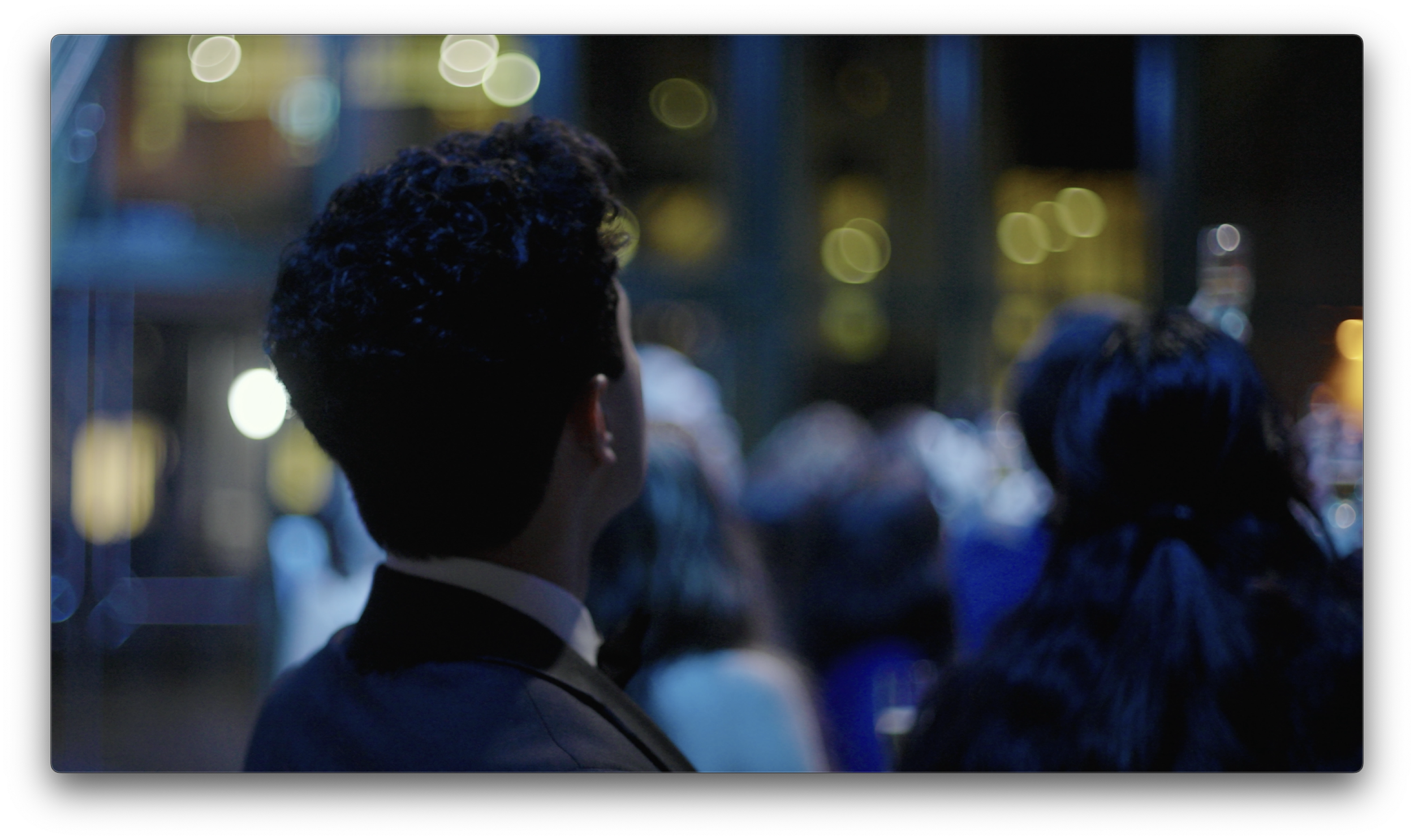
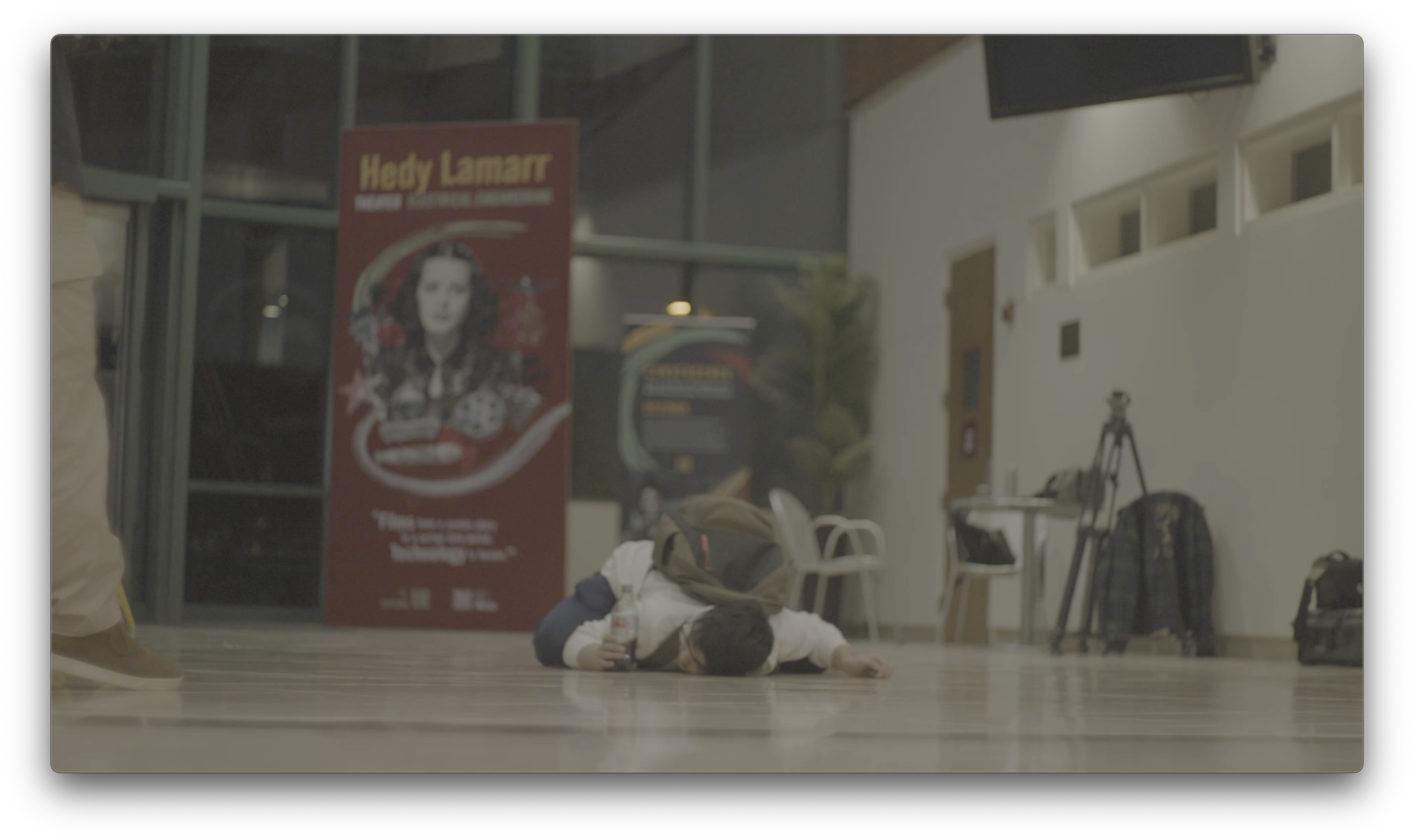
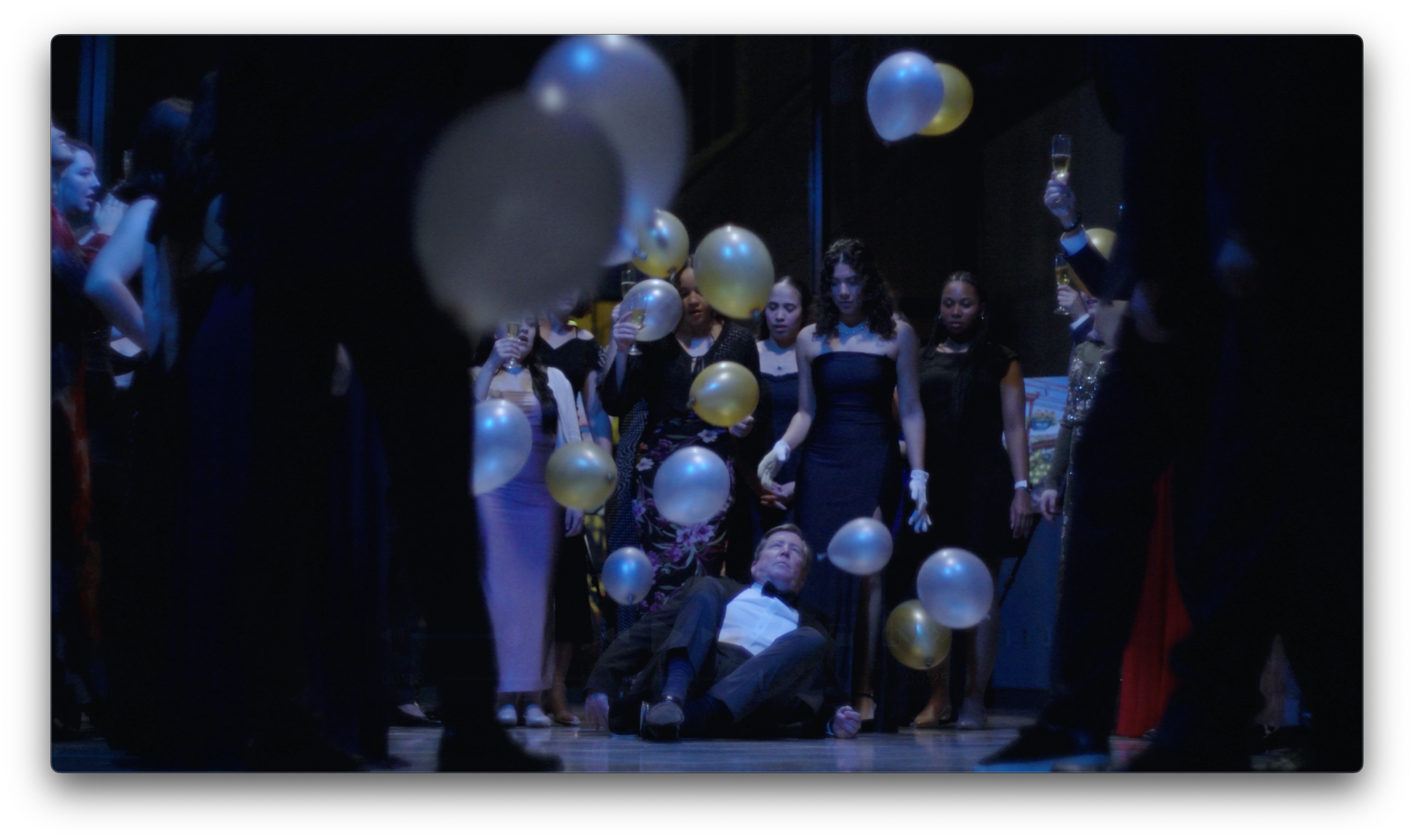
See the execution of some of our final shots, framed in comparison to the pre-production stand-in versions of the same shots.
From dev shot to final shot
Our gala art
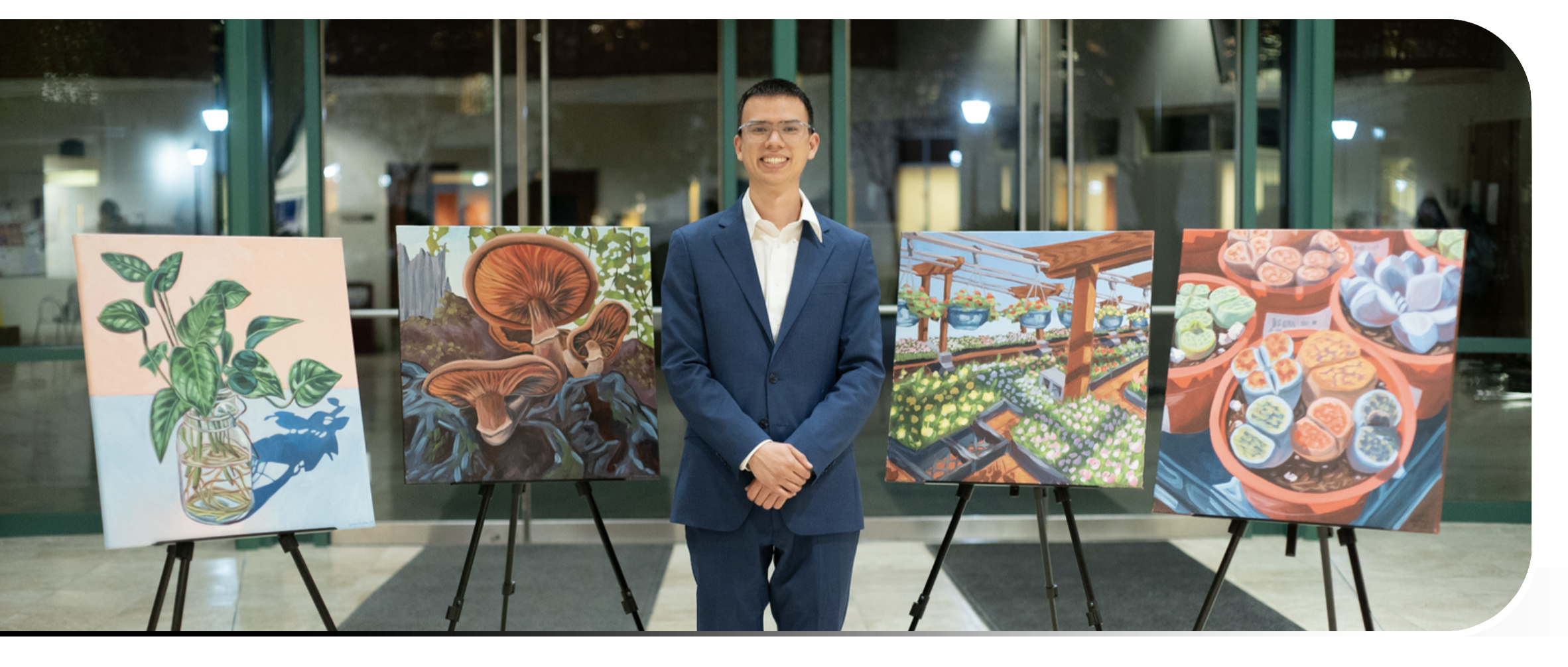
Our team was lucky to collaborate with local and student artists to feature their artwork at our gala set.
Thank you to our friends at the SCU Student Art League and to James Mertke! You can find their Instagram pages below:
@scu_artleague @painting_with_james
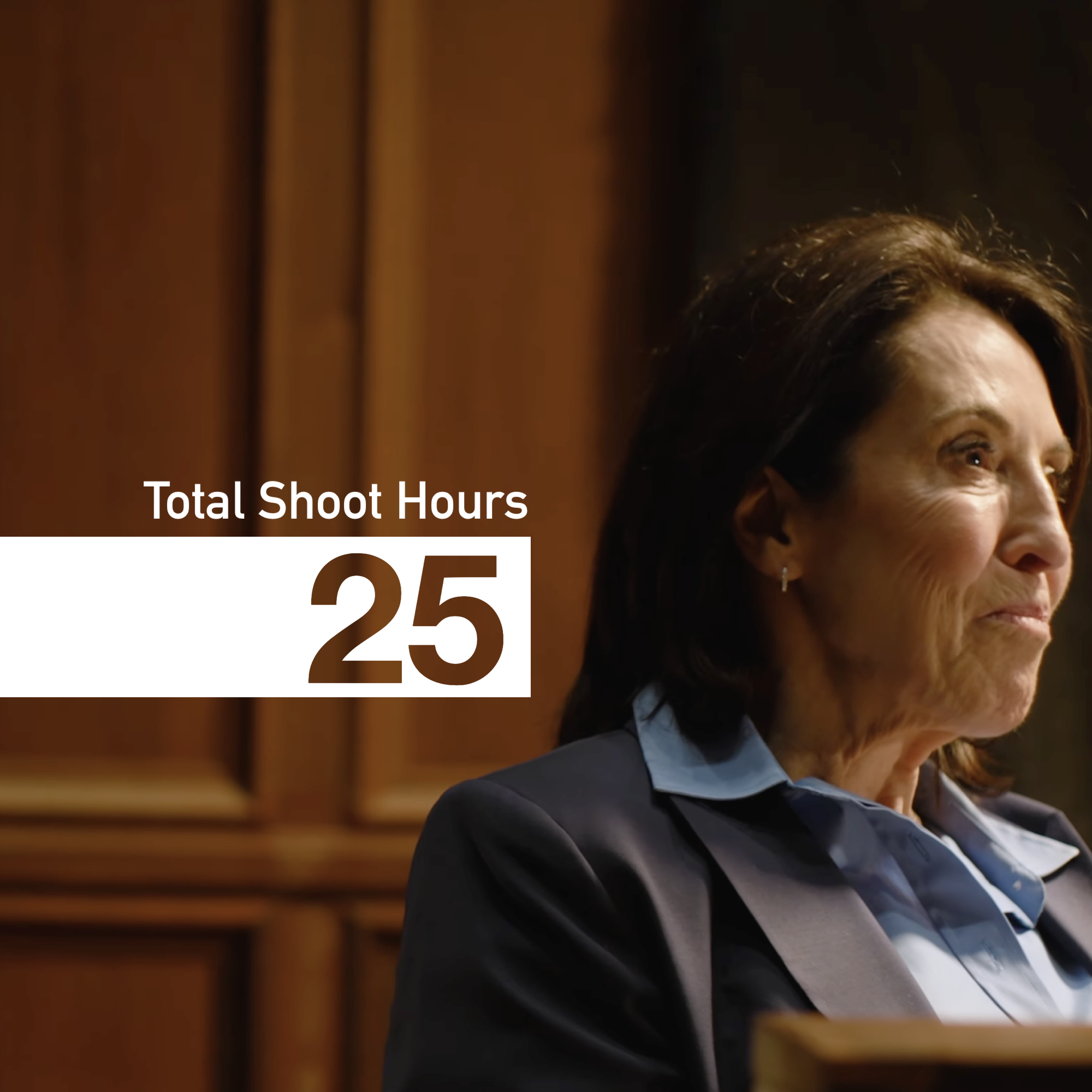
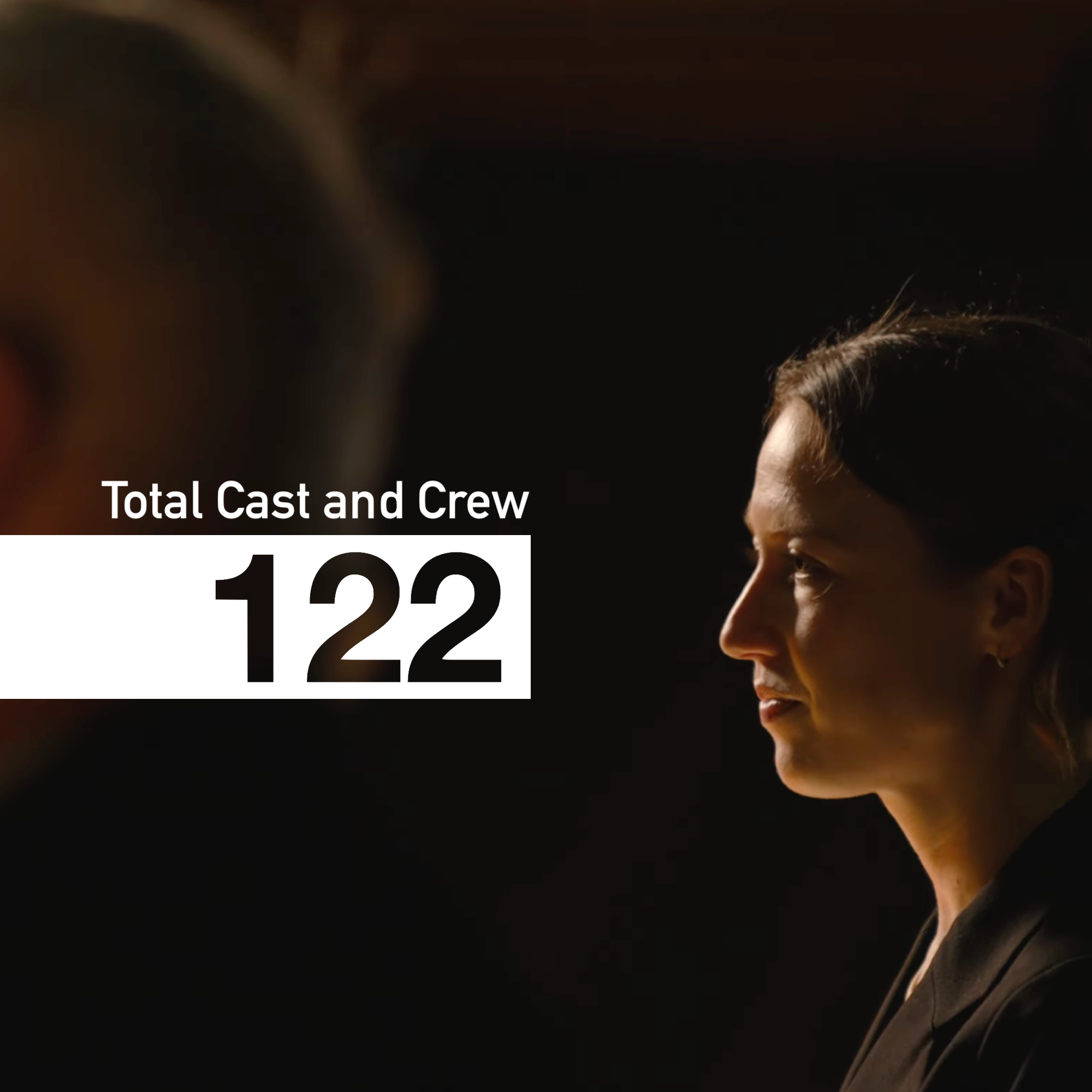
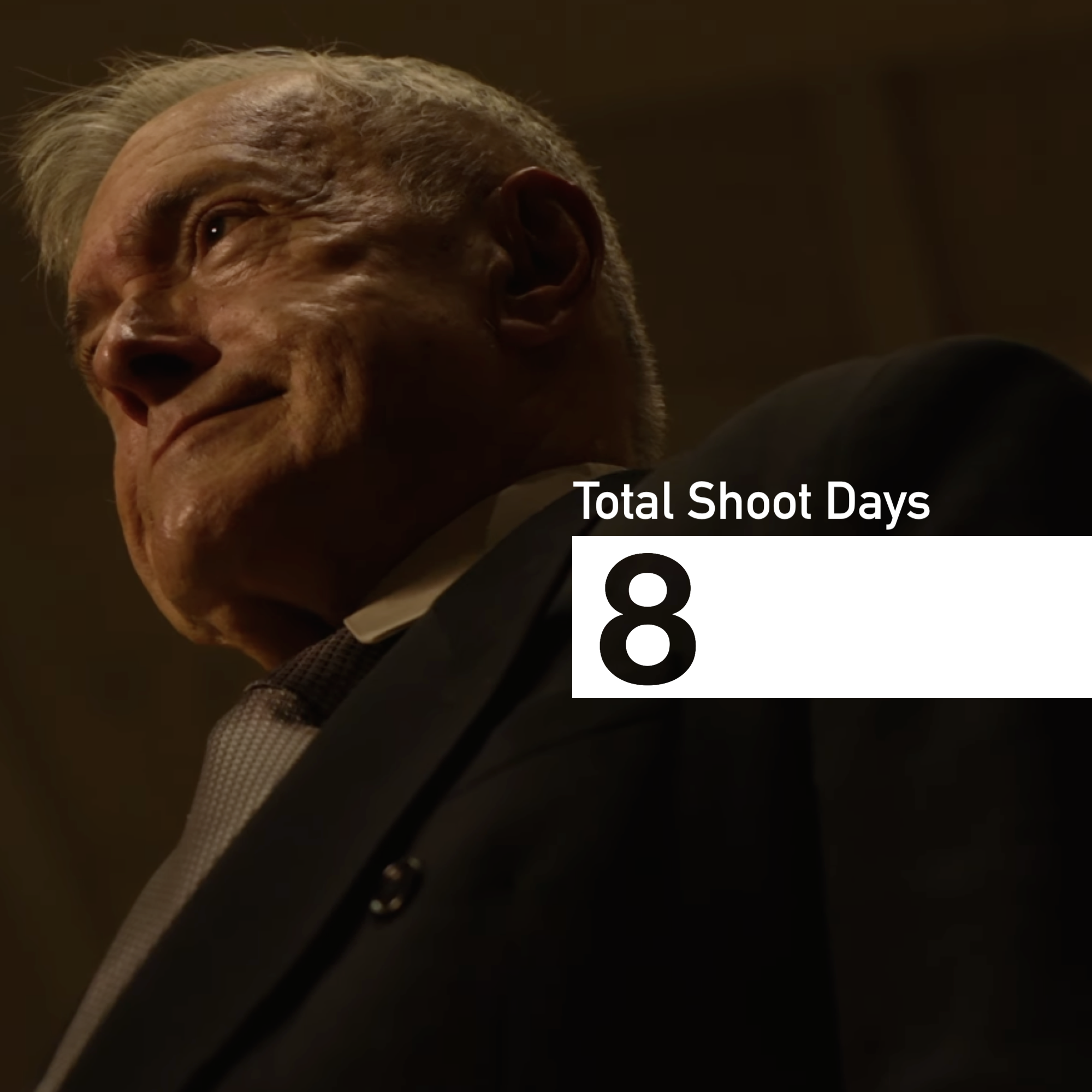
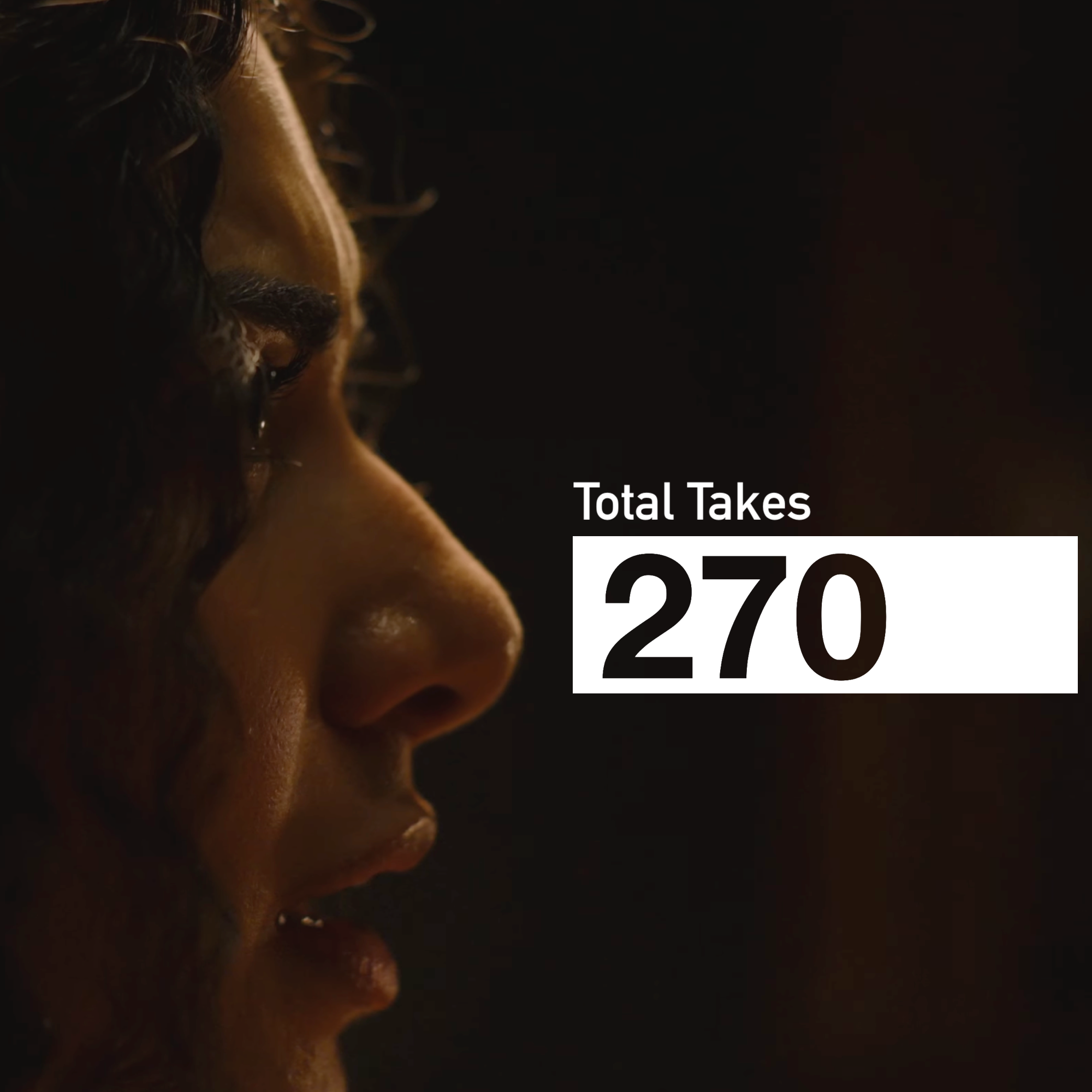
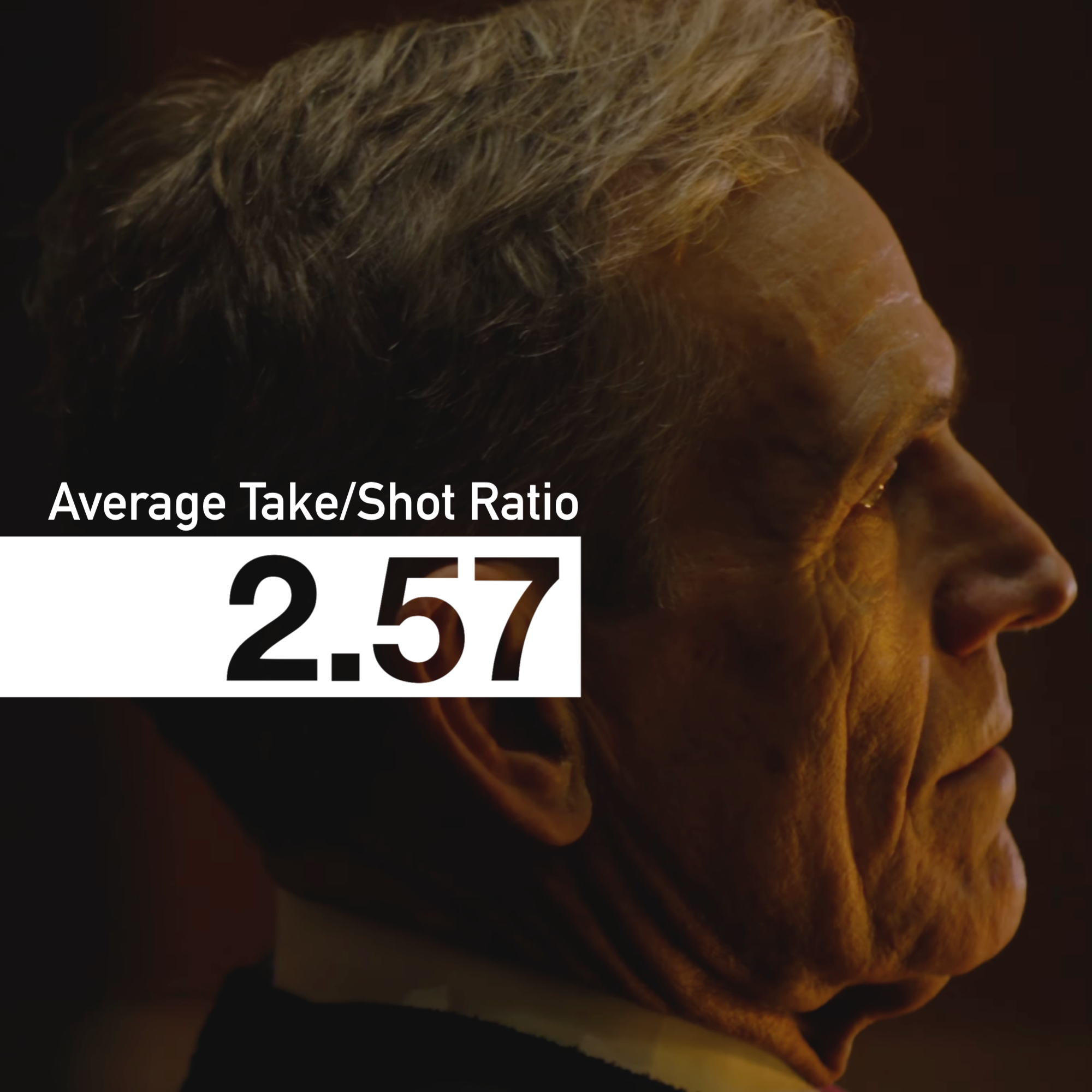
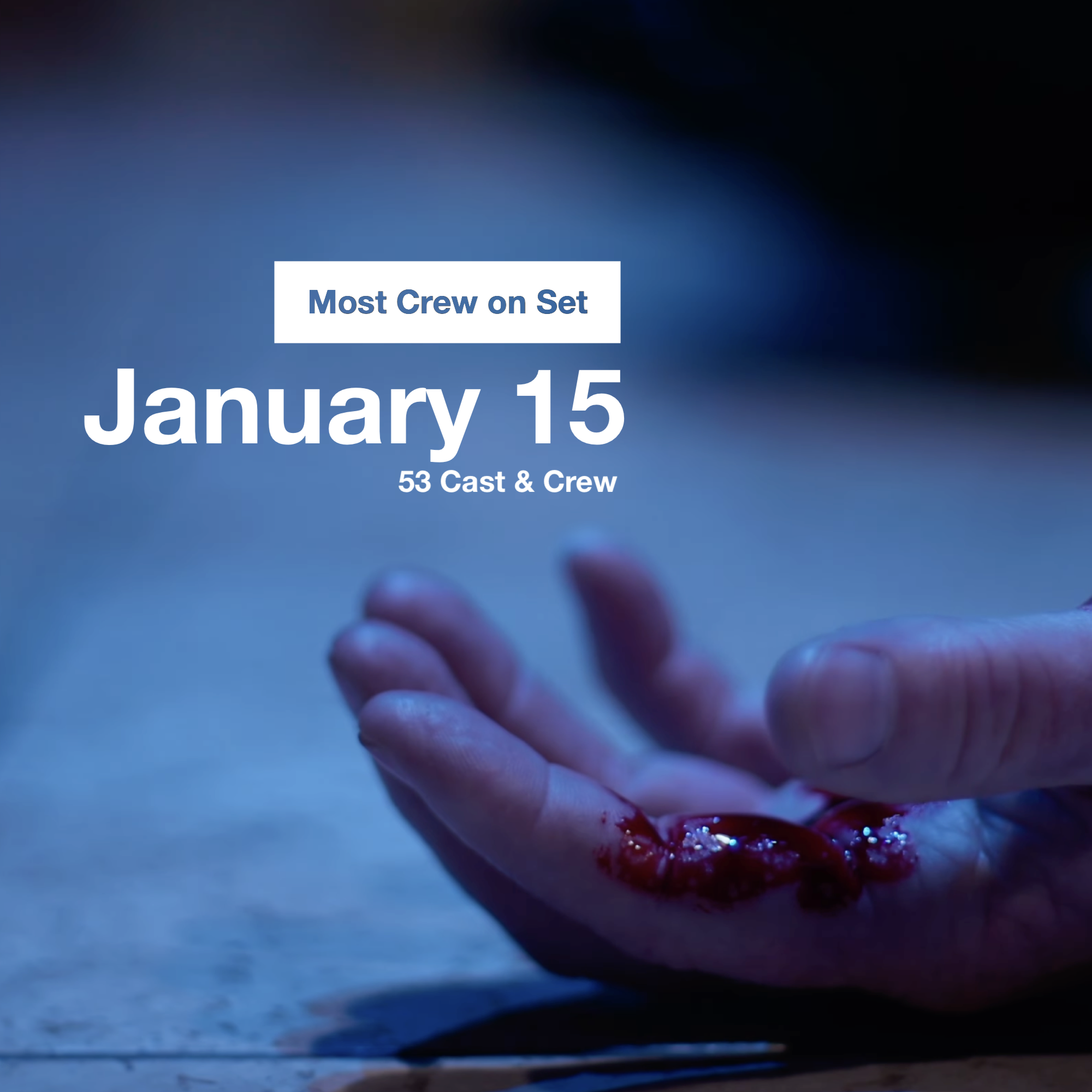
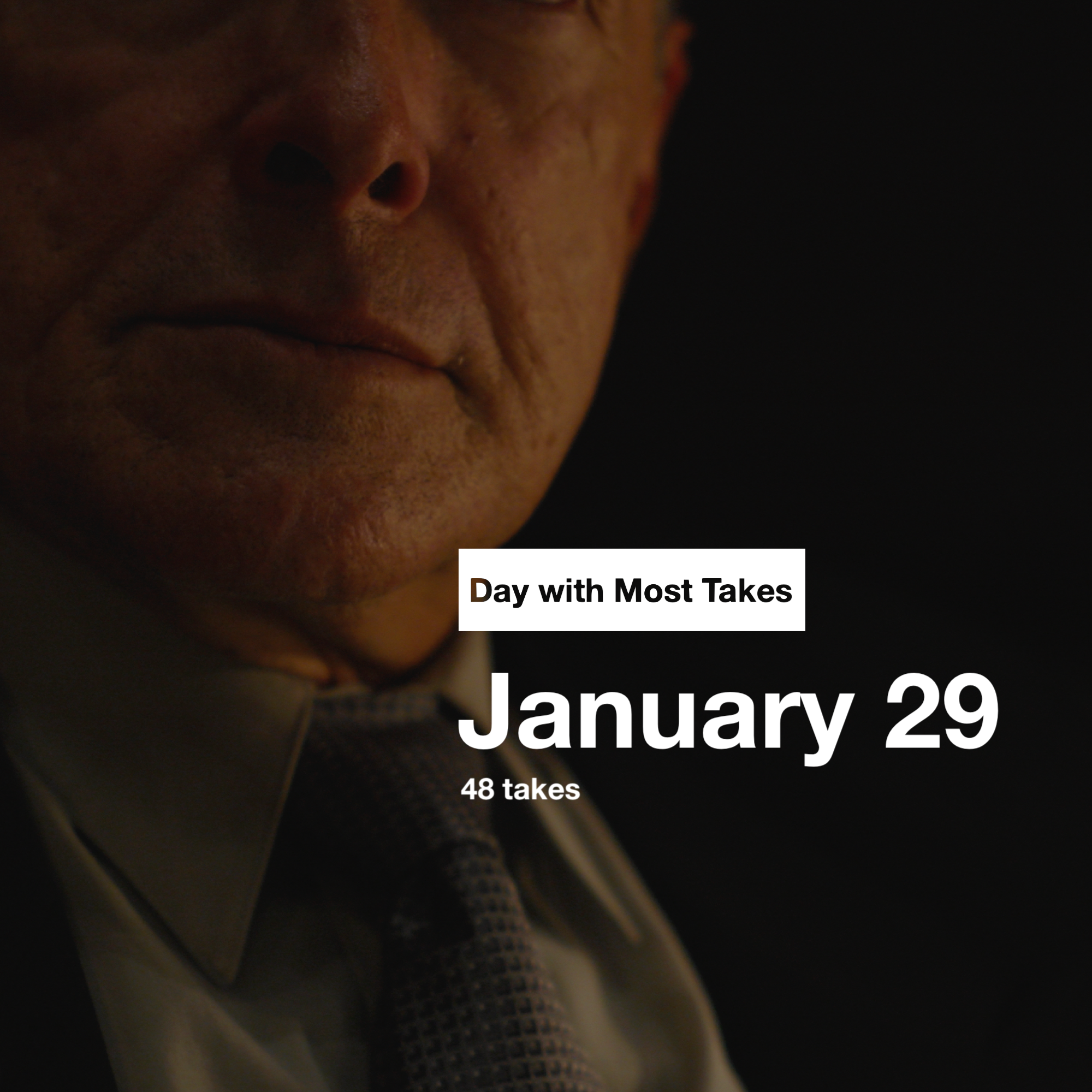
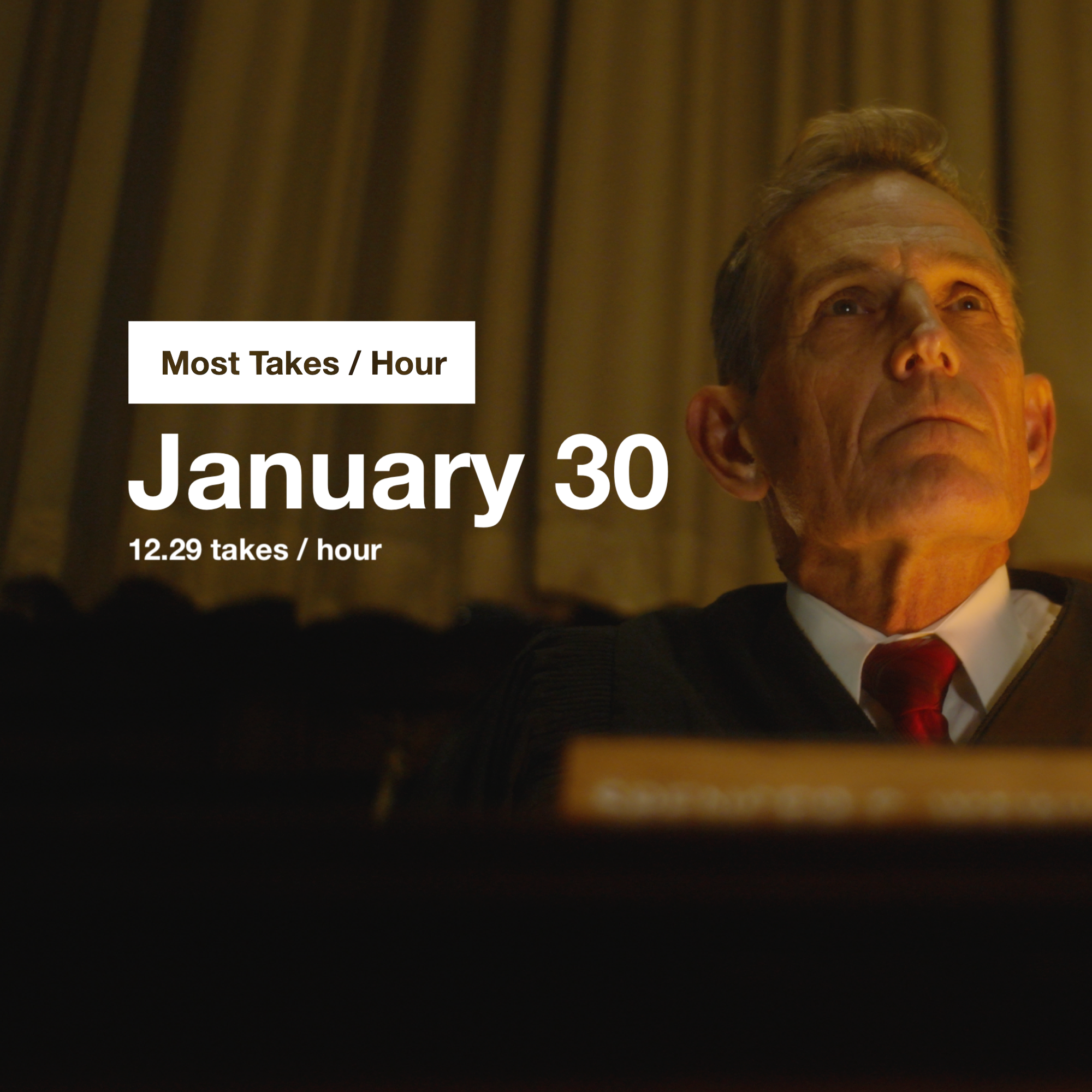
Production, in numbers.
Post-Production
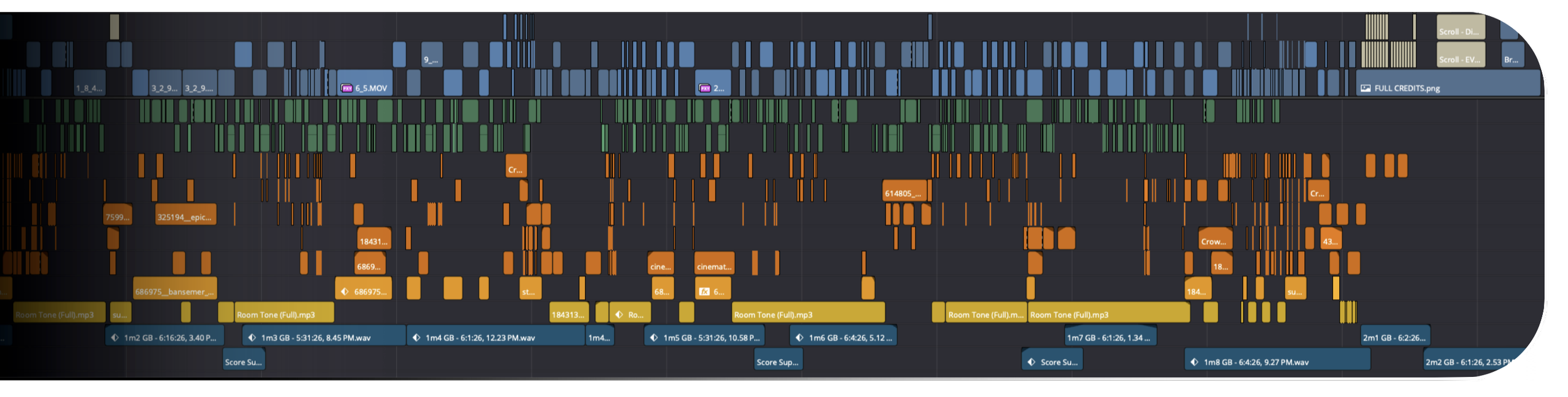
Project timeline
Edited in DaVinci Resolve, The Death of Jim McGraw was brought to life in a free, subscription-less software anyone can use.
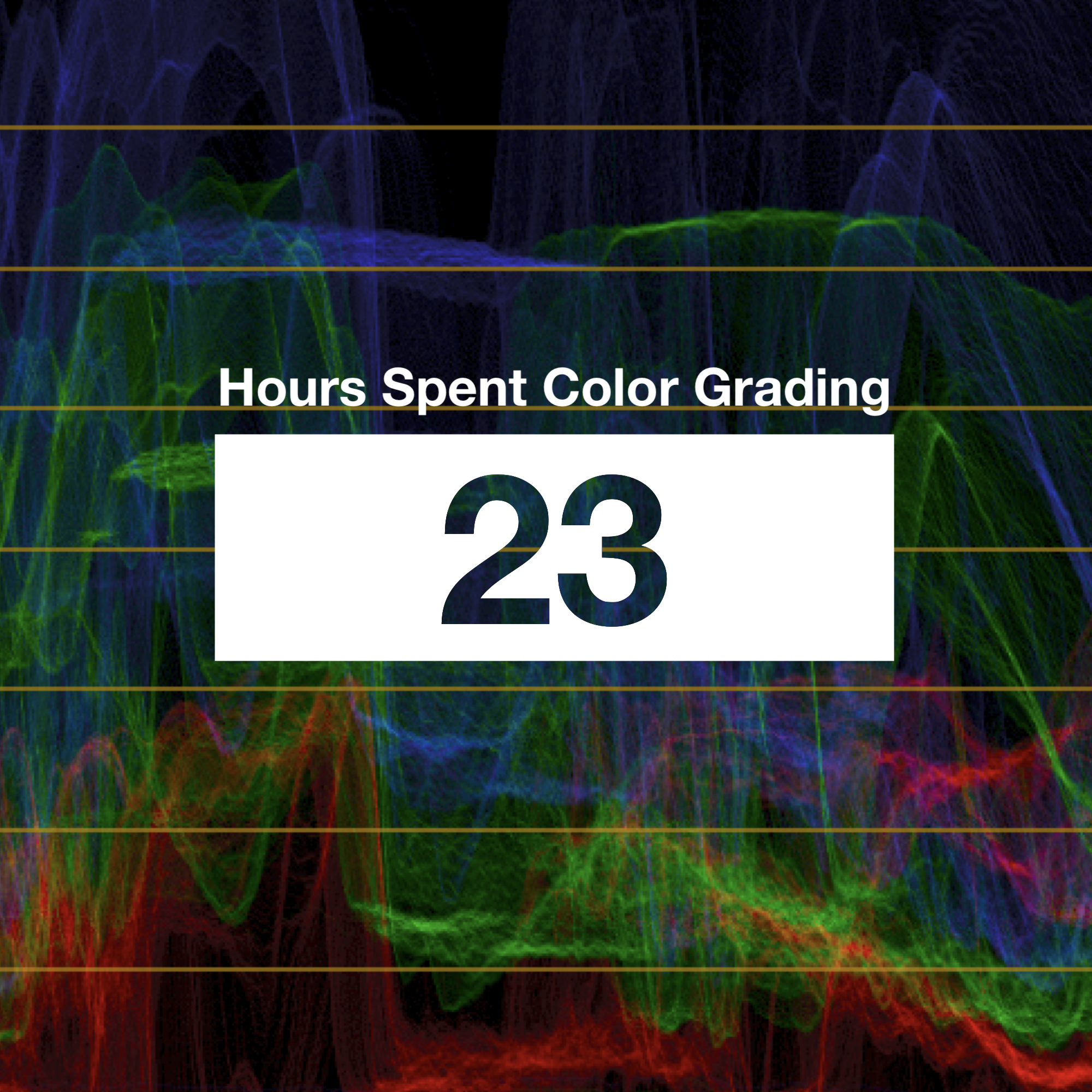
The power of color grading
Through extensive color grading and omnipresent minor touch-up work, we gave The Death of Jim McGraw the signature Five Watt Lights look—making it look better than it has any right to.
The goal of our lighting and color grading was to break up the film into two contrasts for our present-day scenes in the courtroom, and our flashback scenes in the gala:
The Courtroom (Present)
Orange
Dark
The Gala (Past)
Blue
Bright
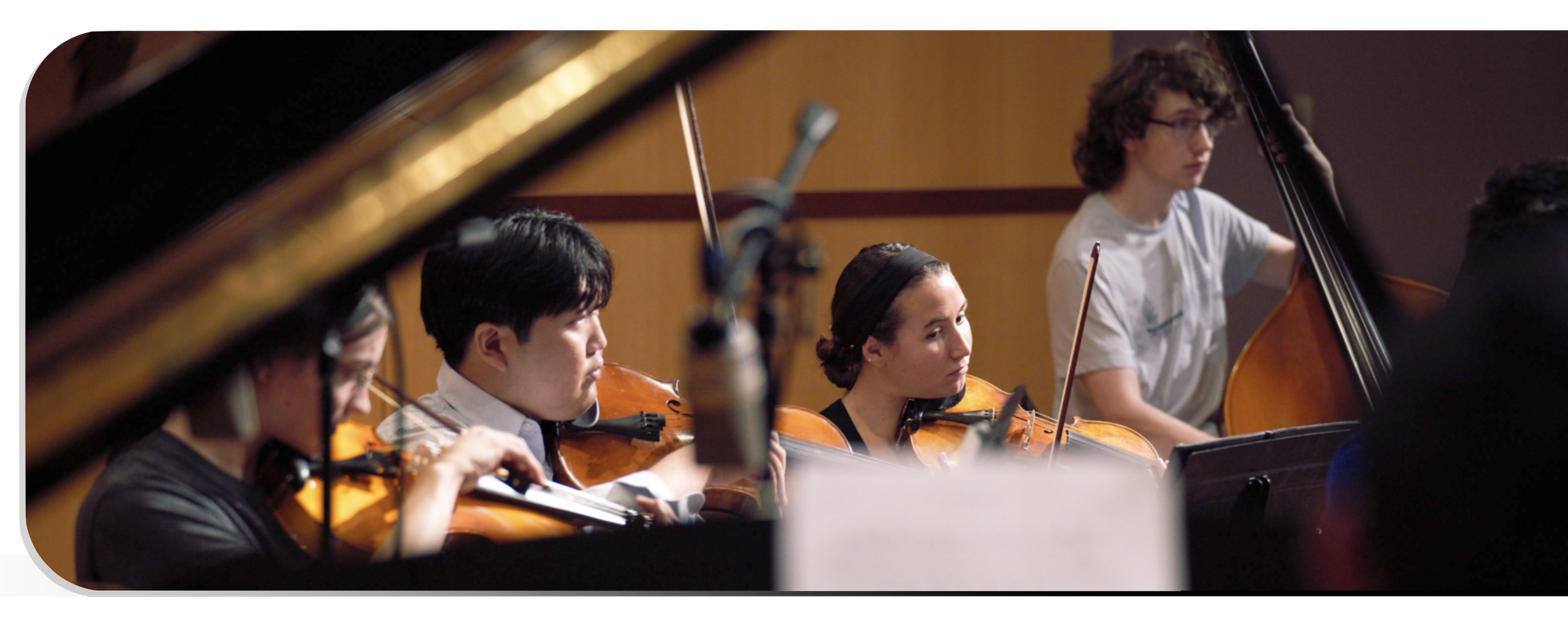
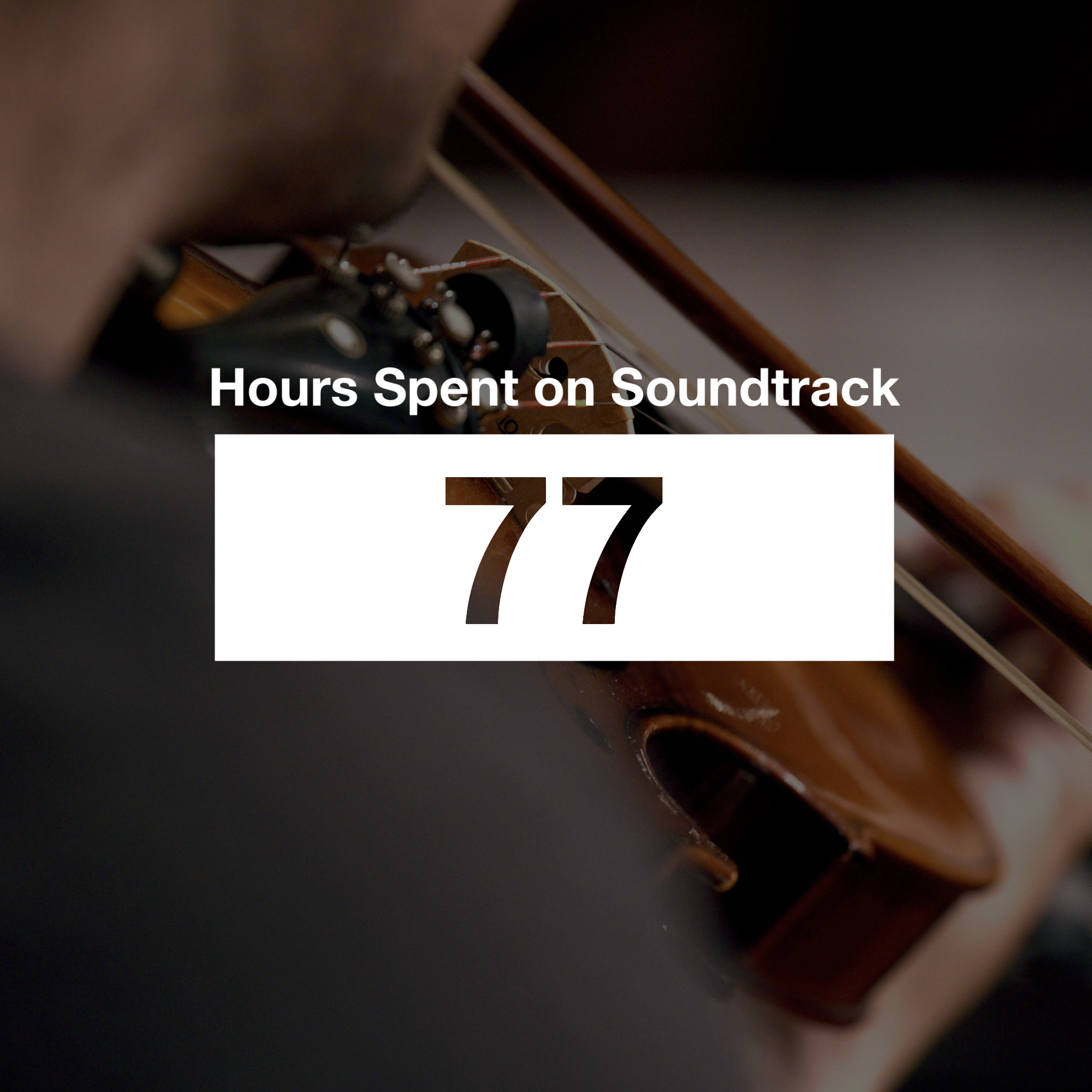
Our original score
Our original soundtrack was composed by our Director, Evan Fine, and recorded live by the Santa Clara University Orchestra, a first for the university. To learn more about that process, click below.
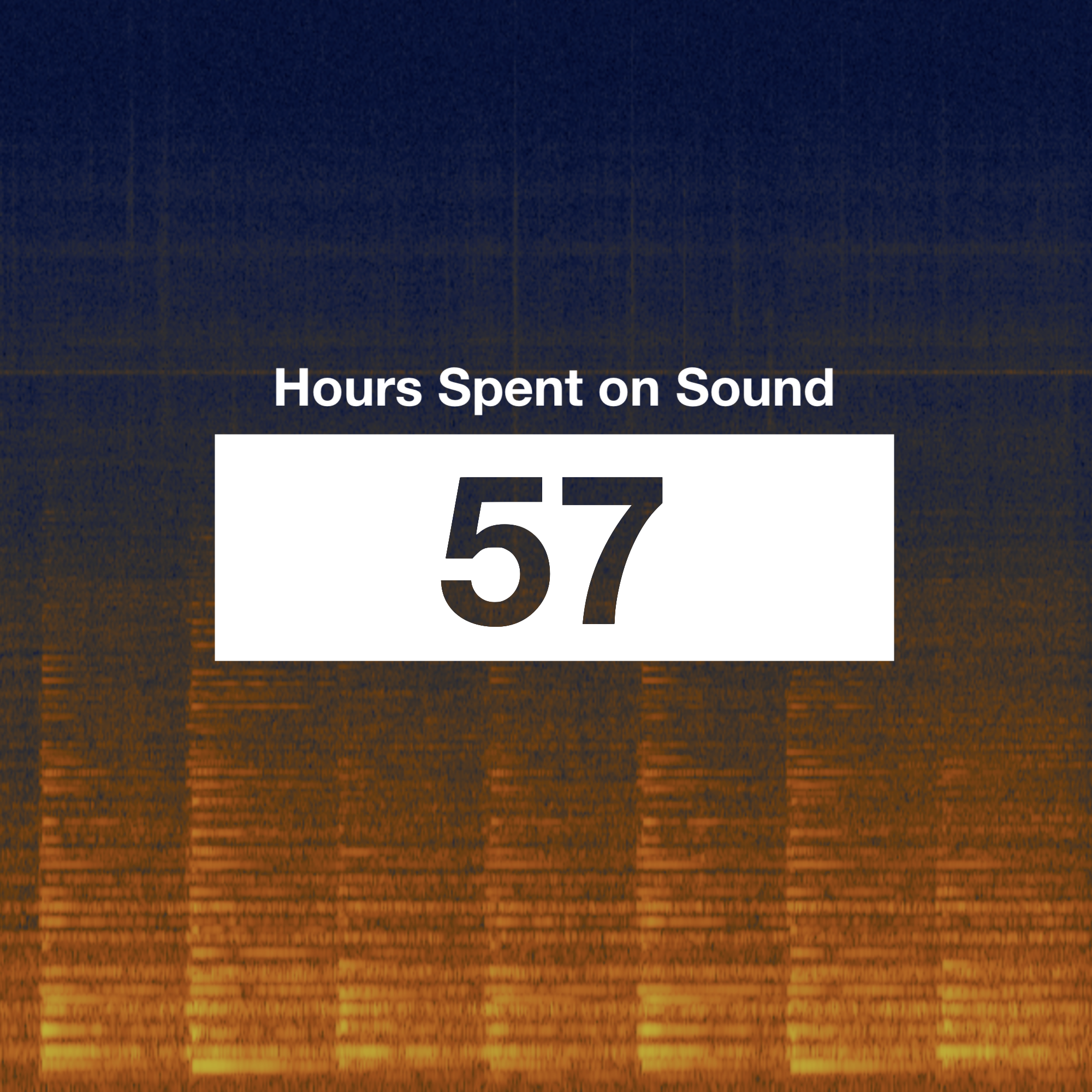
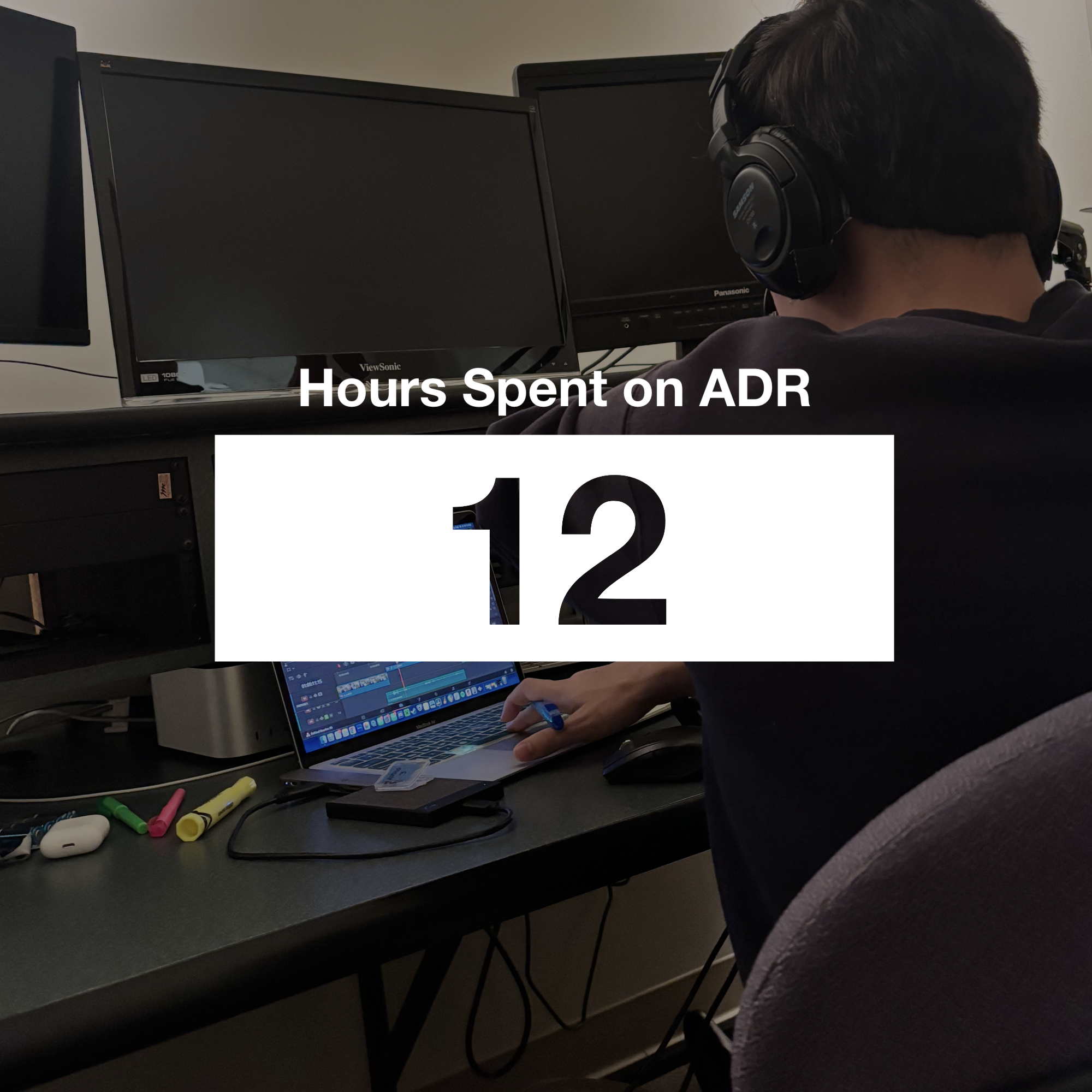
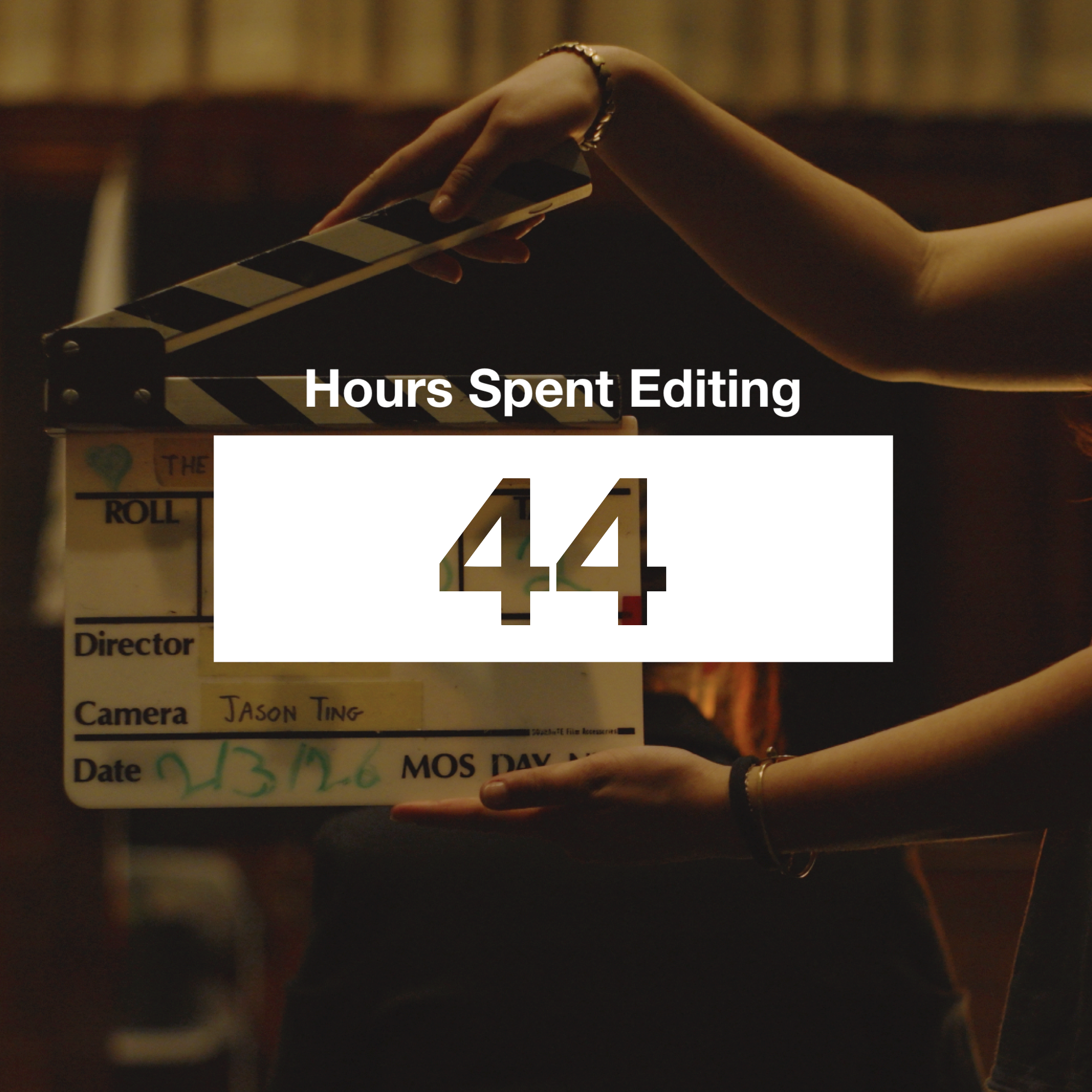
Post, in numbers.