CRAFTING A SOUNDTRACK
Scoring The Death of Jim McGraw.
Why an orchestral score?
“I felt that the character of the film would be best expressed through the rich tones of string music, specifically, a string orchestra. Violins, violas, and cellos playing together have a certain feel about them that synthesized music can’t capture, a grand sense of scale that comes with rolling notes and drumbeat-like rhythms. I am a musician — sound is just as important as visuals to me in this project — and so it was crucial to express the story of this film through music as completely as possible.”
— Evan Fine, Composer
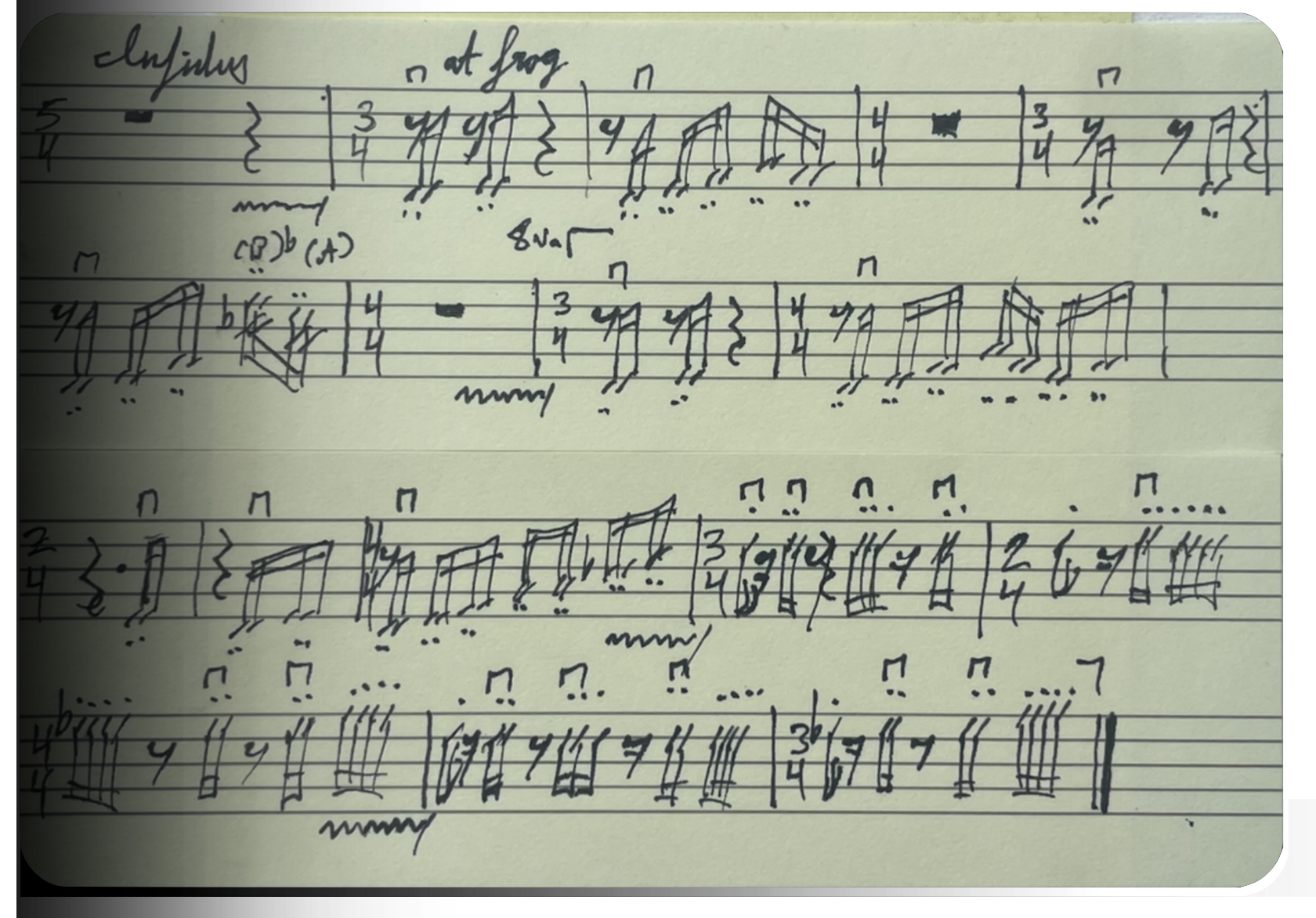
Early score drafts
Some motifs and melodies were written out early in — or even before — the principal production process. For some scenes, shots were filmed, timed, and edited around these scores for visual and aural confluence.
The power of the leitmotif
A leitmotif is a short, recurring musical phrase or melodic idea tied to a character, an emotion, a place, or a concept in a soundtrack. The Death of Jim McGraw makes use of two prominent leitmotifs throughout its runtime. When filming and editing, many scenes and shots were frequently timed around these motifs.
A leitmotif is at its best when it evolves and changes with the story, mirroring the progression of a protagonist or a discovery. Both our leitmotifs saw varied use in our score, shifting with the tides of the case.

The Murder Theme
Dramatic, rising, and making full use of its harmonic tonal landscape, this motif pairs with the scene of Jim McGraw’s murder. In court, you can hear fragments of this theme playing as the truth slowly trickles out — or is subdued.






Felicity’s Theme
Smooth, rolling, and contemplative, this chromatic motif mimics the waves of an ocean, coming and going, ceaseless — a perfect representation of the subdued turmoil in our protagonist’s mind.



The Murder Theme
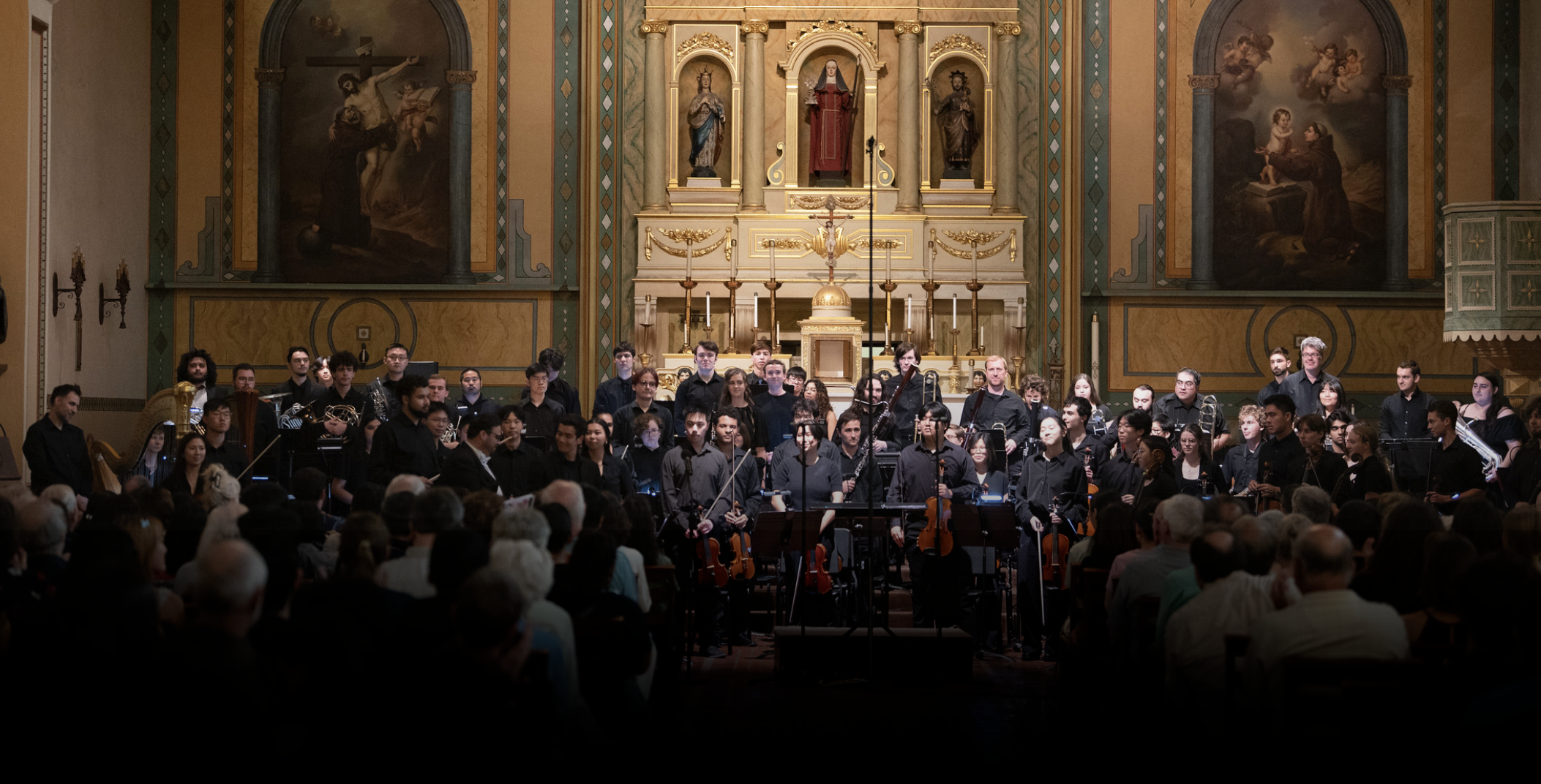
The Santa Clara
University Orchestra
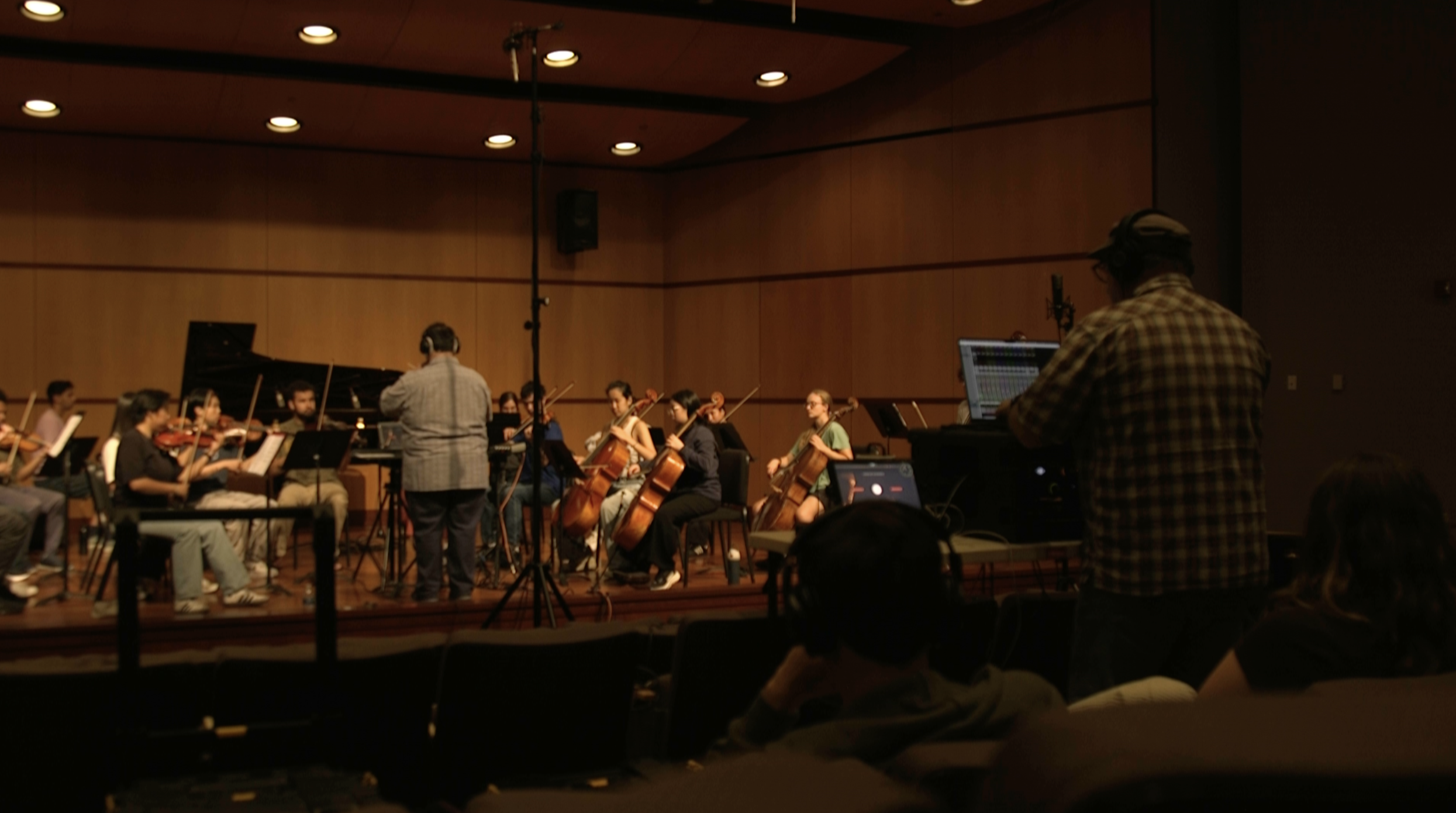
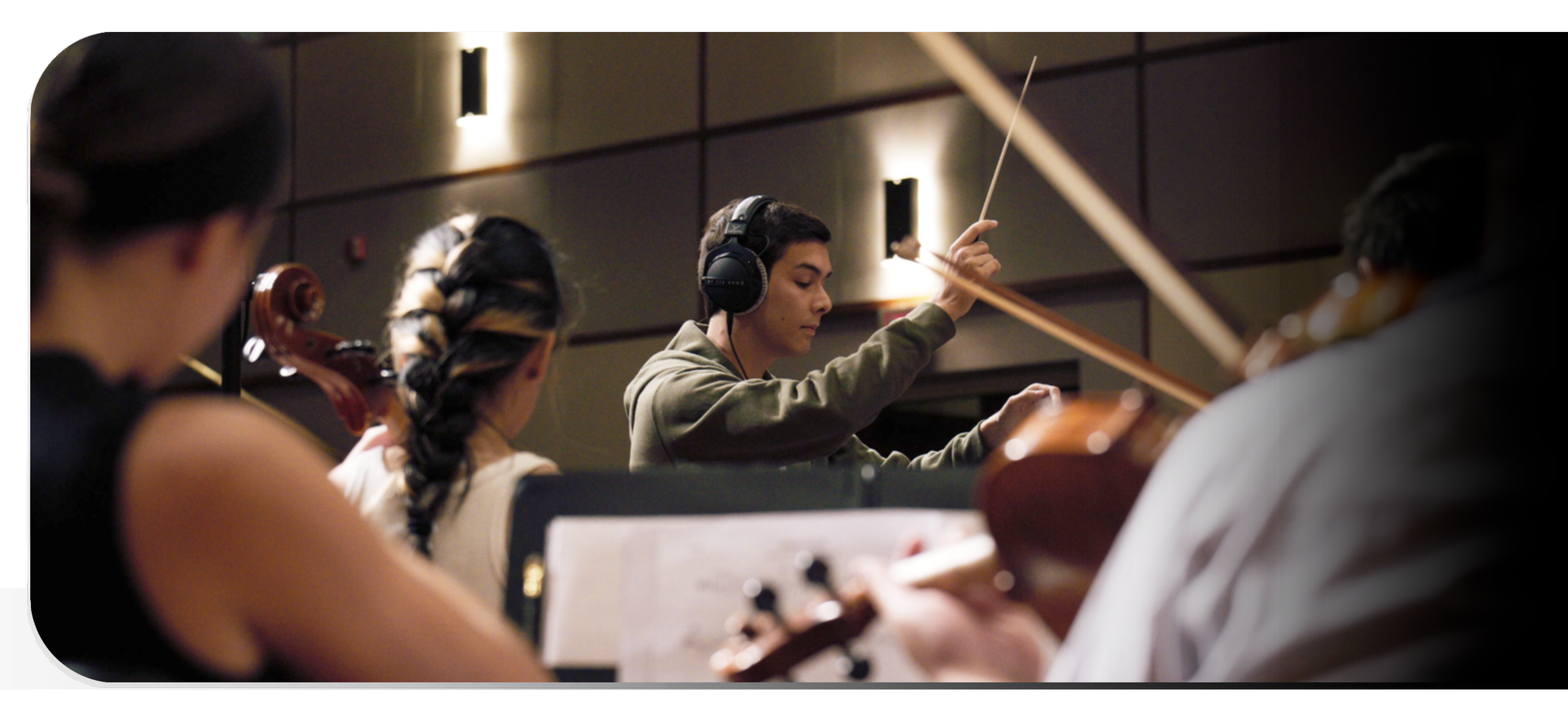
Our team was incredibly lucky to be able to work with the Santa Clara University Orchestra and its director, Dr. Anthony Rivera, to record our soundtrack. This marked a record for the university, being the first time its orchestra partook in the live recording of a film score on campus.
From first rehearsal
to recording
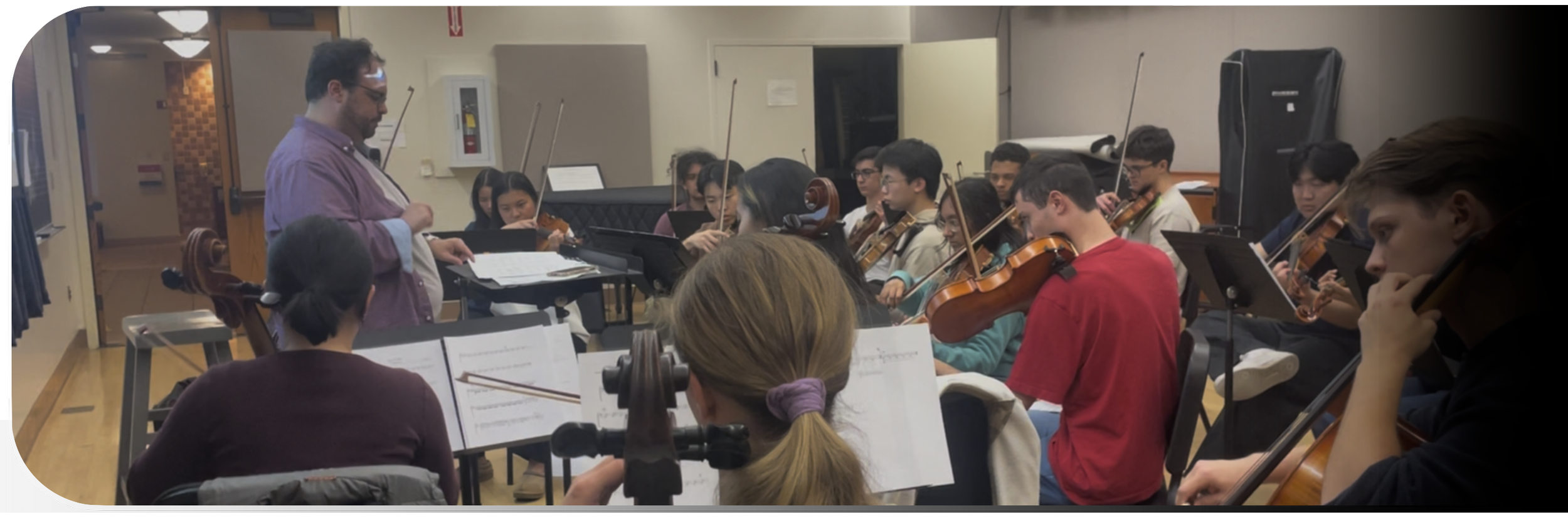
From its first rehearsal on March 31st to our recording session on May 19th, the orchestra had roughly seven hours of rehearsal time to learn our music — and they delivered.
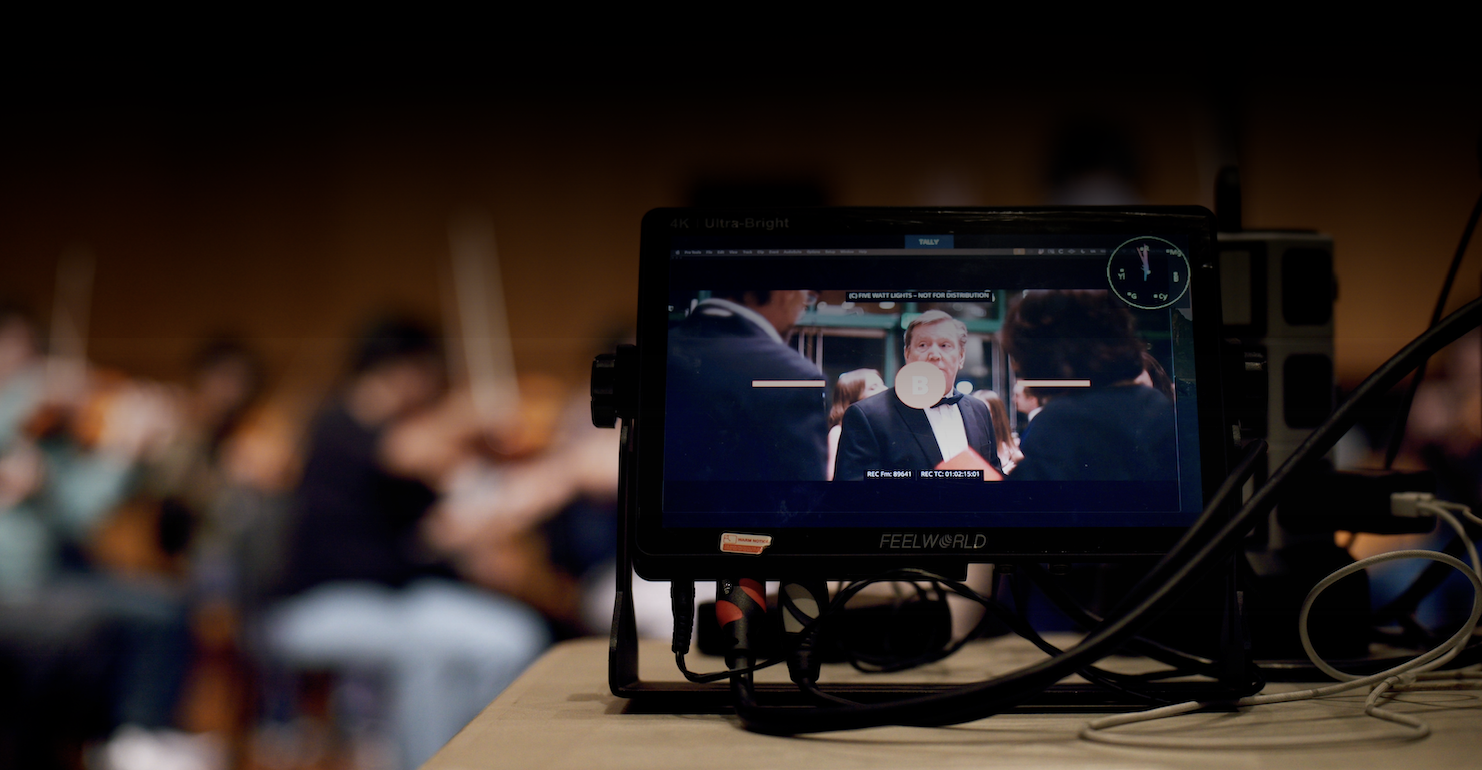
Score Recording
All ten of our music tracks – totaling around fourteen minutes of music – were recorded in a single, two-hour recording session. Five microphones were used to capture the full range of dynamic sound of our 21-piece orchestra.
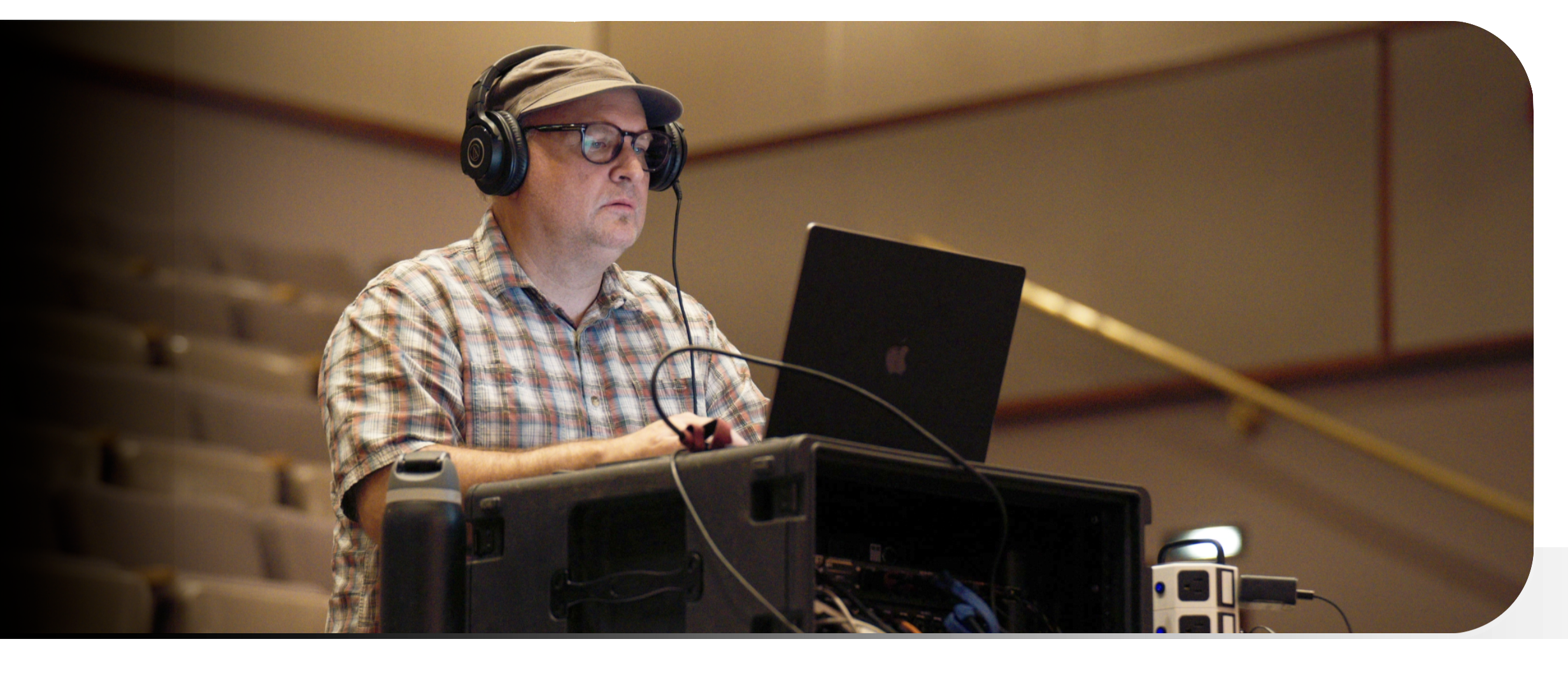
We were very lucky to have Andy Zenczak, founder of Gadgetbox Studios, as our audio engineer for our score. His professional experience ensured that the hard work of our student musicians was appropriately captured.
Score audio engineering
See the evolution
of the music
Listen to the journey of our film’s score, from synthesized temp track to rehearsal to final integration.

Listen on your own terms
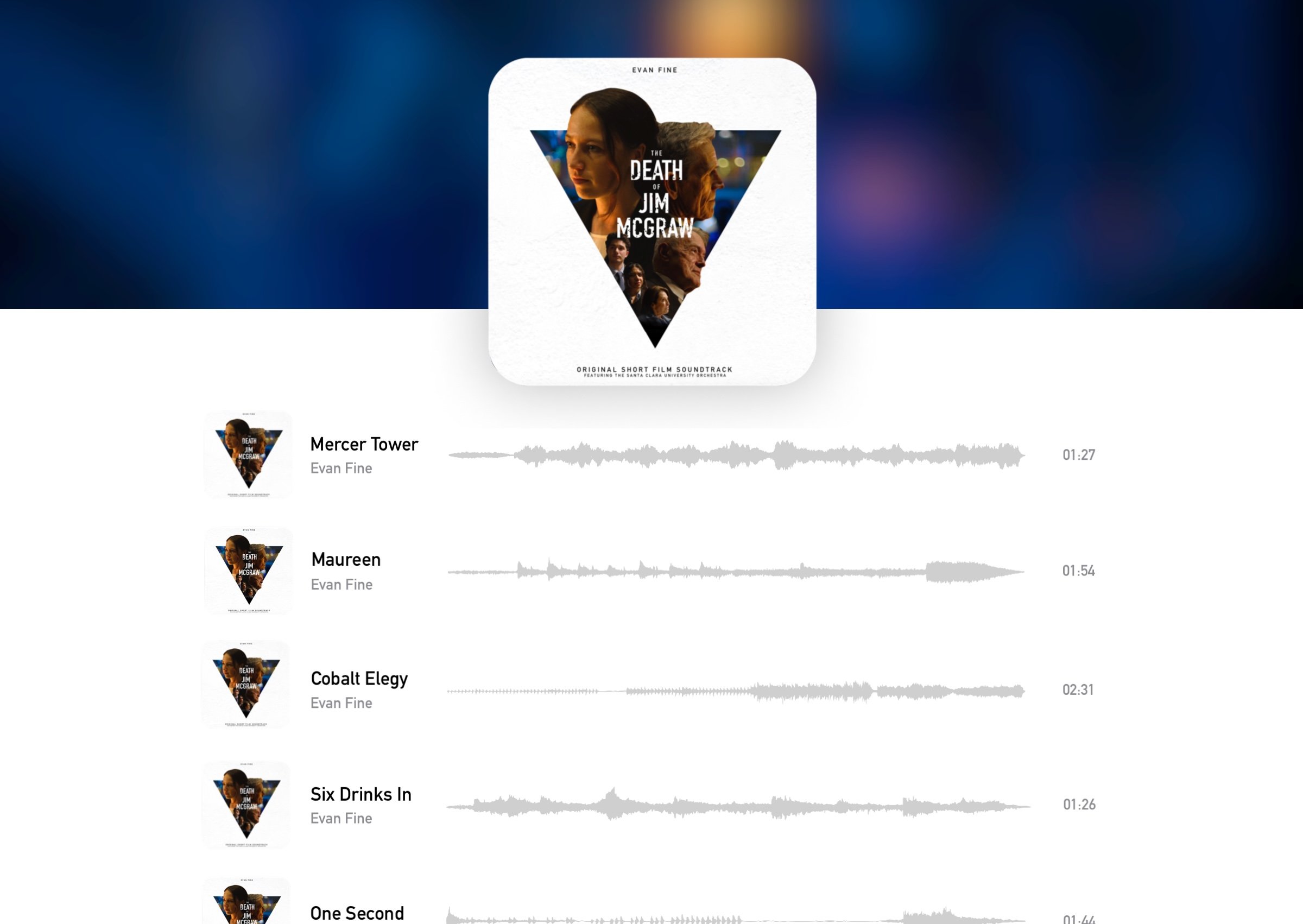
Our score is live on Spotify, YouTube Music, Apple Music, and other music platforms. Stream, listen, and enjoy on your own time!

Apple Music

Spotify

YouTube
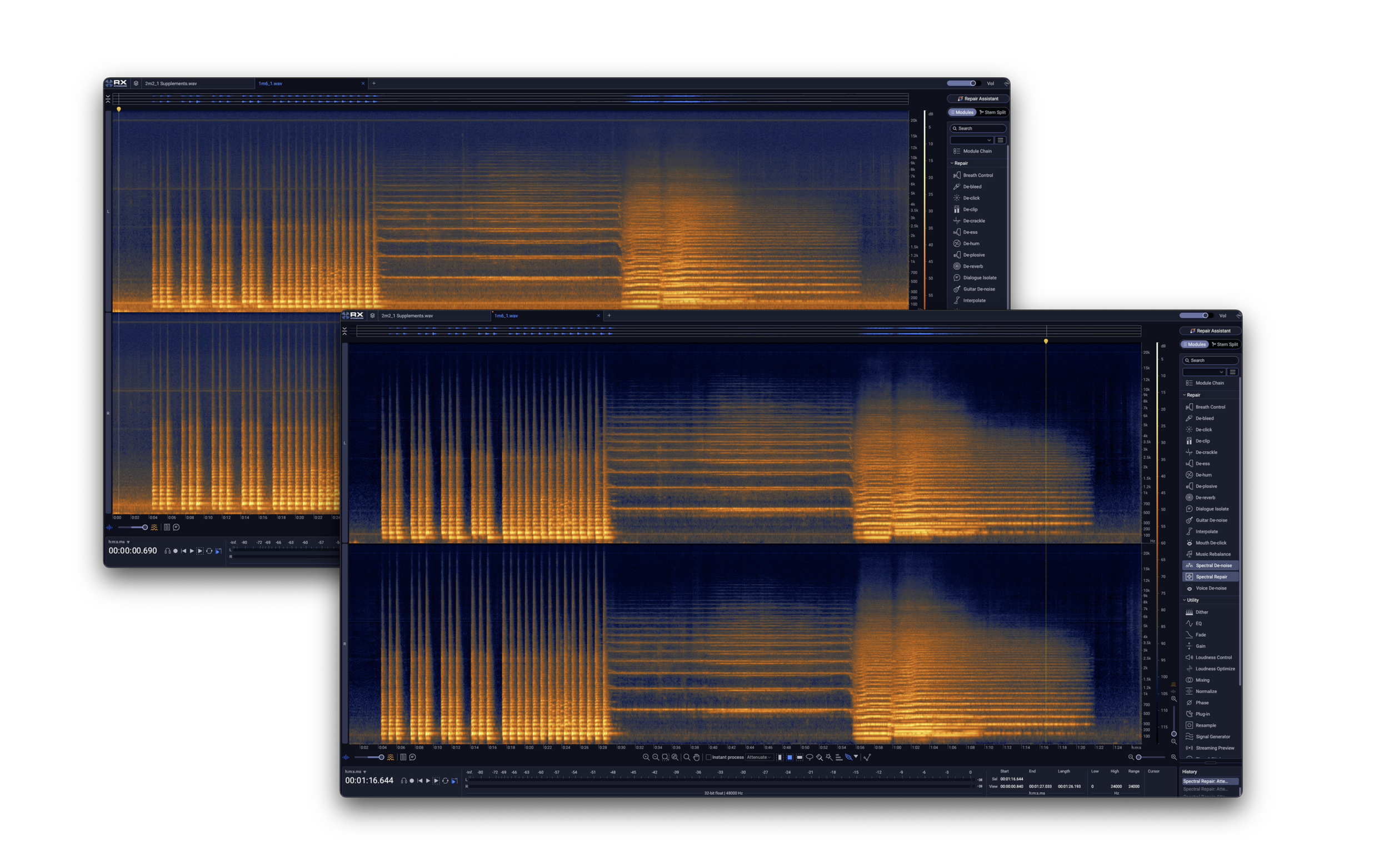
Audio cleanup
in iZotope RX
Making full use of a 7-day free trial for a $1,399 piece of software, audio noise, unwanted coughs and sniffles, and room tone were carefully edited out of the audio files.
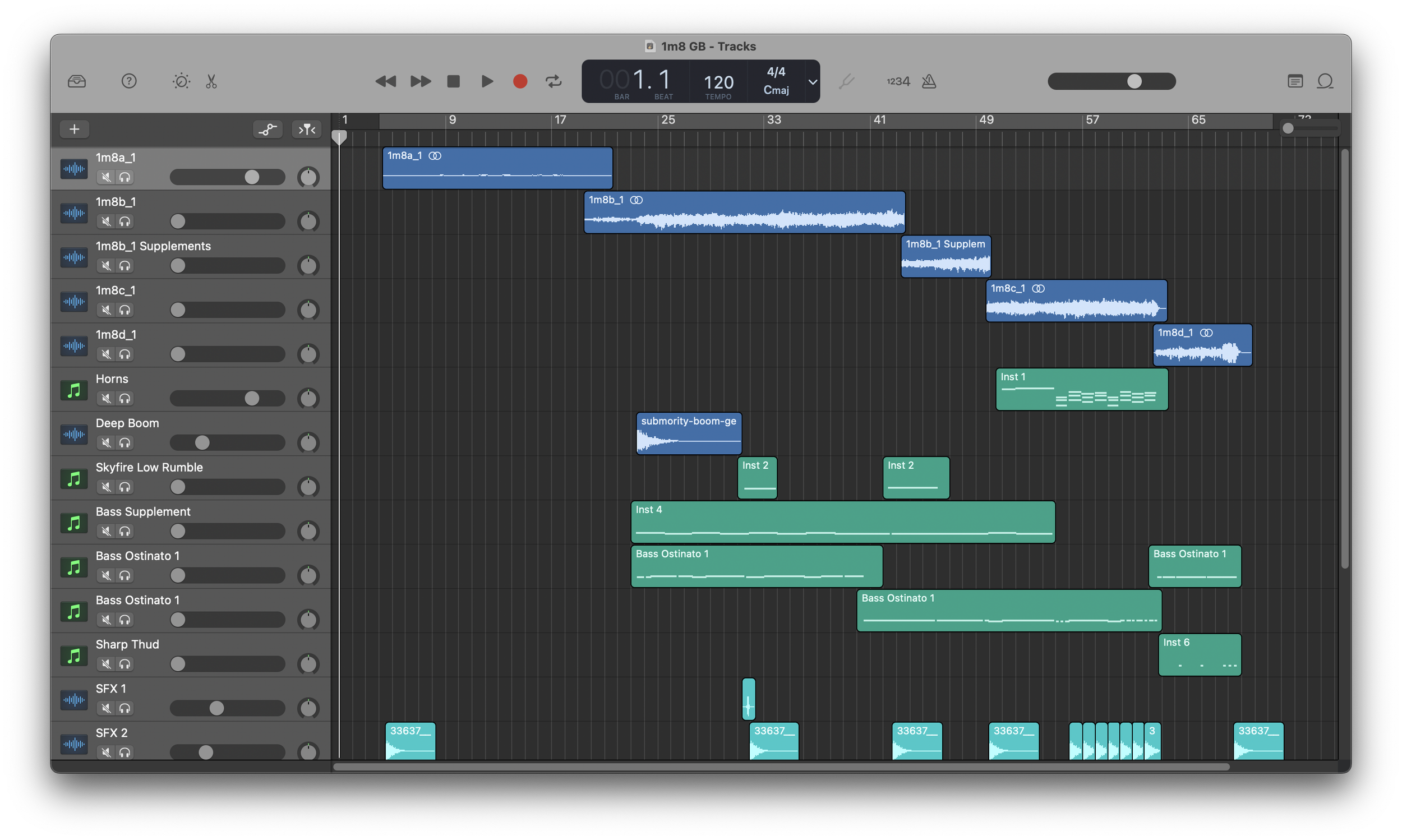
Score supplements
in GarageBand
Additional supplements – bass strings, synthesizers, and sound effects – were added in GarageBand, making use of a number of free VST plugins and instruments.